


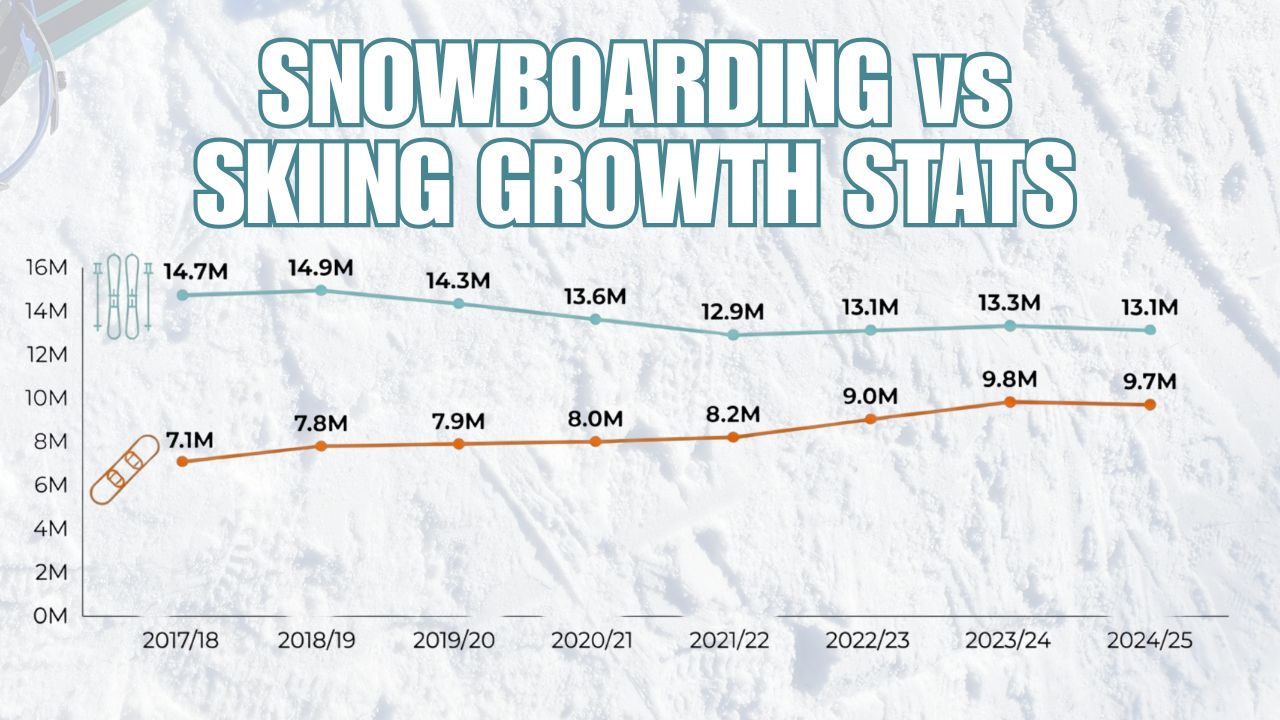

Since 2020, snowboarding’s popularity in America has been growing, while skiing’s popularity has actually begun to decline.
These stats come from a combination of sources, including the latest Snowsports Industries America SIA Participation Report, the U.S. Bureau of Economic Analysis’ report on Outdoor Recreation Economic Statistics, and the Kottke End of Season Report.
Skiing vs Snowboarding Participation Latest Stats
While skiing still has a greater overall participant count at 13.1 million people, that number has been in a slow, year-over-year decline since 2019.
Snowboarding, on the other hand, has been growing in its popularity. The end of season stats show it had 7.1 million riders in 2019 and has now grown to 9.7 million riders in 2025.
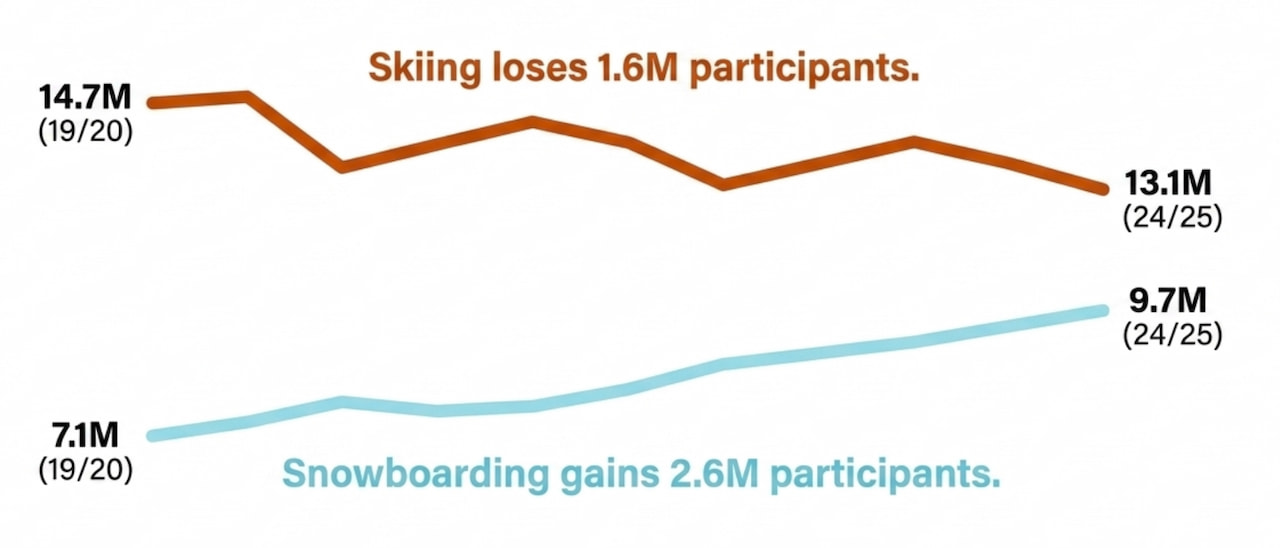
Snowboarding participation has grown from 7.1 million in 2019 to 9.7 million in 2025, so Snowboarding has gained 2.6 million new riders since 2019.
So, Why Doesn’t It Feel That Way In Overly Crowded Lift Lines?
The short answer is because the die-hard skiiers and riders are going more often, making our lift lines look overcrowded, and that disguises us from noticing there are fewer skiiers overall than there used to be.
The really interesting part about the stats is that snowboarders actually go one additional day on average per season than skiers. But skiiers are actually starting to ride more than they used to.
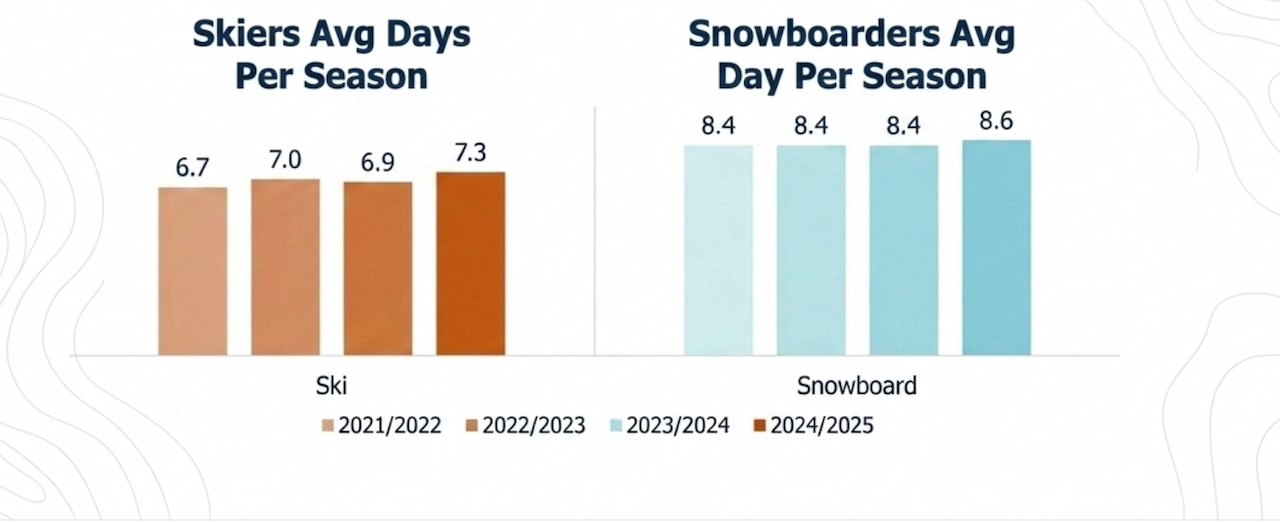
Skiers averaged 7.3 days per season. The average number of days per season for skiers used to be only 6.7 days in 2021, so they are going 8.9% more on average than they used to.
So there is this illusion of people out on the hill that leads to ski lifts being far more crowded than they used to be, while the overall count of skiers is on the decline.
According to the Kottke End of Season Report, the 2024/25 season was actually the second best on record for overall resort visitations, with 61.6 million visits during the season. However, while you are in more crowded lift lines, they are really filled with the familiar faces of the same riders who are logging more average days on the hill per season.
The fact that all of us are logging more days per season is what’s leading to it feeling like the resorts are more crowded than ever.
(My gut tells me as riders and skiers continue to pay more for their season passes every year, they’re going to ride a few extra days to make sure they get their moneys worth of those passes.)
So What Is Snowboarding Doing Differently to Grow While Skiing’s Popularity Declines?
It comes down to diversity and accessibility.
Snowboarding is now the more diverse of the two sports. It reaches participants who more closely resemble the ethnic profile of America today.
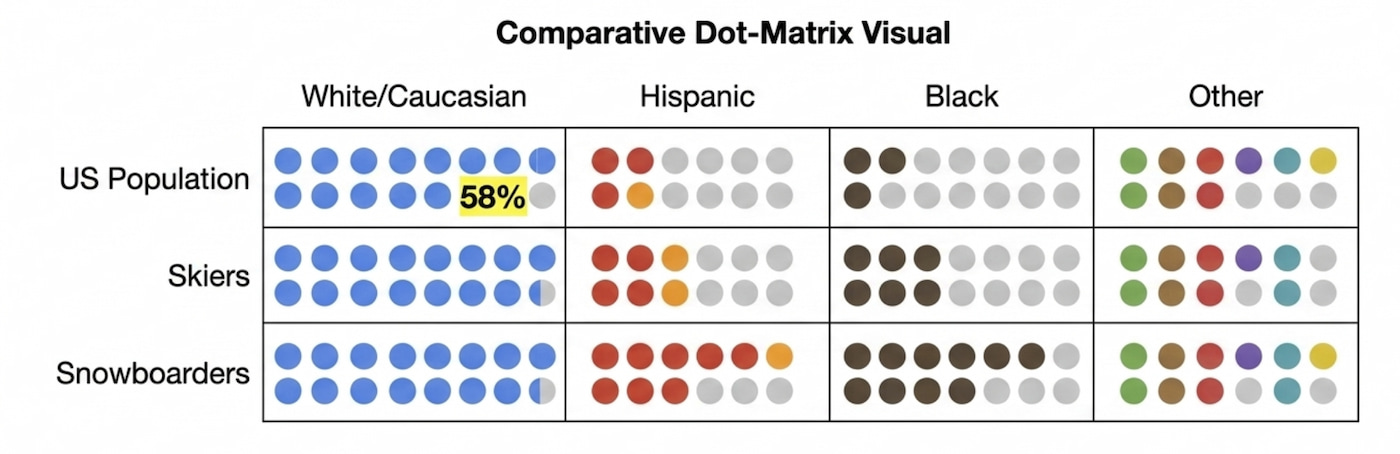
The data backs it up. Snowboarding now more closely mirrors the ethnic makeup of America than skiing does. Black and Hispanic Americans are choosing to snowboard at nearly double the rate they choose to learn to ski.
That’s not a coincidence, though. It’s the result of a sport that’s been more open, more affordable, and more culturally connected to a broader audience.
The question is, why is that, though?
So What’s Actually Driving the Popularity Growth for Snowboarding?
Diversity is one part of the answer. However, it’s not the only factor.
The real reasons that snowboarding is growing come down to a few things that make the sport easier to get into, appeal to a younger audience, and make it easier to feel like you belong to a more welcoming community.
Snowboarding Gear Is Cheaper and Less of a Headache to Set Up Used
Getting on the hill is expensive, no matter what you ride the slopes on. However, snowboarding gear is generally more affordable and less of a headache to set up yourself.
If you’re looking to buy a full retail setup, a set of skis will instantly hit you with an extra component tax because you will need to buy four separate pieces of hard goods, including skis, bindings, boots, and then poles. With snowboarding, you just need a board, bindings, and boots, but snowboard setups are actually cheaper. Data tracked by Evo reveals that adult ski-and-binding packages will often cost between $500 to $950, while a decent all-mountain snowboard from a reputable brand will cost between $400 to $580.
Those costs are all before even factoring in the rigid, hyper-engineered plastic of ski boots when compared to snowboard boots. Ski boots often cost between $500 to $1,000. That’s around double the price of a decent entry-level snowboard boot, ranging between $200 to $350.
It’s also worth mentioning that it’s easier and cheaper for a first timer to set up a snowboard deck because they have universal mounts built right in to them. You can simply screw your own bindings in yourself, adjust your stance whenever you want, and not pay a shop to do any of that for you. That also means you can find a solid used snowboard for what it would cost you to rent two or three times at a resort, and you’re off with your own gear for a few years as you learn.
It’s also worth mentioning that it’s easier and cheaper for a first-timer to set up a snowboard deck because they have universal mounts built right into them. You can simply screw your own bindings in yourself, adjust your stance whenever you want, and not pay a shop to do any of that for you.
Compare that to skiing, where you should not adjust your own bindings in your setup due to safety reasons. Skiers have to pay the safety tax just to use their gear, because every time you change boots, a certified mechanic should perform a torque check to calibrate your DIN settings. Service prices to calibrate your DIN settings from retailers like REI run between $25 to $35 every single time you need an adjustment.
Snowboarders skip that entire headache and simply use a screwdriver to adjust anything they need to, and with that freedom, snowboarders can more easily find a used snowboard on Facebook Marketplace and be off and learning with a board they own for what it would cost to rent one for two or three times.
Cultural and Younger Generational Appeal
Snowboarding is outpacing skiing with capturing the next generation of winter sports lovers.
Currently, 17% of all snowboarders are completely brand new to the sport, and this is a higher recruitment rate than skiing’s 14% stat.
These stats are also driven by a massive youth trending tilt.
81% of the current snowboarding community is under the age of 35. While Skiing shows that its older audience of 35+ skiers are continuing on longer with the sport than snowboarders.
Skiing’s 35+ segment is actually 30% larger when it’s compared to snowboarding’s 19% of total participants that fall into the 35+ age bracket.
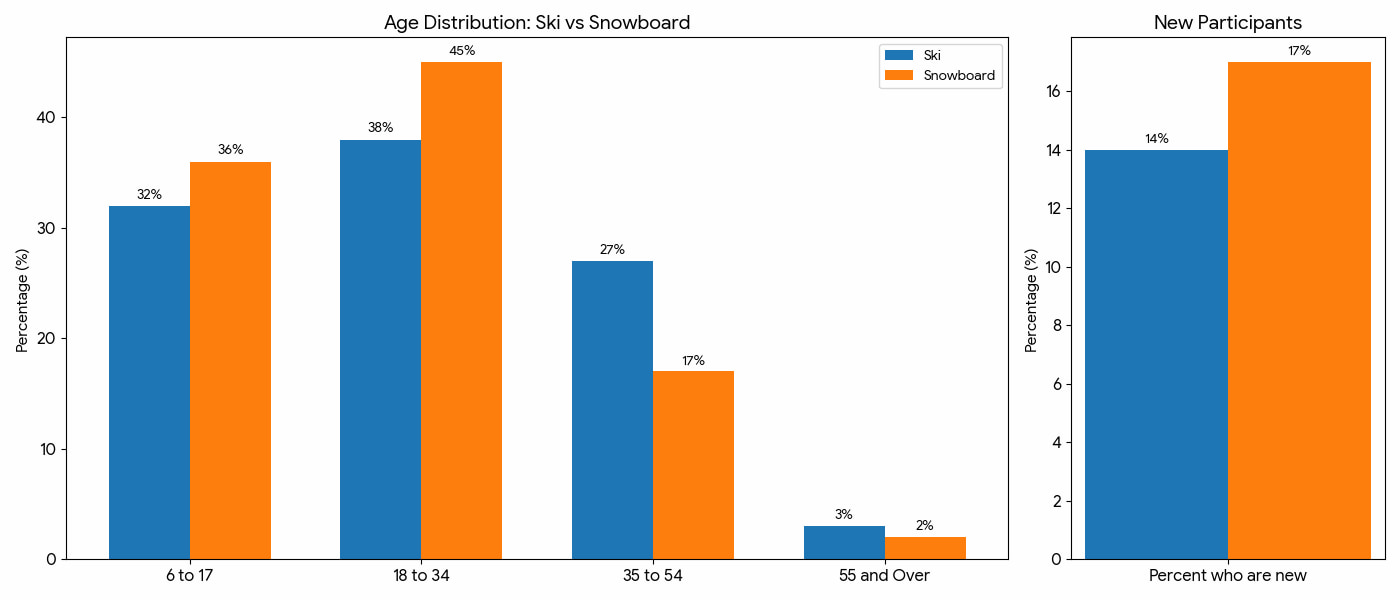
By dominating the younger audience, snowboarding is positioning itself as the primary growth engine for mountain sports.
New Traditions vs. Old With How Kids Entered These Sports
Skiing has a bit of a exclusivity problem. Where in the past, the decision to ski was made by your parents, taking you to learn at the age of three when you went with them on the family ski trips. This is, of course, reserved for families that could afford to make it happen. And with it being more expensive to go out for a day with a lesson and a rental, it’s happening less and less.
That legacy model of your parents taking you is great if you were born into a family with the means to do it. However, snowboarding doesn’t carry the same family expectation. Most first time snowboarders pick it up in their teens or twenties, and so the sport is entirely built around riders just like that and not ones whose parents took them along.
In other words, it’s no accident that the average snowboarder falls in the 25 to 34 age bracket, while the age segment where skiers are beating out snowboarders is the older, 45 to 54 year old age bracket. The data about the age gap shows two very different origin stories for how people enter each of these sports.
Non Profits To Get Underserved Communities to the Mountain
Now, there are non-profit groups like Hoods to Woods, Chill, and Shred that are all knocking down geographic and financial barriers by getting underserved urban youth on the hill with free gear, transportation, and instruction. That kind of accessibility does more than any ad campaign a resort or brand could run.
Representation at the Pro Level
Then there is representation at the pro level. Watching someone like Zeb Powell win X Games medals and go viral on a nearly weekly basis destroys the idea that you have to look a certain way to belong on the mountain.
Zeb is backed by Burton, the largest snowboard company in the world, and he also became the first snowboarder to officially sign with the Jordan Brand.
Skiing doesn’t have any stratosphere-like pros on that level to compare, and that’s proving the point. That’s a mainstream signal that reaches well beyond snowboarding. Let’s get some ski dollars flowing to the younger, diverse crowd who are out there putting it down for their community.
But the Mountain Still Has an Accessibility Problem
Snow sports are the top recreational activity in only four states: Colorado, New Hampshire, Utah, and Vermont.
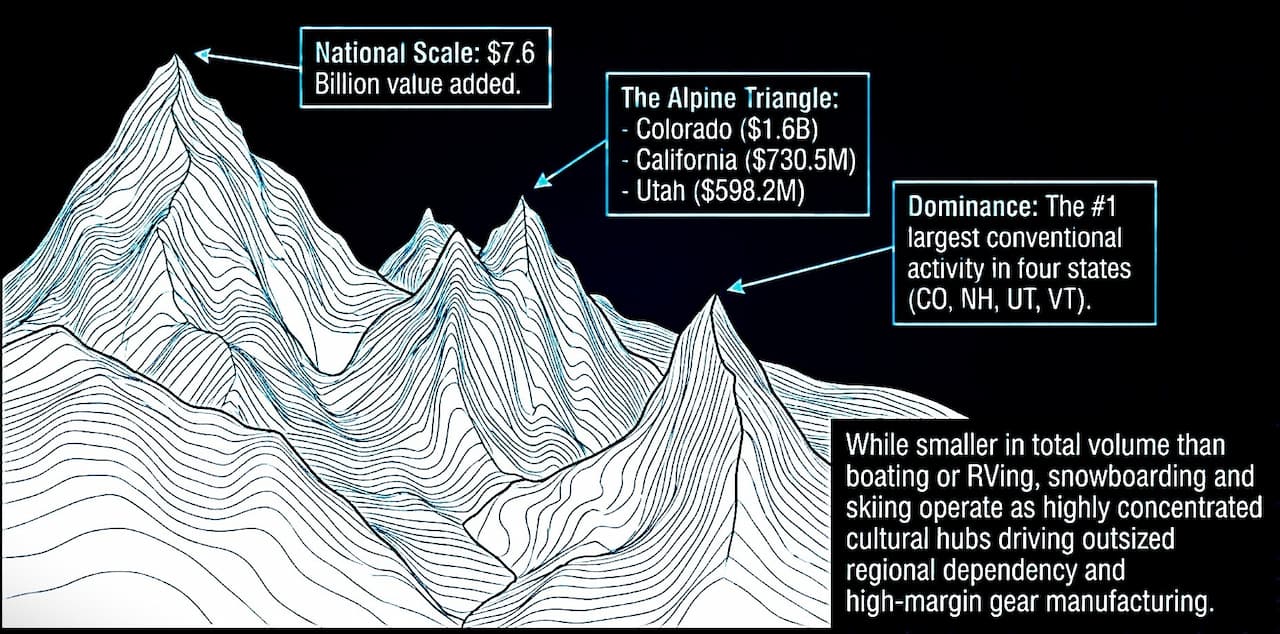
Colorado alone adds $1.6 billion in economic value for snow sports. However, for most new riders, those mountains aren’t a realistic option to get to. They’re too far and too expensive to ride at. That’s why small, local hills are becoming the actual lifeblood of the sport. They’re closer to most of us, and they’re dramatically cheaper to ride at.
Marsha Hovey of Trollhaugen resort, a small Wisconsin hill that has quietly become a freestyle destination thanks to its rope tow park, made this point well on the Bomb Hole podcast. The local hill is where most people actually learn to ride, and where most people decide if they’re going to stick with it.
My local hill is Montage Mountain in Scranton, Pennsylvania. Lift tickets run $45 Monday through Wednesday, and that includes rentals too. Now, that’s a completely different conversation than the $300 day rate in Park City, UT. That gap between what corporate mountains charge and what independent hills charge is exactly where the sport either grows or stalls.
Vail Resorts is the obvious elephant in the room.
Their Epic Pass model actually penalizes the new walk-up rider with incredibly high day lift ticket rates. This model is strategically designed to push season pass sales months in advance, and that model works financially for them. However, it’s not a model built to grow either sport.
There is more to the story on why some lift ticket prices are so high, though.
Independent mountains want to keep costs low and extend seasons as long as possible, but they’re squeezed on the insurance side of things. There are only two insurance companies that dominate the resort market, and about $20 of every lift ticket goes straight to insurance before any resort gets a profit. Now, add in the unpredictable weather to the mix, and needing to make snow more often, and you’ll start to see why some resorts are charging more just to stay open.
Seeing Snow Sports for the First Time in a Shopping Mall Near NYC
Big Snow in New Jersey is a good example of what creative exposure looks like. They put a year round terrain park inside the American Dream Mall right outside New York City. As people stop for coffee at the mall’s cafe, they end up watching people ride through the observation window. It gives both of these sports exposure to a new audience because none of these mall goers planned a trip to the mountain. They just get to see riding and skiing first-hand while they sip coffee in a mall.
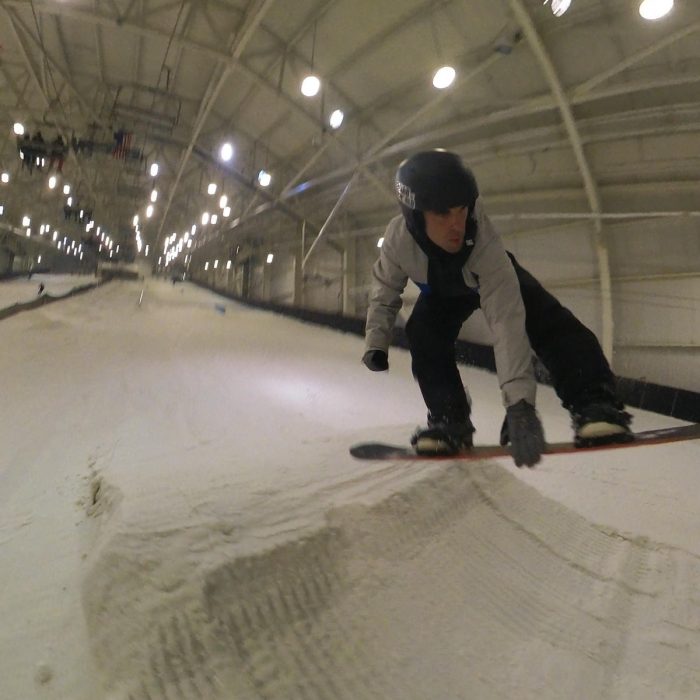
I am not arguing that made snow in a mall is the future of either of these sports. Everyone reading this would much rather ride and ski outside.
But that’s not really the point.
The point is that Big Snow puts snowboarding and skiing right in front of people who would never have seen it first-hand otherwise. That first look is often all it takes to get someone interested in trying it.
Big Snow also gives all of us a chance to keep our riding skills sharp during months when most of the country can’t ride at all.
As more indoor setups like this pop up, that combination of exposure and year-round access is going to keep feeding new people into the sport. And not to mention that they’re going to be training on conditions that are rarely brick conditions (so they’re occasionally safer to learn on).
Where It Goes From Here: Going Outside vs Video Games
But how do we get even more people interested in riding and skiing?
Both snowboarding and skiing are competing with the trending data showing young people are going outside less than ever before.
The American Heart Association published data showing that only one in four teenagers gets the recommended daily hour of physical activity. They note that 60 percent of parents say video games are the primary reason for their kids not going outside.
Maybe the smarter play is to meet that audience where they already live and gamify learning to ski and ride. Some resorts are already experimenting with that.
LAAX in the Swiss Alps uses an app to reward riders with points and badges for the runs, tricks, and top speeds they earn through the day.
Altogether, the sports that grow from here are going to be the ones that figure out how to be more affordable to get into entry-level gear, visible to people who’ve never seen them before, and engaging enough to get someone off the couch. These stats show that snowboarding is closer to all three of those factors than skiing is at the moment.
That’s not a knock on skiing. It’s just where the momentum is currently, and the numbers are starting to show it.
Sources: SIA Snowsports Industries America Key Trends in Participation, 2025–2026 Regional Summits; Kottke End of Season Report; U.S. Bureau of Economic Analysis Outdoor Recreation Economic Statistics 2024
Related Posts:

Steve Weber is the passionate snowboarder, skateboarder, and author behind Board of the World. He understands that most gear reviews focus on having the perfect snow conditions, but his testing methodology is different. Living in Pennsylvania, Steve describes exactly how a board performs when the conditions aren’t perfect. His reviews cover performance on ice, hardpack, and flat-out brick conditions. In other words, he reviews boards for the conditions that East Coast riders actually face.
Bringing 27 years of East Coast snowboarding and 21 years of skateboarding experience, Steve is a 42-year-old intermediate park rider. His recommendations are informed by decades of battling icy conditions, ensuring every review accounts for the board’s performance on the roughest of terrain.
For the last five years, Steve has poured his passion into writing in-depth, unbiased reviews that help riders make informed decisions about the gear they’ll use. He also works part-time at a snowboard shop in Northeastern Pennsylvania, which gives him a direct line to learning about the new gear tech months in advance. When he’s not writing reviews, Steve is often found riding at Montage Mountain and testing out new boards.
Steve’s goal with Board of the World is simple: to help every reader find the right gear so they can have fun outside from the first time they use it.