
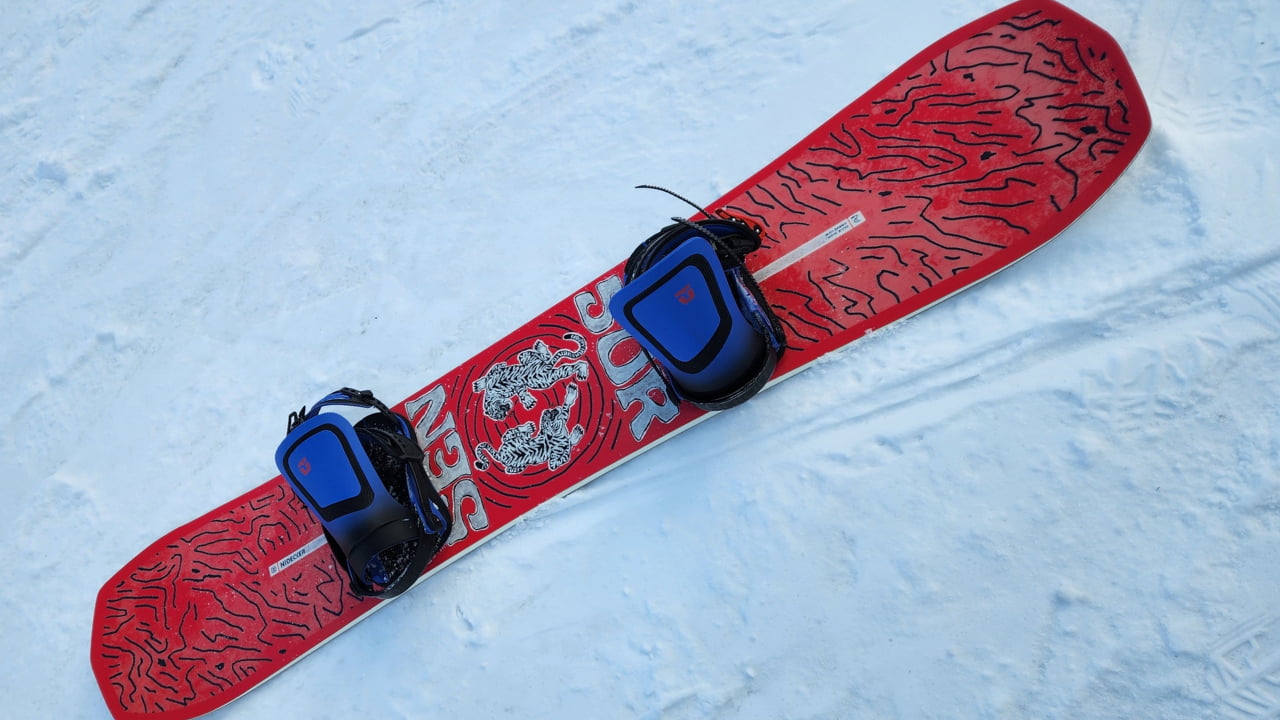

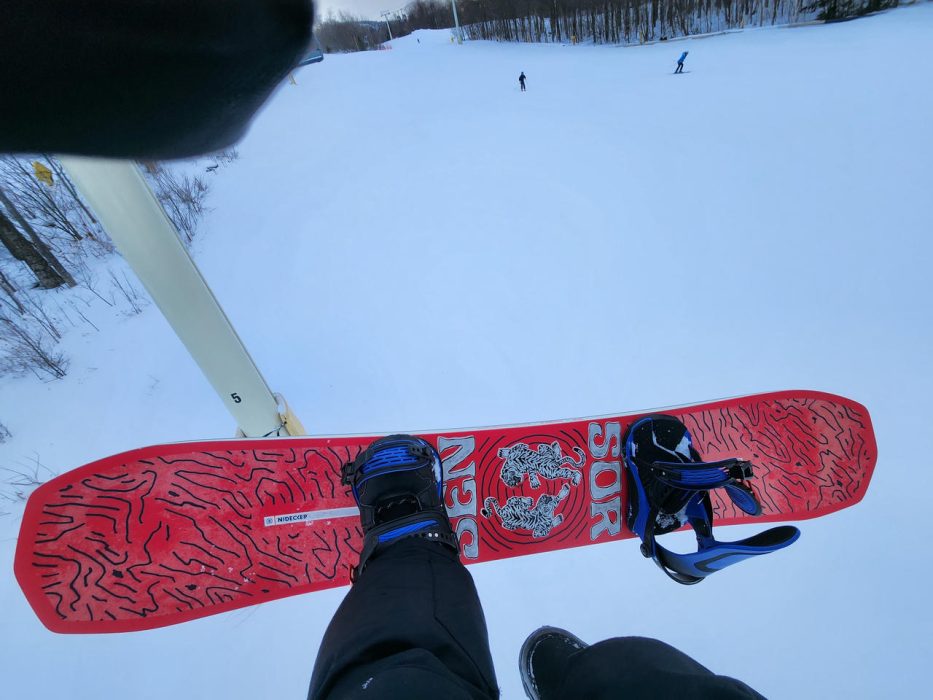
The Nidecker Sensor is an all-mountain freestyle twin that manages to be both a an outstanding jib board and an approachable camber deck for beginner to intermediate all mountain riders.
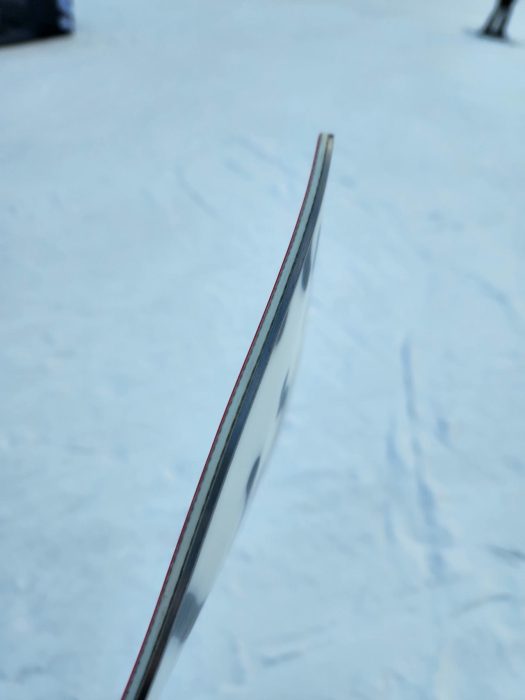
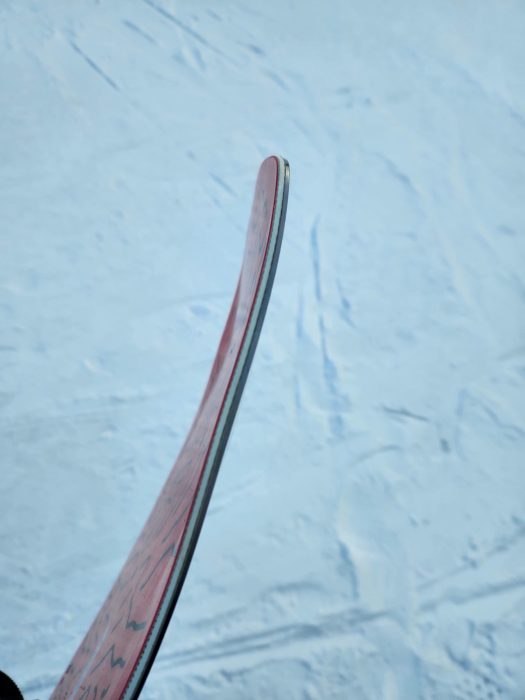
The Sensor features Nidecker’s Sidekick tech, which means it has a 3d spoon-like shape to both its nose and tail. This shape lifts the board’s primary contact points off the snow to give this deck a very catch-free, skate-like, forgiving feel. That means that you can ride away from tricks that are slightly off-axis easily.
The Sensor also has a soft 4 out of 10 flex pattern to make this one of the easiest boards that you can jib with. Its soft flex allows it to mold around rails and kinks to help you balance on them.
The best part of it all is its price, though.
This deck costs only $479.95.
Who Is the Nidecker Sensor Snowboard for?
This board is perfect for the jibber or freestyle rider who likes to hit small to medium-sized park features, and is trying to keep their budget under $500.
It’s also a great board for the late-stage beginner who would like to get their first camber deck. The 3D contoured tips help this deck feel less catchy than a traditional camber board, so it will be easier to learn on as beginners learn to connect their turns.
Nidecker Sensor Specs
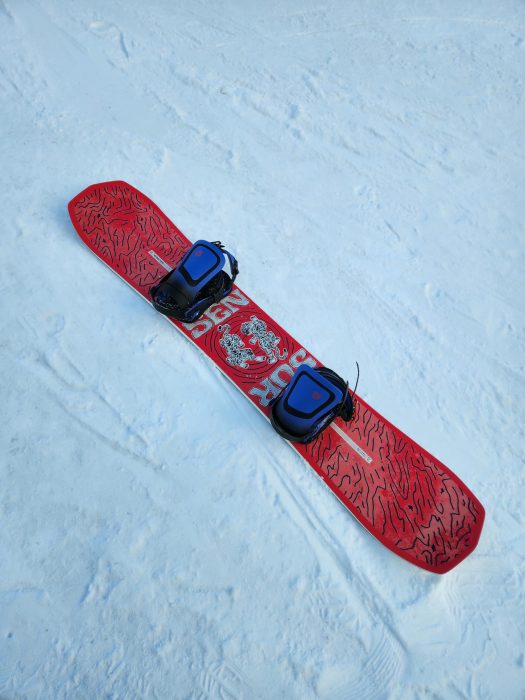
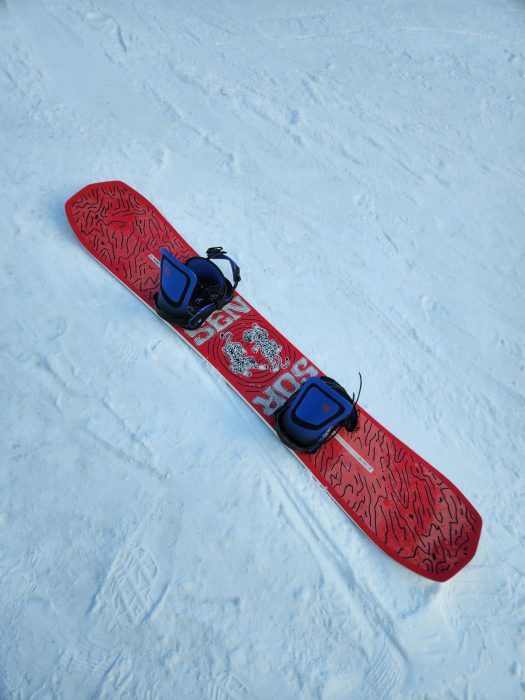
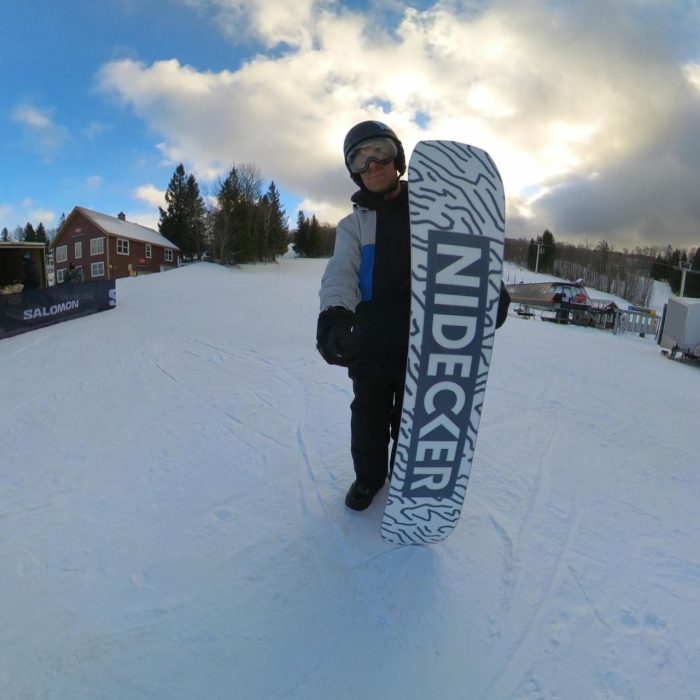
Board Reviewed: 156 Nidecker Sensor 2026
Price of Board: $479.95
How the Price Compares to Others:
The Nidecker Sensor costs $11.94 more than the average snowboard price of $468.01.
Our Rating Score: 4.23 out of 5
How the Nidecker Sensor Ranks Against Others:
Ranks 30th out of the 36 boards reviewed in the park category.
| Year Reviewed | 2026 |
| Category | Park / Jib |
| Shape | True Twin |
| Flex | 4/10 Feels Equally Pressable All Around (From nose to tail & toe to heel) |
| Core | Master Core (Poplar & Paulownia) |
| Base | N-5000 (Specially formulated extruded base – Not the fastest nor the slowest) |
Summary of What I Thought of the Nidecker Sensor
The Nidecker Sensor is a solid jib board with an extra boost of pop. Its real highlight is in the park, though. It offers one of the most forgiving jibbing experiences due to the Sidekick spoon shape. There were times when I should have caught an edge and gone flying, but I was able to power through and ride away clean.
But it all comes at a tradeoff that anyone riding on the East Coast should know: this board doesn’t track well on ice. When conditions get icy, as they do here on the East Coast, this board will slip out of its turns. The contouring’s edge hold works well when there is some form of hardpack or soft snow for it to bite into. On ice, it kept falling out of its turns, so keep that in mind.
This deck is for the jibber who is looking to lap the tow rope park and trying to get those tall-looking presses, but who also wants an extra boost of pop off small to medium-sized jumps, too. This deck works well on groomers, hardpack, and softer snow. It’s not the best on ice or in powder. Just know that it has its limits based on the conditions, and you’ll be fine.
Pros
- Jib Machine: Sidekick (spoon-shaped nose and tail) technology makes it nearly impossible to catch an edge on jib features.
- Extra Boost of Pop: Carbon fiber positioned between the inserts and tips provides a noticeable 10% boost in snap.
- Dampness / Shock Absorption: The Absorbnid topsheet works well to absorb the chatter while riding and some of the initial shock when landing on rails.
- Overall Value / It is Cheap: For only $479, you get a lot of board tech to help you jib and jump.
- Forgiving & Easy to Learn On: This is a good first camber board thanks to its countoured tips. If you’re coming from a rocker or flat board, this will be a good first camber deck.
Cons
- Grip to Ice: Lacks the extra bite of grip when things get slick out. The 3D contouring doesn’t track well in brick-like conditions.
- Learning Curve to Sidekick Tech: While it is a very simple and intuitive board to ride, it does have a small learning curve to master the nuances of the sidekick.
Detailed Performance Review
Pop / Jumping
Score: 8.5/10
Nidecker added carbon fiber between the inserts and the nose/tail, and you can feel it. It gives the board an extra 10% boost of pop over a standard camber park board.
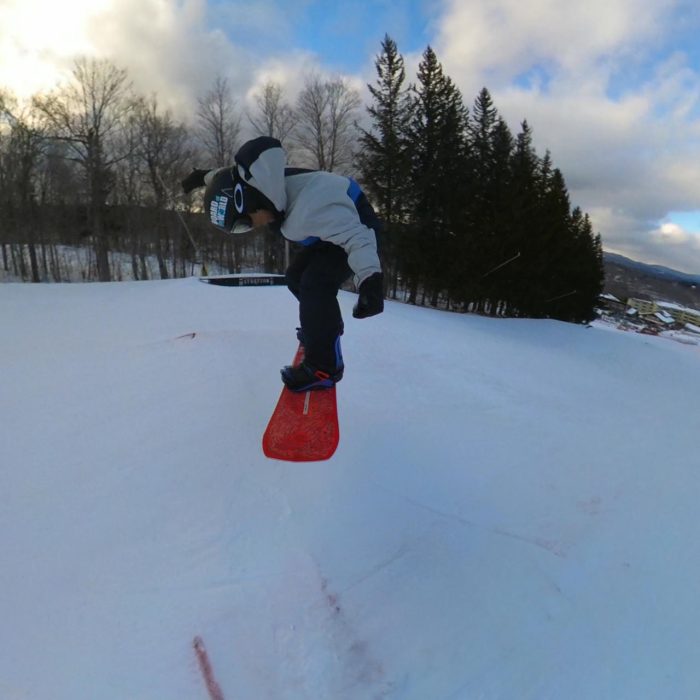
It is worth noting that learning to pop with this deck isn’t the most intuitive. With the tail being spoon-shaped, you will have to practice loading it up just right to blast off the center of the tail. If you pop slightly off-center, you won’t get the maximum boost snap. Once I got the hang of the loading points, I was blasting proper offside hits and medium jumps.
Jibs
Score: 10/10
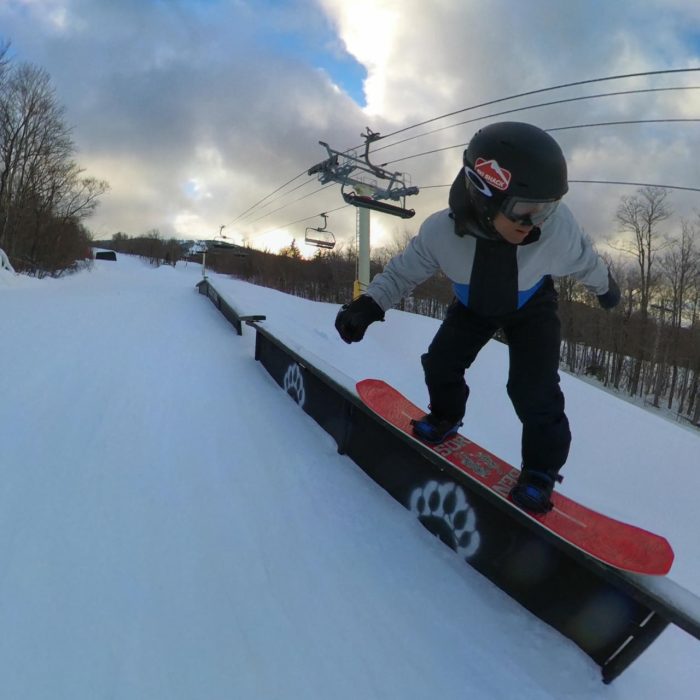
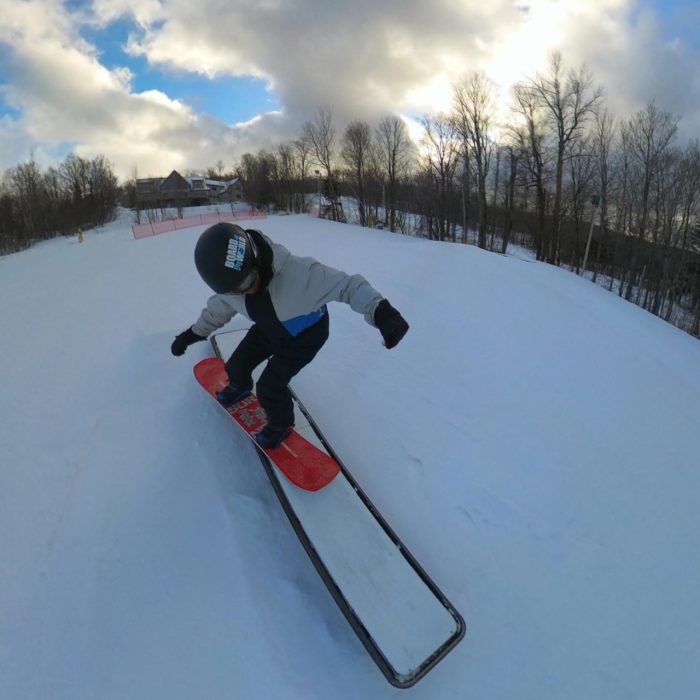
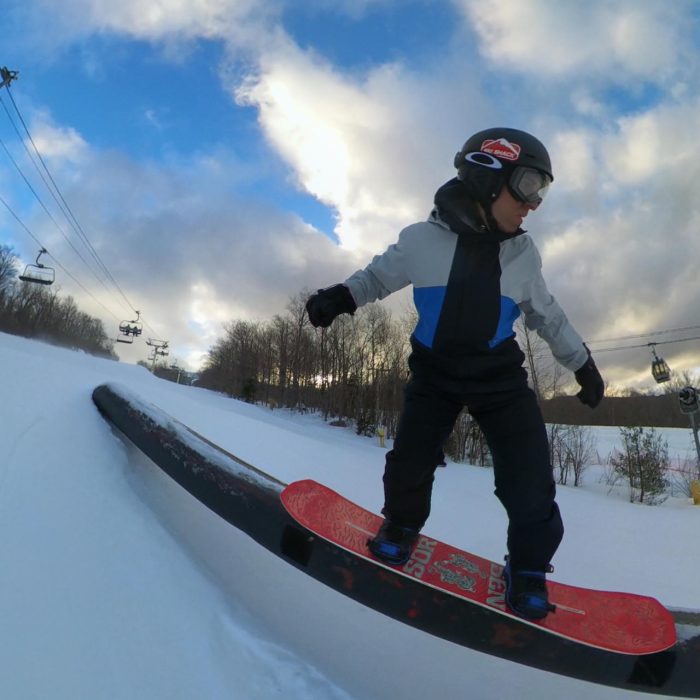
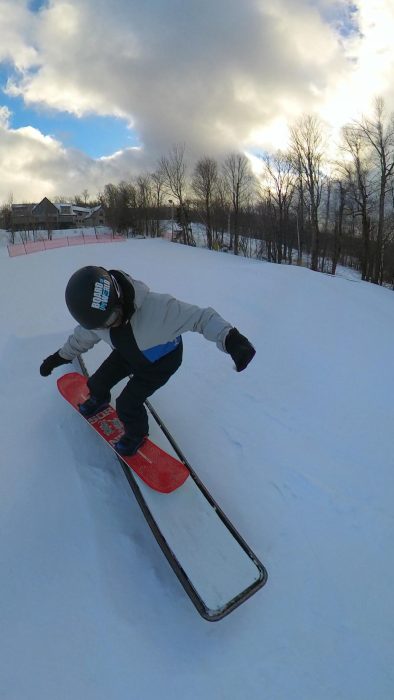
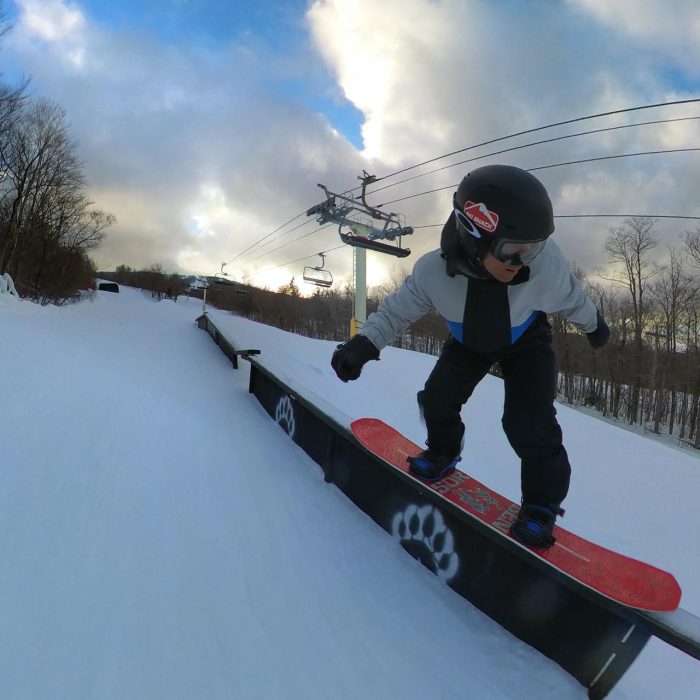
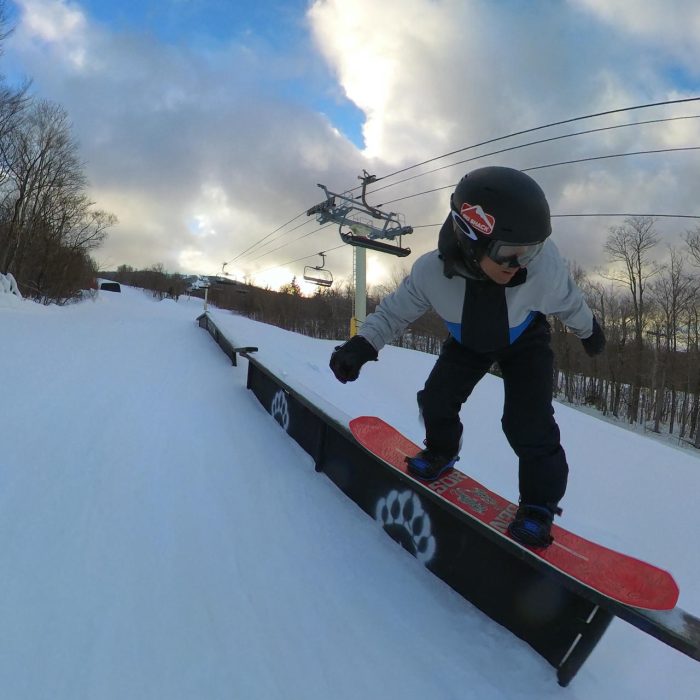
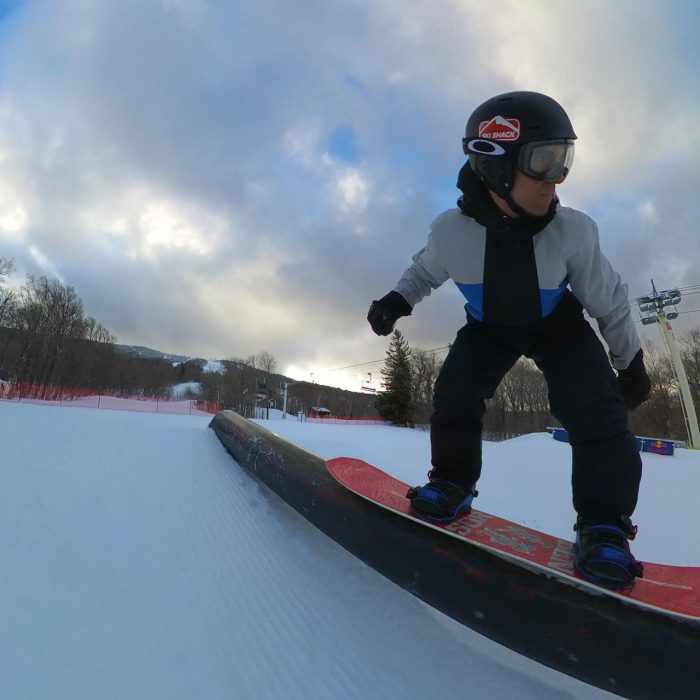
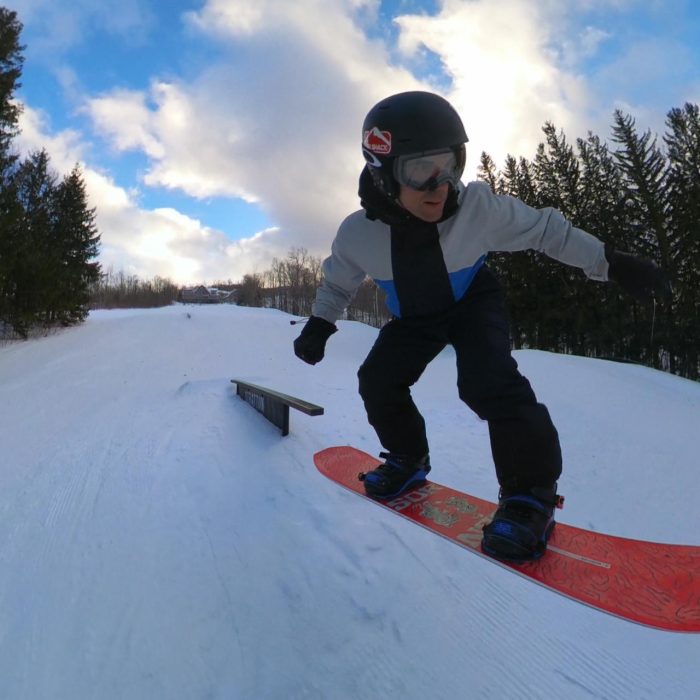
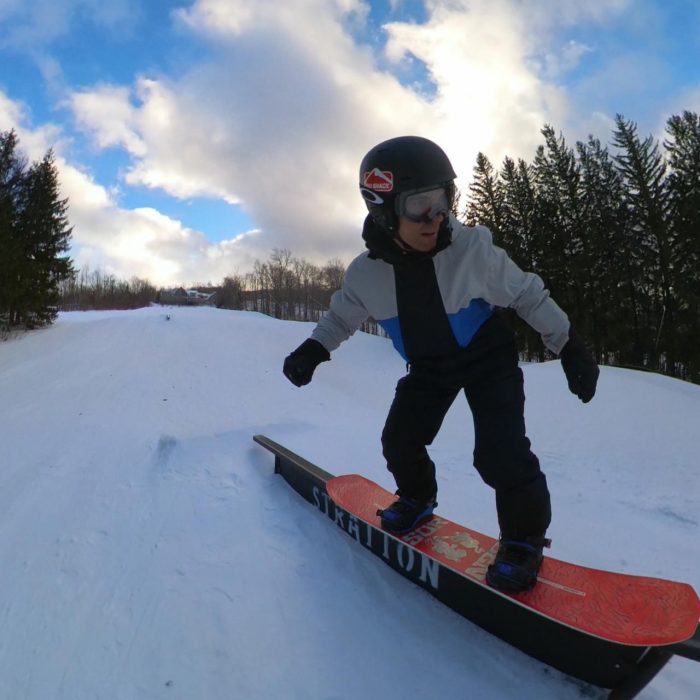
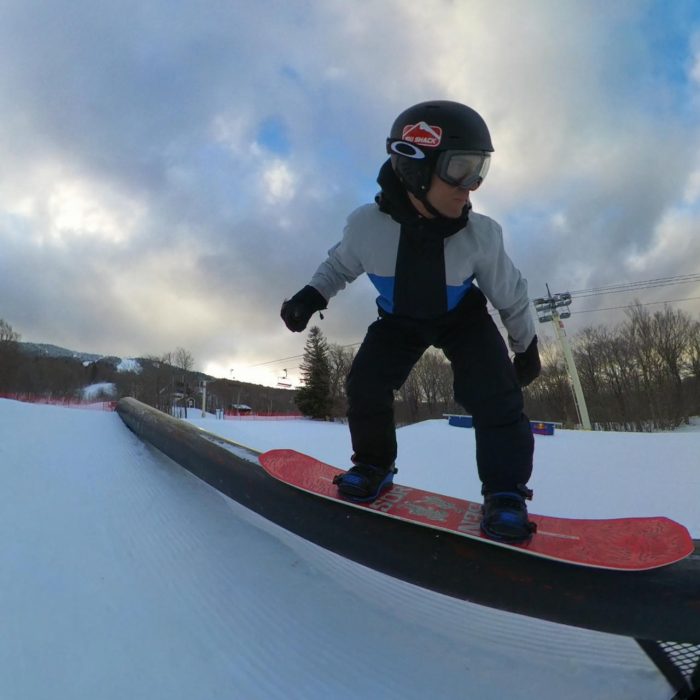
Jibbing is the real highlight of the Nidecker Sensor. The countered tips paired with the softer flex (4/10 flex) made this board incredibly easy to jib with.
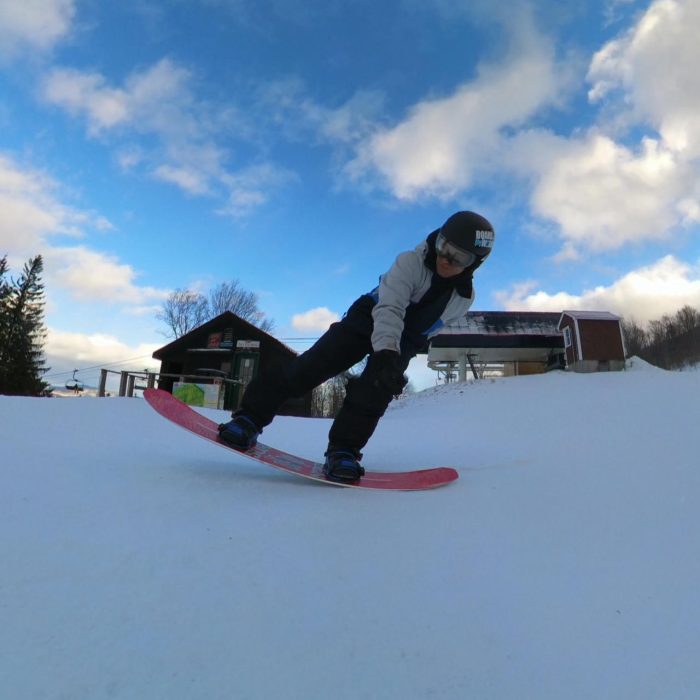
The Sidekick’s lifted contact points prevent you from catching your edges, while the softer flex lets the board mold around the shape of the feature to help you balance. Overall, I’d say the jibbing experience feels extremely similar to the Bataleon Disaster, so whichever board you like the graphics of more, I’d say go with it.
Buttering
Score: 9/10
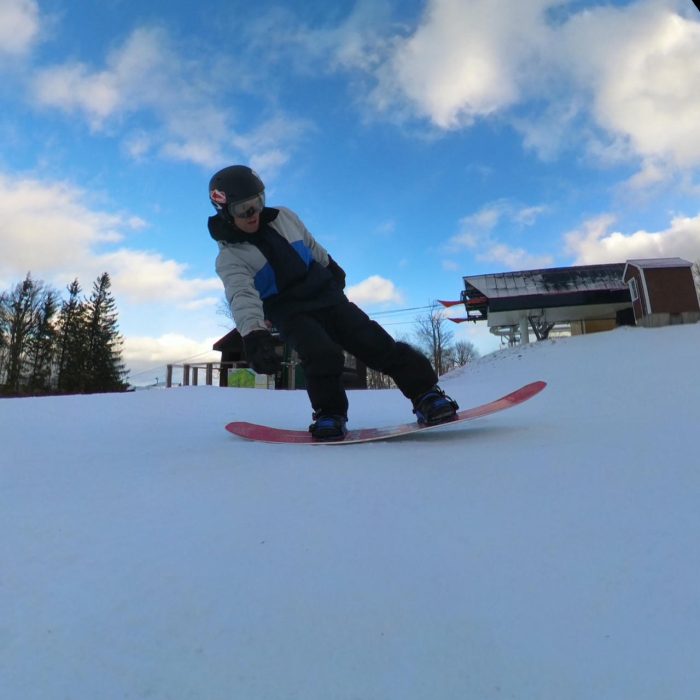
With a 4/10 flex and those contoured tips, this board is buttering perfection. It’s easily pressable, and its contact points stay out of the way (as long as you keep your weight uphill), so you can pivot your butters around.
Carving / Resort Riding
Score: 7.5/10
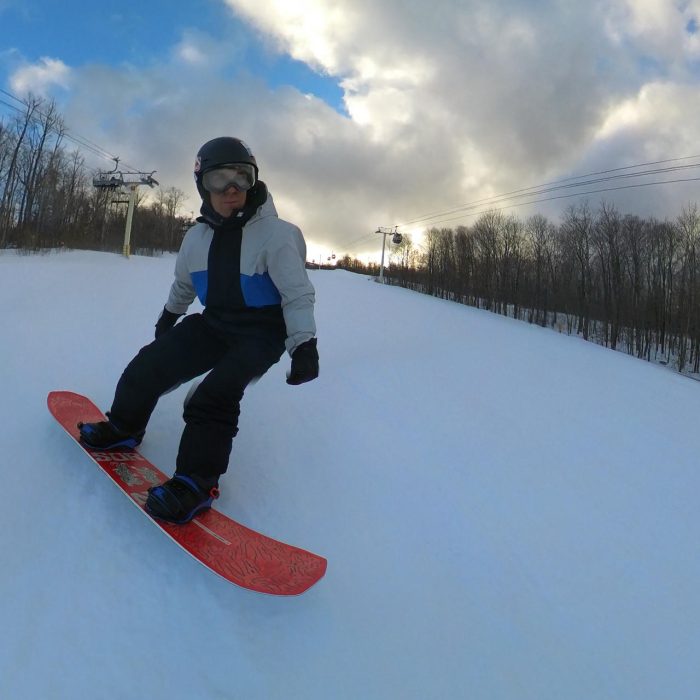
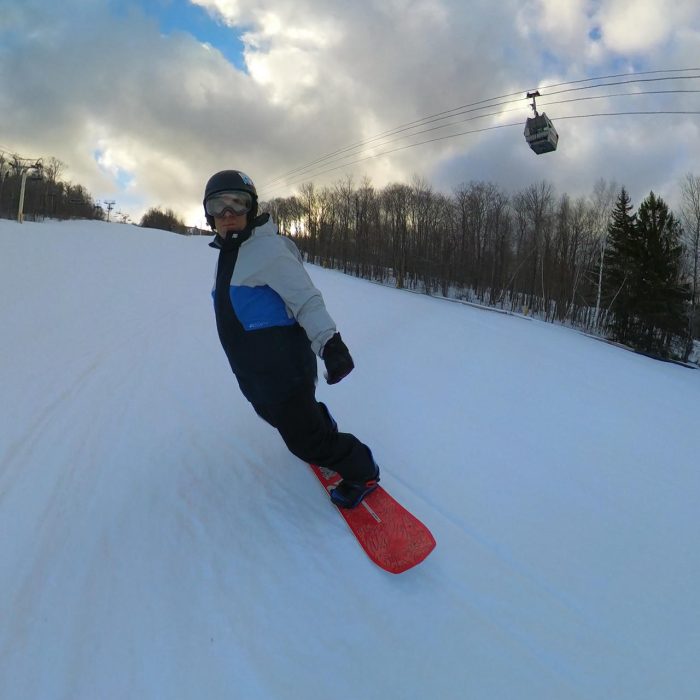
Carving-wise, this board is pretty average. Other than its very quick turning initiation, it doesn’t have any additional characteristics that will wow you with its overall carving experience. It’s a cruisy board with an exaggerated contoured shape in its tips to keep it catch-free.
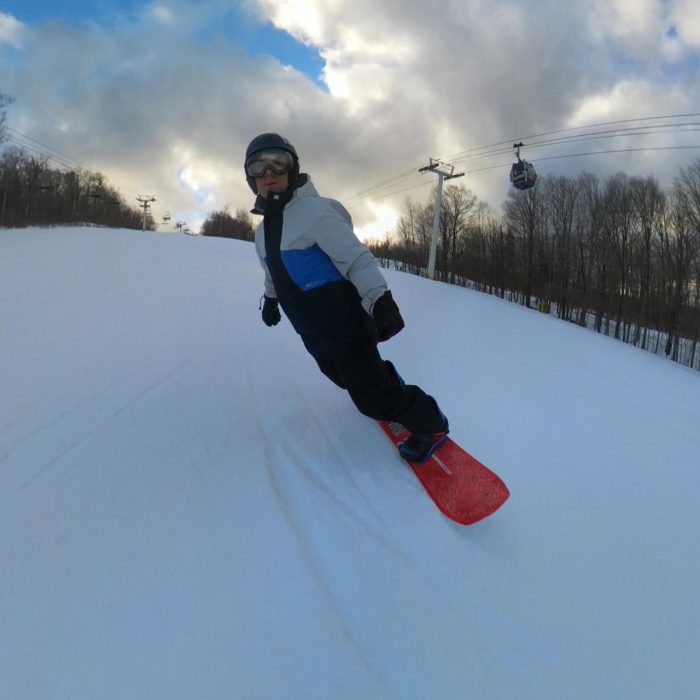
It’s intuitive and simple to ride. There just isn’t a lot of power or response in its turns. It’s more lively and skate like than precise. So it’ll be a great first camber board for someone just learning, but it isn’t going to be a stable all-mountain carver you can charge with.
Just keep that in mind, this board is better for the casual carver and someone looking to jib every feature in sight. It’s built for that and not for digging trenches like turns outside of the park.
Edge Hold on Ice & Poor Conditions
Score: 5.5/10
Riding the ice was the sketchiest part of this board, so please make note of this.
The Nidecker Sensor is so lively and catch free that it started to slip out of turns, the icier the conditions got. It just felt overly loose on ice.
So is this board too loose to ride on ice? Yes, I’d say so. Its level of edge hold grip on ice just isn’t there.
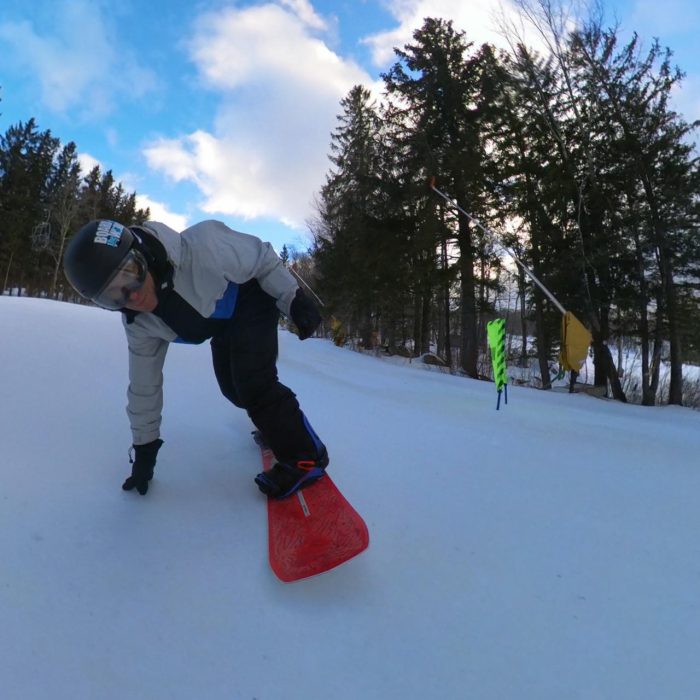
So if your conditions are often icy, this likely won’t be a board you’ll ride often.
Think of this as being more the board for winning rail jams and locking into really tall presses, and not as an all mountain freestyle deck that’s ready for all types of conditions. It just isn’t so stable on ice.
With that being said, if you’ll be riding on ice often, check out the Sensor Team board. It is around two points stiffer and has a flat base that grips to ice better.
Speed
Score: 7/10
The Speed of the base in the Nidecker Sensor was pretty average. I’d say it is more than fast enough for a park board. It’s built on the N-5000 base, which is a specially formulated extruded base that’s meant to be low maintenance while being faster and more durable than the standard extruded base. It won’t win any races, but it’s more than fast enough for what a jibber needs and for keeping up with your friends.
Dampness
Score: 7/10
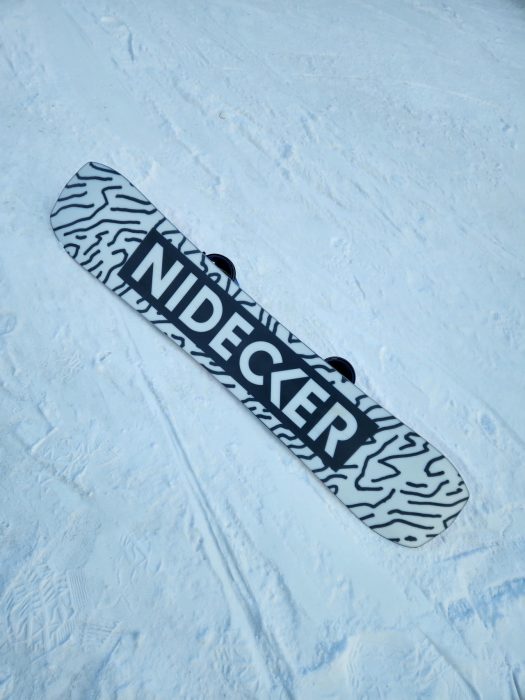
For a soft park board, this deck is noticeably damp. It’s got a rubbery top sheet that works well for dissipating the chatter you’ll feel as you ride. It also absorbs the shock from jump landings and the initial shock felt when you first hit a rail feature to help you balance. One added bonus is that topsheet itself is pretty grippy, so if you like to do one footed tricks, this would be a great deck for it.
Park Score Scoring Table
| Considerations | Score Out of 100 | Weight (Importance) |
|---|---|---|
| Resort Riding / Versatility | 80 | 5 |
| Pop / Power | 85 | 10 |
| Powder | 70 | 3 |
| Carving / Turns | 75 | 5 |
| Responsiveness | 75 | 5 |
| Speed | 75 | 10 |
| Ice / Poor Conditions | 55 | 5 |
| Switch | 100 | 10 |
| Jibs | 100 | 15 |
| Jumps | 85 | 15 |
| Dampness | 70 | 5 |
| Buttering | 90 | 10 |
| Fun to ride | 100 | 2 |
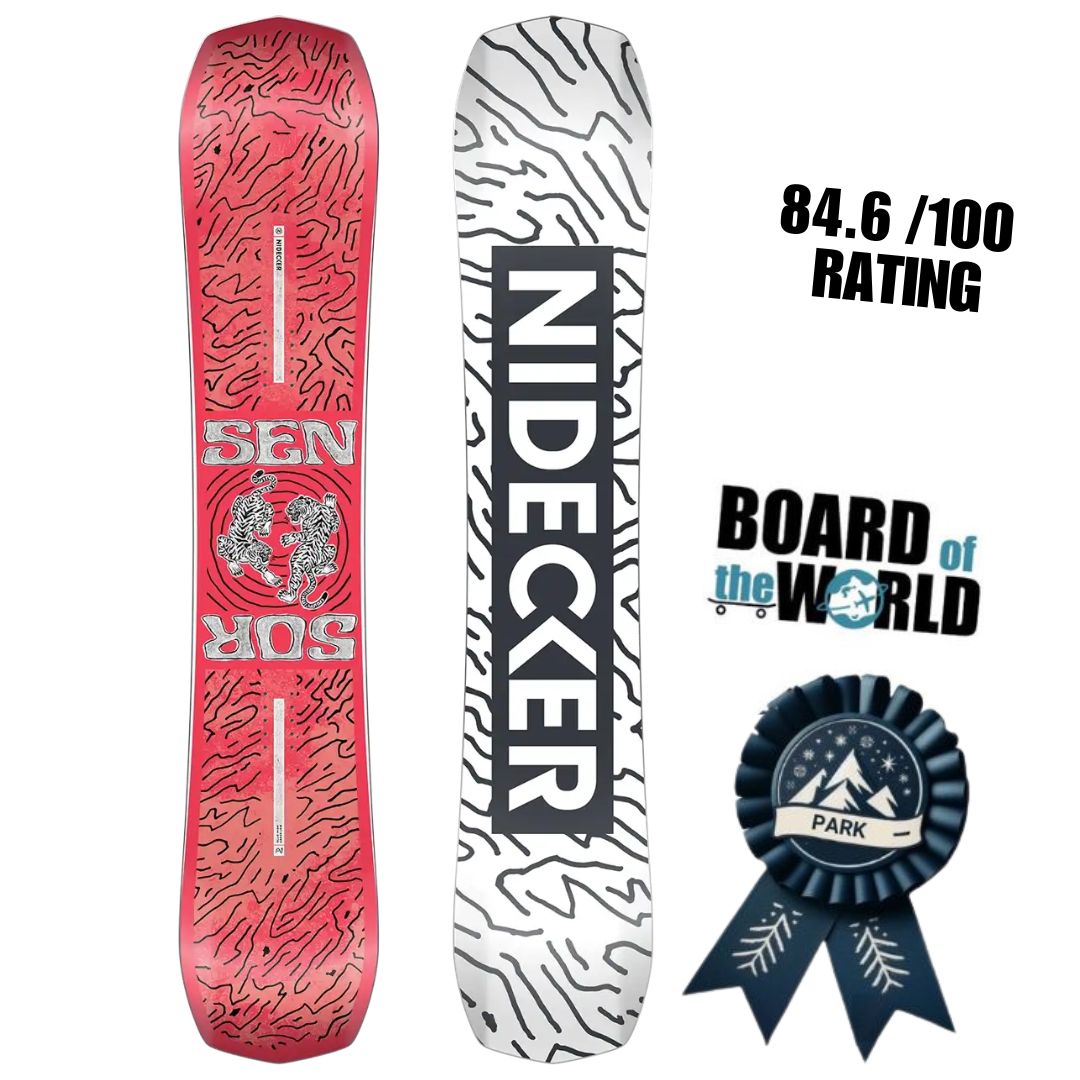
| Weighted Park Score | 84.6 | 100 |
Final Thoughts: Is the Nidecker Sensor Worth It?
The Nidecker Sensor earned an overall park rating score of 84.6 out of a possible 100. It’s one of the best soft flexing, jib boards I got to ride for the 2026 season. If you like to jib and hit small features, get this board immediately and have all of the fun. With that said, I wouldn’t recommend getting this one as your all-mountain daily driver. It’s just a bit too loose to carve with when conditions get icy.
Get the Nidecker Sensor if: You’re looking for a board to jib with / enter rail jams.
You’re a beginner interested in finding a camber board that’s more playful and catch-free to learn on.
Overall, the Nidecker Sensor is a cheat code for balancing your jibs with some extra tech to help it absorb the shock of your landings. I just wasn’t the most confident in its ability to hold an edge on ice.
https://alnk.to/hDtw6WgNidecker Sensor 2026
See Images from the Review
About the Reviewer
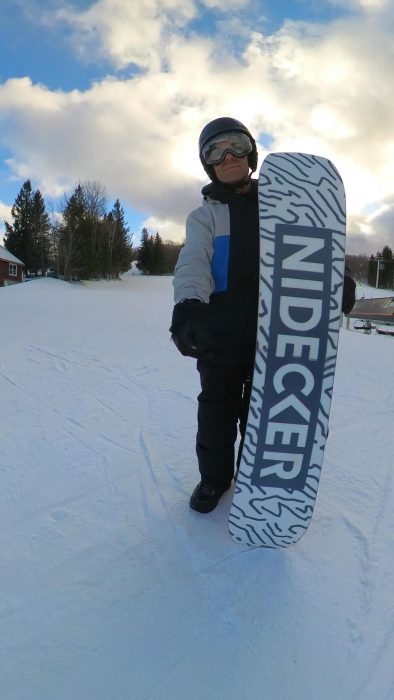
Rider Name: Steve Weber
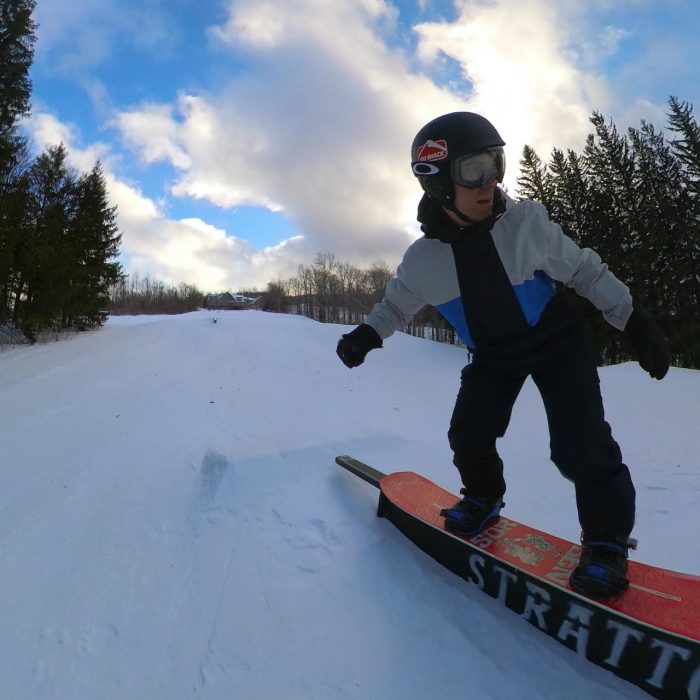
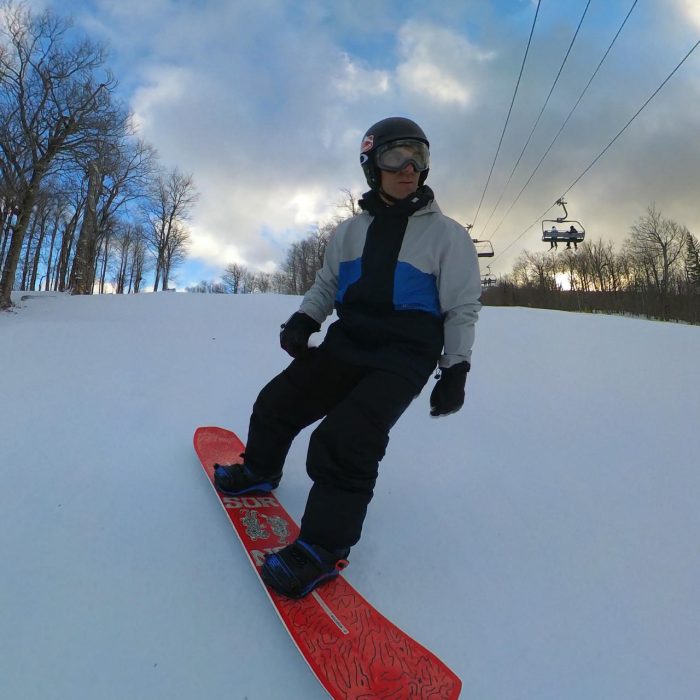
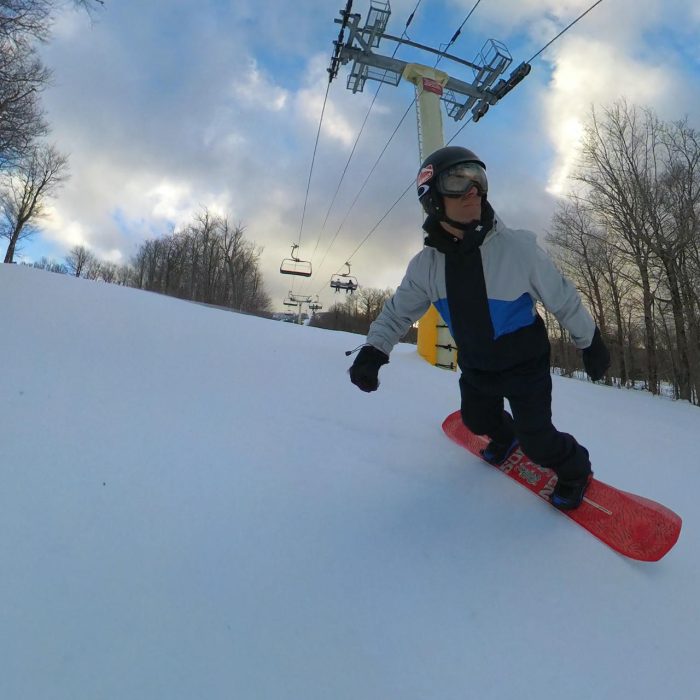
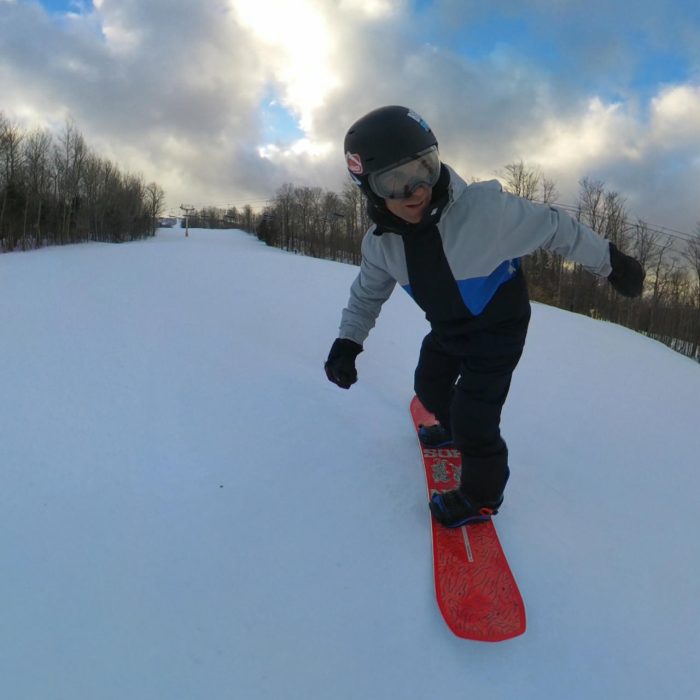
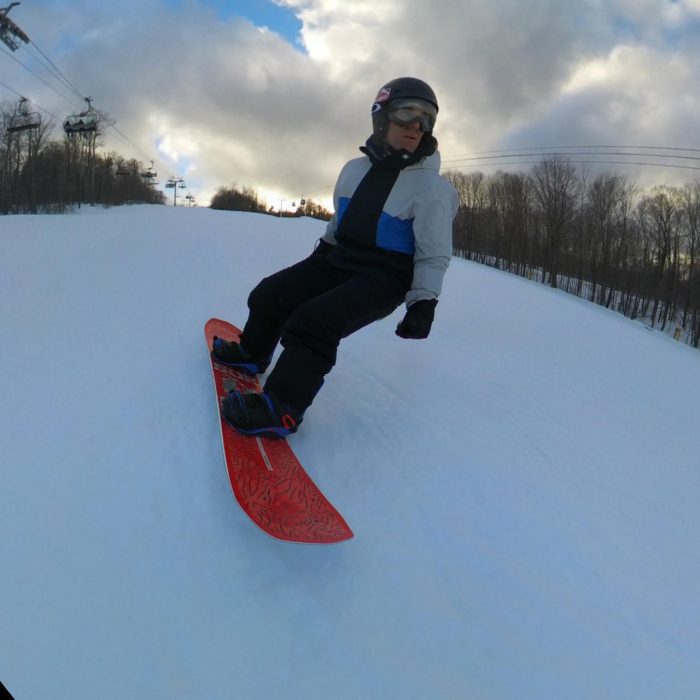
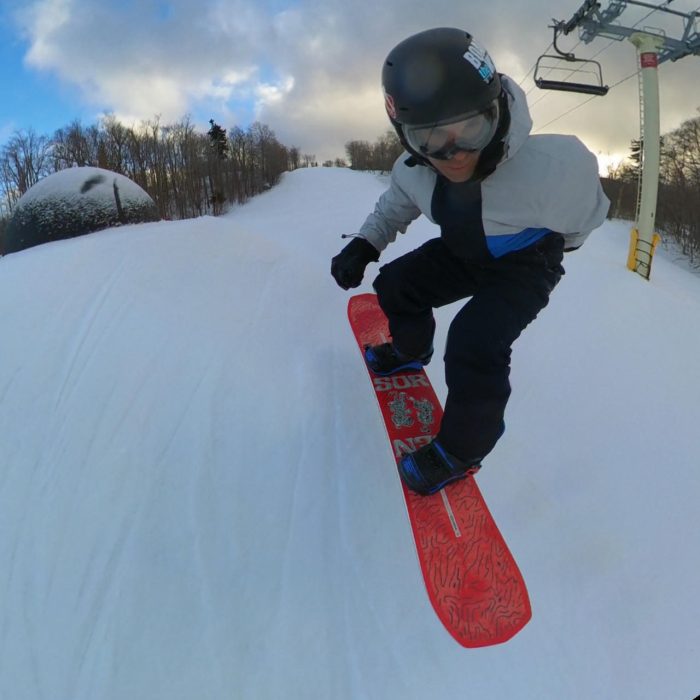
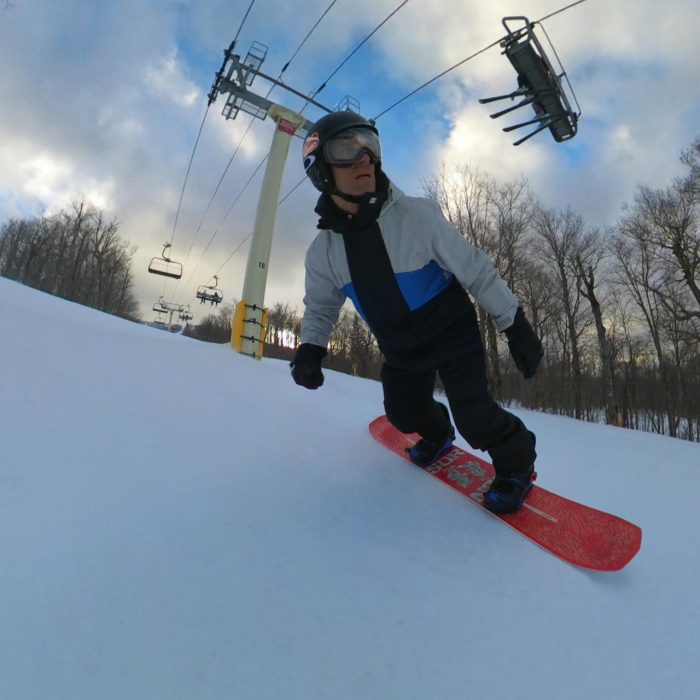
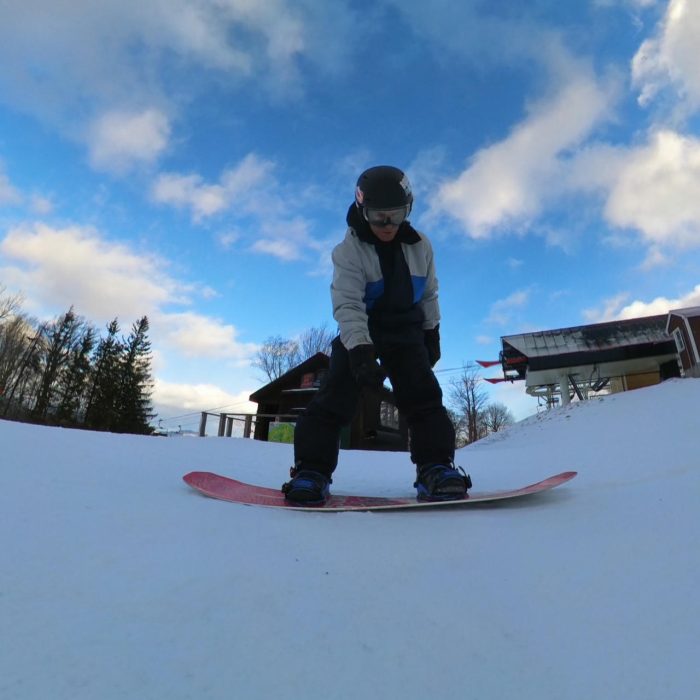
Field Test Notes: I rode the 156 2026 Nidecker Sensor for 2 days during the EWSRA 2026 tradeshow demo in Stratton, VT in February of 2025.
Rider Experience Level: Intermediate to Advanced – I’ve been riding for over 15 years. I prefer to hit small to medium park features over making the perfect turn.
Bindings Used: The Union Ultra Bindings
Rider Weight: 142lbs
Rider Age: 42
Why Trust This Review?
With over 15 years of park riding experience here on the icy East Coast, I know what it takes to have a safe and fun time out on the mountain. I’m an intermediate park rider who can relate to riders of all skill levels. I’ve been writing in-depth reviews just like this one for the past four years, and my main goal with this review is simply to help you find the right board.
I write these reviews as a “for the fun of it” project. They are as unbiased as I can be for someone who tends to ride in an area with icier conditions. You can support this project by making a purchase through any of the links in the post. They point to the lowest offer for the board, don’t cost you anything additional, and tell the retailer I sent you.
Thanks for reading! Please leave a comment below if you have any questions.

Steve Weber is the passionate snowboarder, skateboarder, and author behind Board of the World. He understands that most gear reviews focus on having the perfect snow conditions, but his testing methodology is different. Living in Pennsylvania, Steve describes exactly how a board performs when the conditions aren’t perfect. His reviews cover performance on ice, hardpack, and flat-out brick conditions. In other words, he reviews boards for the conditions that East Coast riders actually face.
Bringing 27 years of East Coast snowboarding and 21 years of skateboarding experience, Steve is a 42-year-old intermediate park rider. His recommendations are informed by decades of battling icy conditions, ensuring every review accounts for the board’s performance on the roughest of terrain.
For the last five years, Steve has poured his passion into writing in-depth, unbiased reviews that help riders make informed decisions about the gear they’ll use. He also works part-time at a snowboard shop in Northeastern Pennsylvania, which gives him a direct line to learning about the new gear tech months in advance. When he’s not writing reviews, Steve is often found riding at Montage Mountain and testing out new boards.
Steve’s goal with Board of the World is simple: to help every reader find the right gear so they can have fun outside from the first time they use it.