
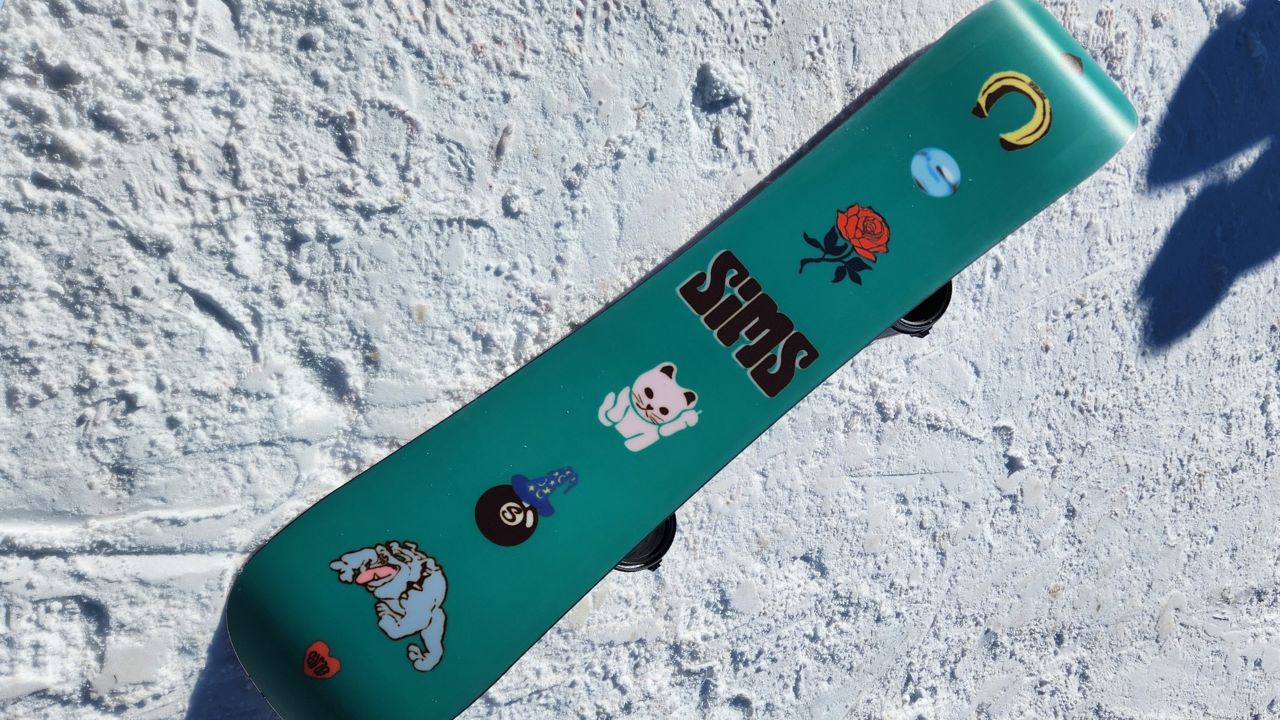

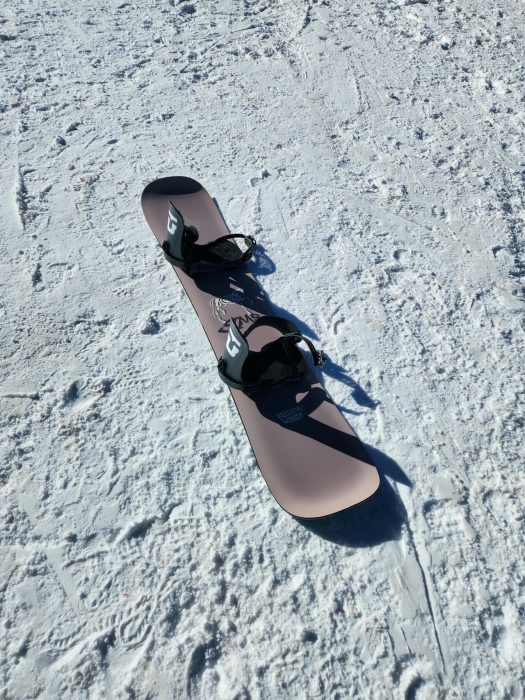
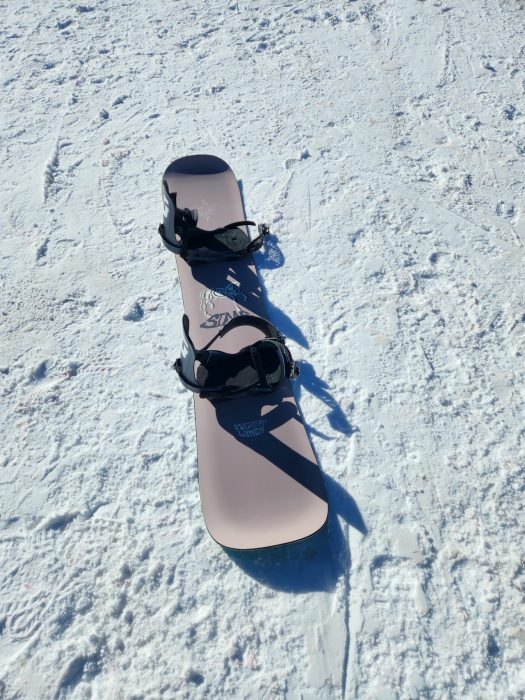
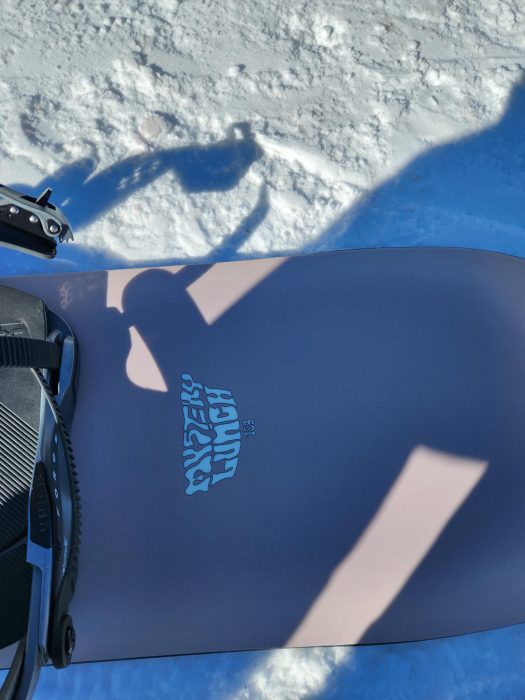
The Sims Mystery Lunch is a park board with a wide, stable feel and a playful 4 out of 10 flex. This board features a camber profile between the feet, triax glass, a high density sintered base, and a 50mm carbon I-beam that runs the full length of the deck from tip to tail for an extra 10% boost of pop off jumps.
The Mystery Lunch is also meant to be downsized by 3cm from your usual length. This is due to its twin volume-shifted design. That just means that its shape is shorter and wider than a standard twin tip freestyle deck. So, you get the stability of a wider platform to balance on, but it is more agile than normal due to the nose and tail not being as long as they would be in your usual size.
Sims Mystery Lunch Highlights
Overall, the extra width made the Mystery Lunch such a fun and easy board to jib with. The added stability helped me relearn back blunt sameway 270s again. The softer flex and wider profile just made jibbing feel easier, and there is a lot of board tech wrapped into this one for only $470. (and the PRO Tip is you can even find last season’s for around $300).
It’s a pretty stellar deal for the park rider.
Board Reviewed: 153 Sims Mystery Lunch 2025
Price of Board: $339.00
How the Price Compares to Others:
The Sims Mystery Lunch costs -$129.01 less than the average snowboard price of $468.01.
Our Rating Score: 4.27 out of 5
How the Sims Mystery Lunch Ranks Against Others:
Ranks 26th out of the 38 boards reviewed in the all mountain category.
Ranks 24th out of the 36 boards reviewed in the park category.
Pros of the Sims Mystery Lunch
- Great Price & Value: You get a Premium Race spec’d Sintered base, a Carbon “I-Beam,” and a Tri-Tex fiberglass layup for only $470 (and the average park deck is around $550 at the moment).
- Extra Stability for Jibbing: The “Lunch Tray” layout (flat sections outside the inserts) combined with a wider waist width makes this board a cheat code for going sideways on rails. My 153 had a 258mm waist, and for comparison, my Capita DOA 154 is only 250mm (so the sims is an extra 0.31 of an inch wider)
- Extra 10% Boost of Pop: The Carbon I-Beam (a 50mm carbon stringer) offers an additional 10% boost off jumps and the end of features without stiffening the board too much. This board is still torsionally soft and maneuverable.
- Incredibly Smooth & Locked-in Turning Experience: The Mystery Lunch’s wider shape is designed to give you leverage, stability, and response in your turns. Even though it’s a wider board, with a deeper sidecut, its shape allows it to stay locked in to its turns. You get a ton of edgehold and stability without having to fight the board to stay on track.
- Forgiving Early Rise Camber Profile: This has a 90s inspired outline with early rise short tips (I’d say a “nubby” like nose), these have exaggerated upward angles that offer a catch-free feel for jibbing. They give you an extra leverage point to get a taller looking press. And you can also use the exaggerated angle to bash (or slappy) into features.
Cons of the Sims Mystery Lunch
- It is Not The Most Beginner Friendly Deck: The combination of traditional camber and a wider shape will be more for the intermediate rider and up. It’s an easy riding board, just not the most beginner-friendly to learn on.
- Not Recommended for Powder: This is a groomer and park specialist. It isn’t so great in powder, though. The exaggerated upward angles of the nose and tail inadvertently catch snow and keep it there on your topsheet, which makes the board feel heavier to ride, so it’s best to ride this one on groomers or in the park.
Sims Mystery Lunch Review Rating
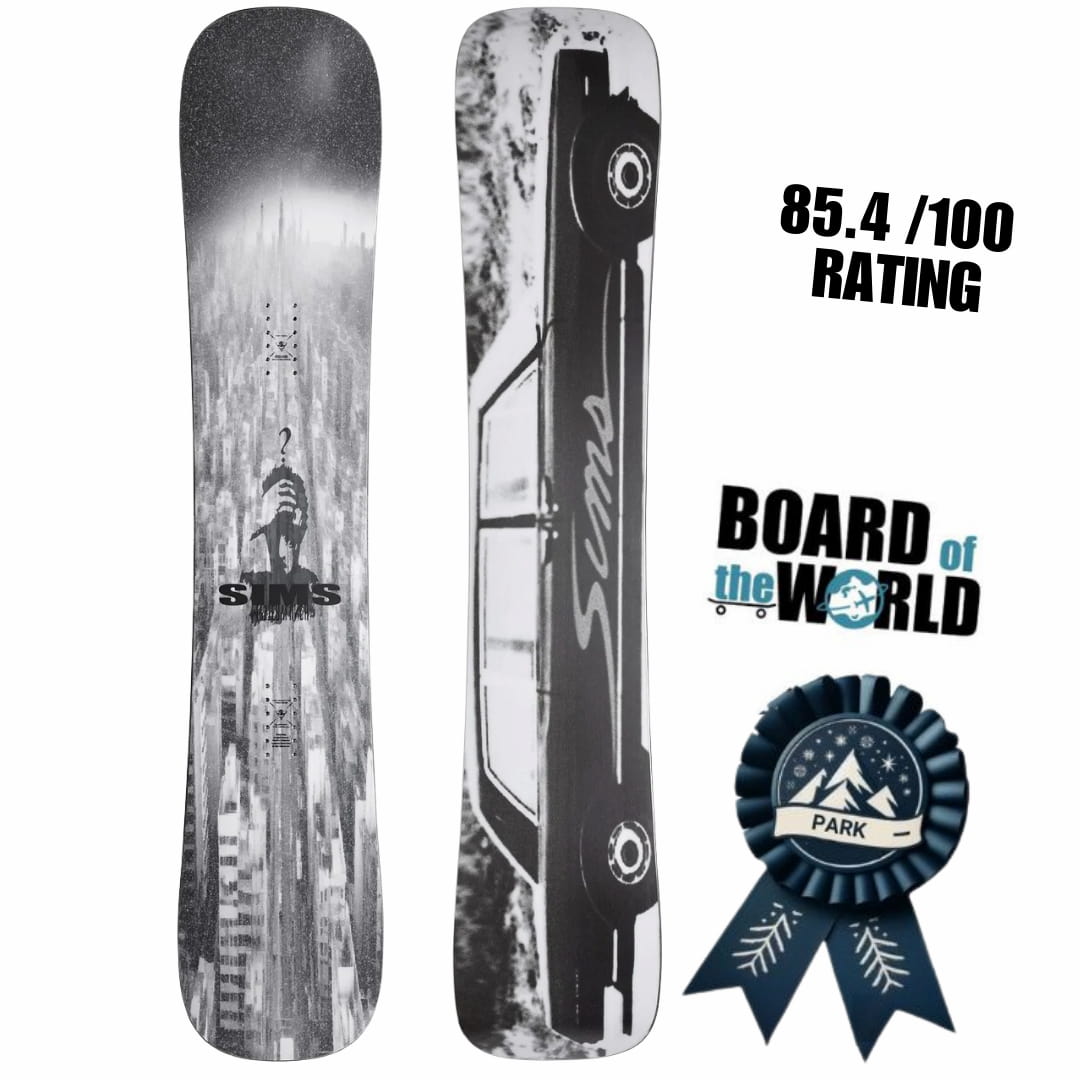
The Sims Mystery Lunch snowboard earned an 85.4 out of a possible 100 in our all mountain freestyle boards scale. This scale promotes jibbing and jumping along with carving performance, and the Mystery Lunch’s unique shape made it perfect for all of those categories.
| Considerations | Score Out of 100 | Weight / Importance to Score |
|---|---|---|
| Pop / Power | 85 | 10 |
| Carving / Turns | 87.5 | 10 |
| Speed | 80 | 10 |
| Ice / Poor Conditions | 75 | 10 |
| Switch | 100 | 10 |
| Jumps | 85 | 10 |
| Dampness | 80 | 10 |
| Fun to ride | 100 | 10 |
| Resort Riding / Versatility | 85 | 5 |
| Responsiveness | 80 | 5 |
| Jibs | 90 | 5 |
| Powder | 60 | 3 |
| Buttering | 80 | 2 |
| Weighted Score | 85.4 | 100 |
How the Sims Mystery Lunch Rides
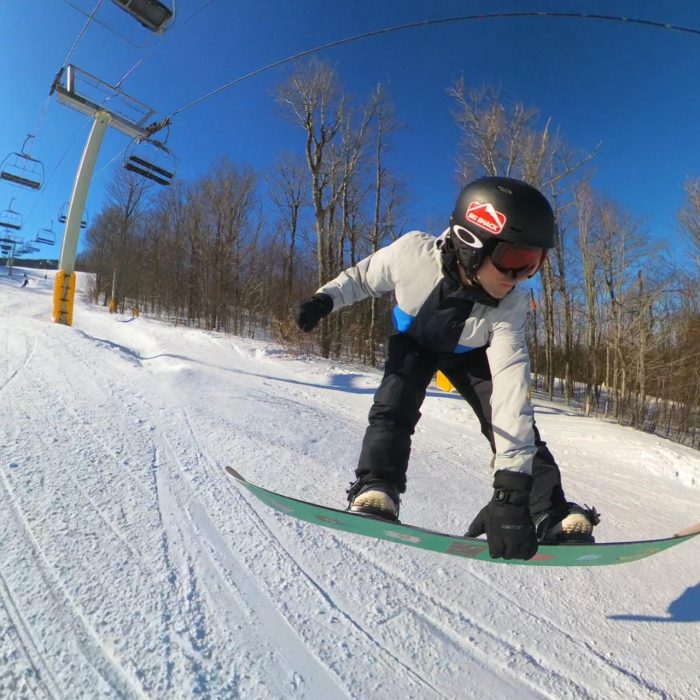
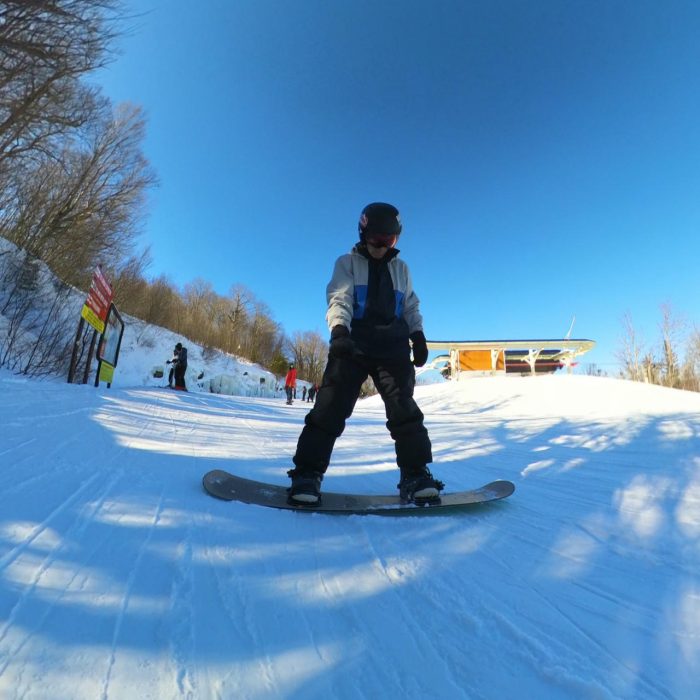
Overall, the Mystery Lunch feels intuitive to ride, stable, and responsive, all while still being pressable. Here is how it jibs, jumps, and carves.
Soft Flex Pattern
Flex this board is 4/10 from nose to tail and the same flex torsionally from toe to heel.
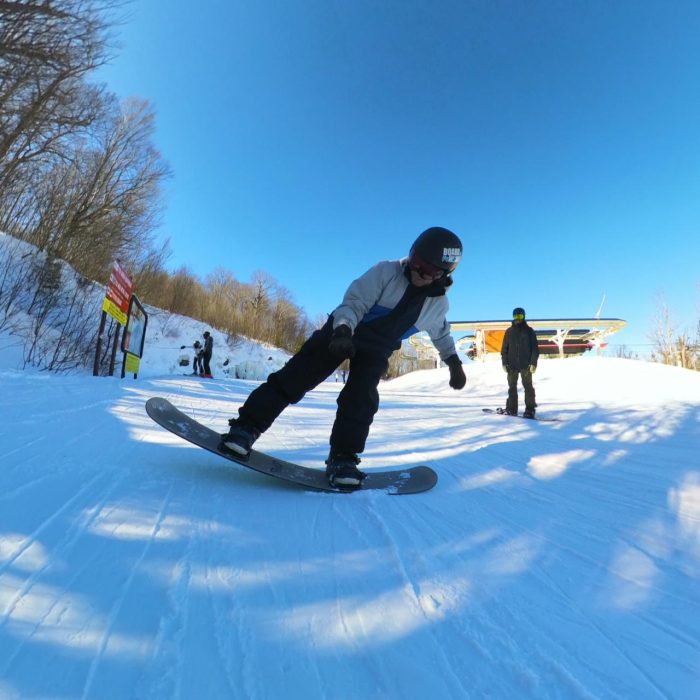
Jibbing
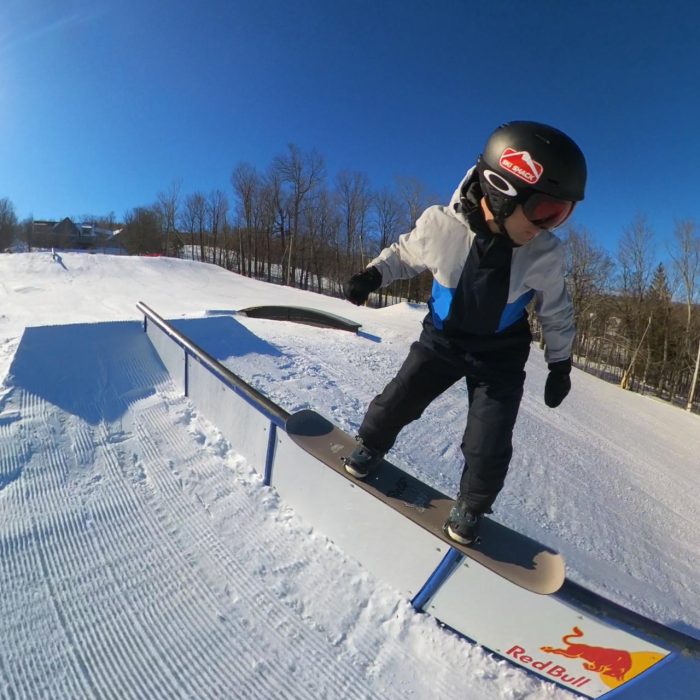
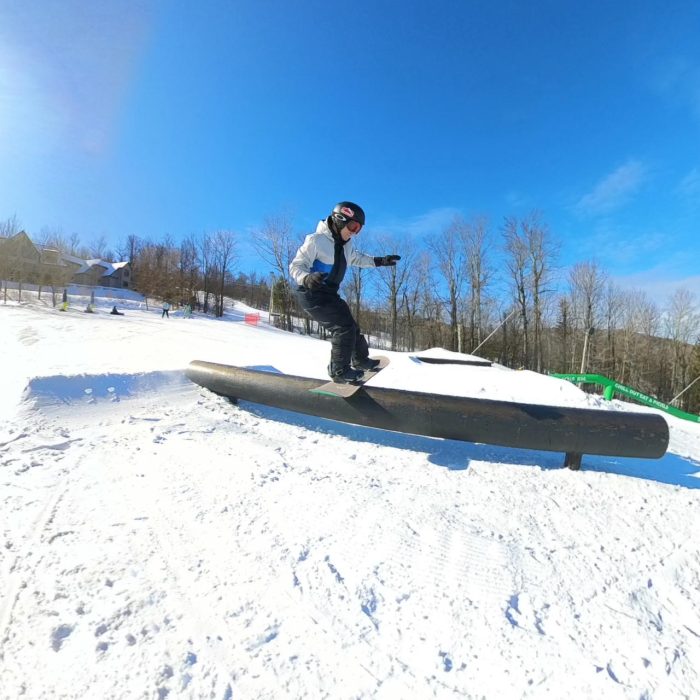
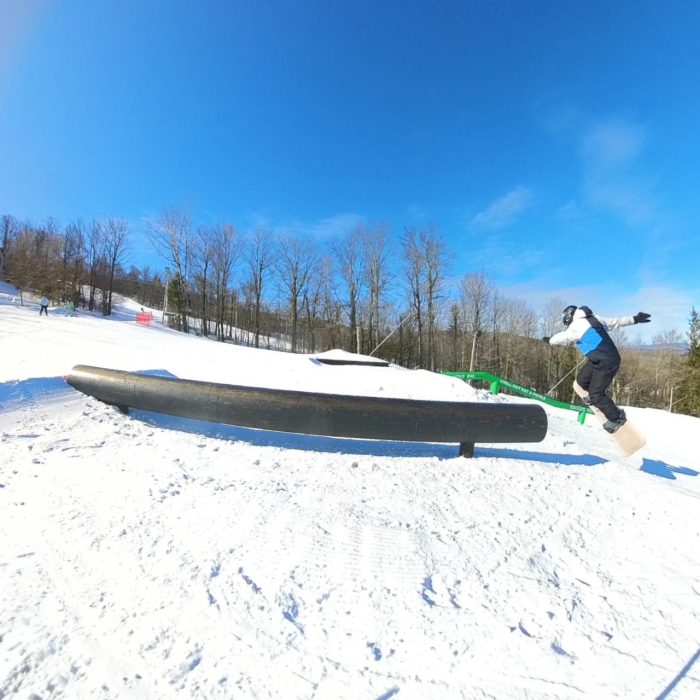
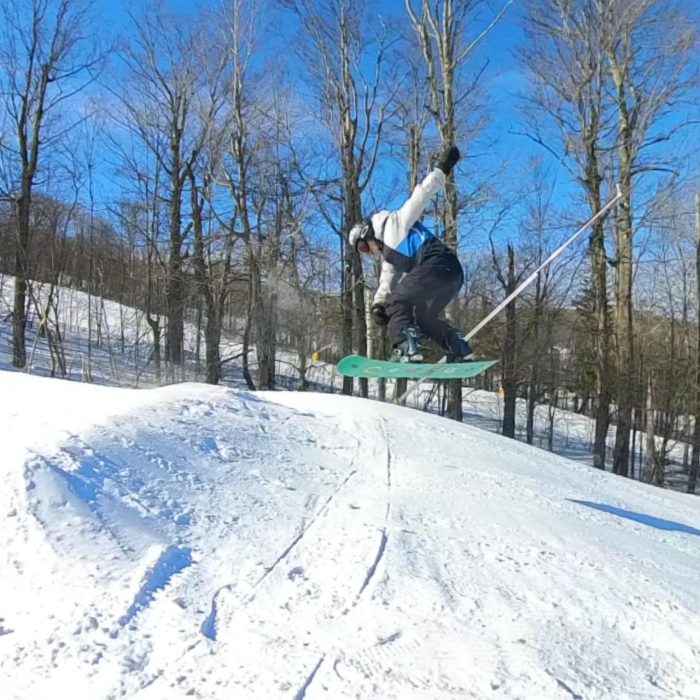
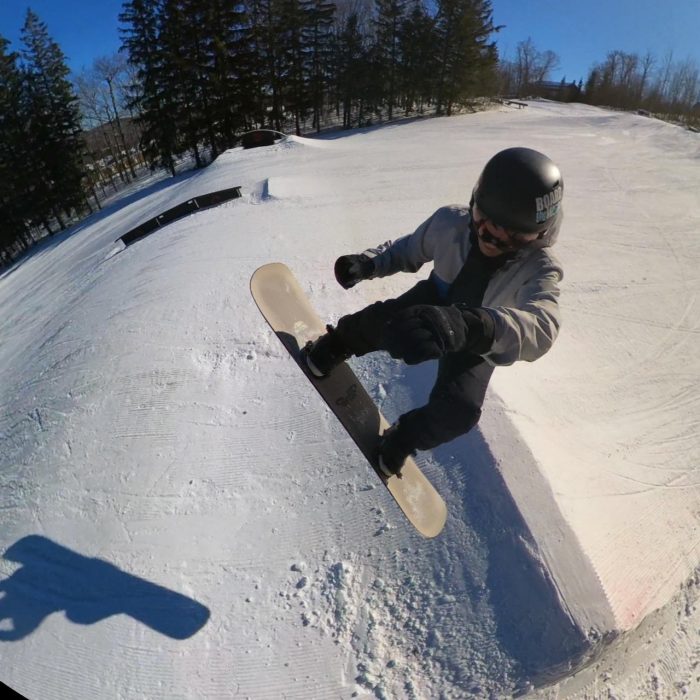
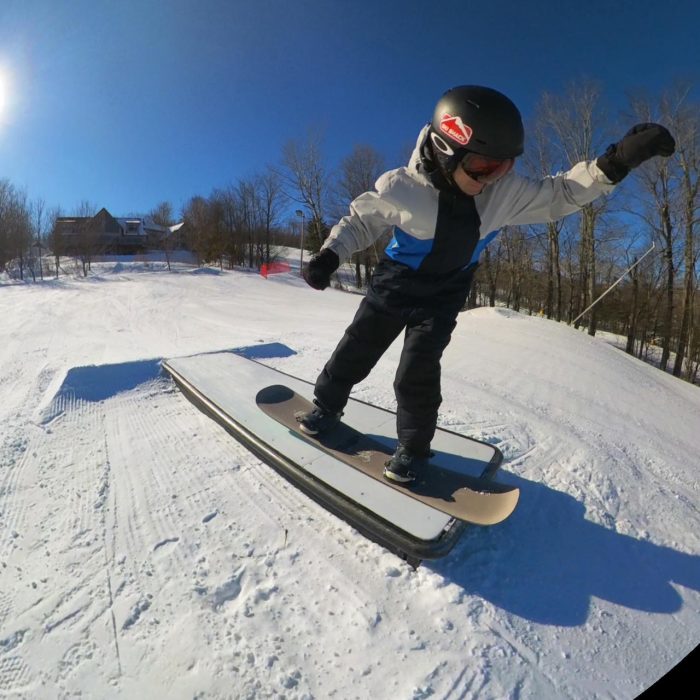
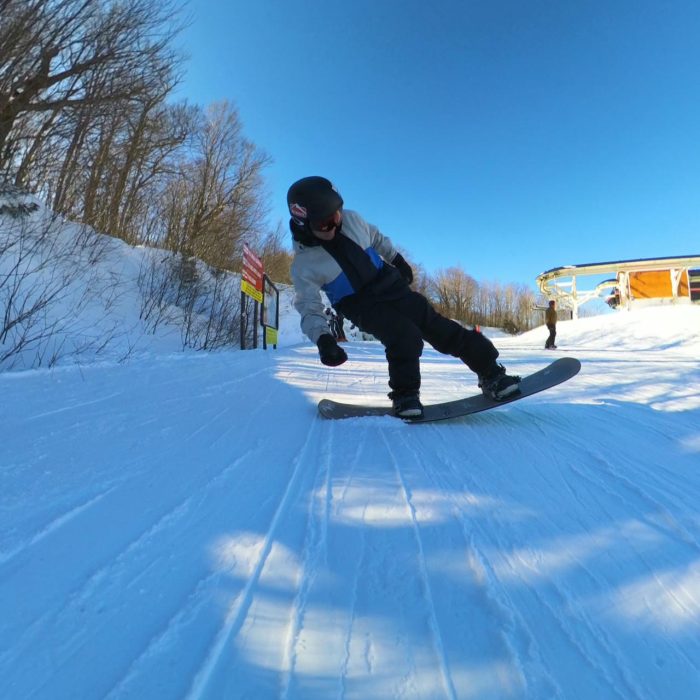
Jibbing is where the board truly excelled for me. The wider width mixed with the softer (4/10) flex made it feel so much easier to balance sideways on rail features.
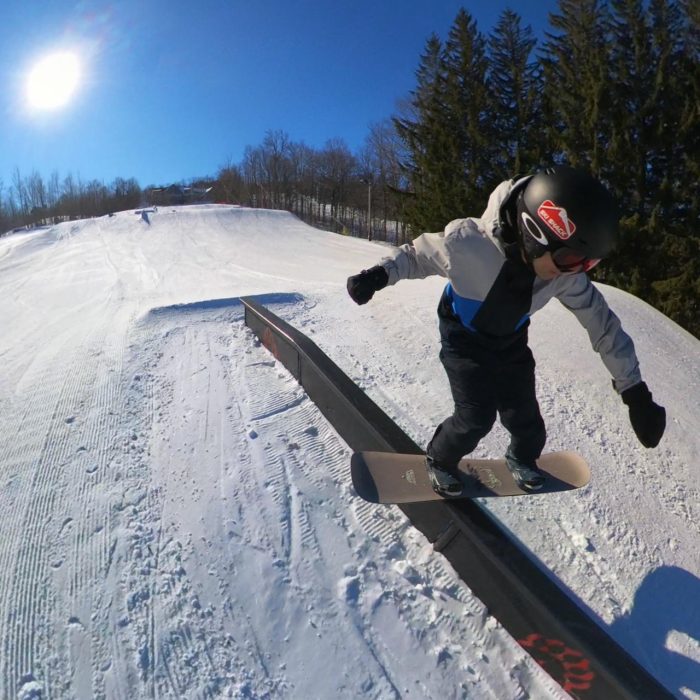
The highlight for jibbing is the unique nose and tail. These are raised with extremely exaggerated angles, so you can use them as an extra leverage point to get a really tall press. With the board itself being wider, I also found it a little easier to balance my presses.
The shape let’s bash into rail features (slappy into) rather than needing to pop on all of the time.
It’s just a really cool shape that lent itself to being a jib machine. Nothing about it made jibbing feel harder than it needed to be. It just was designed to help you stay on your feet.
Jumping
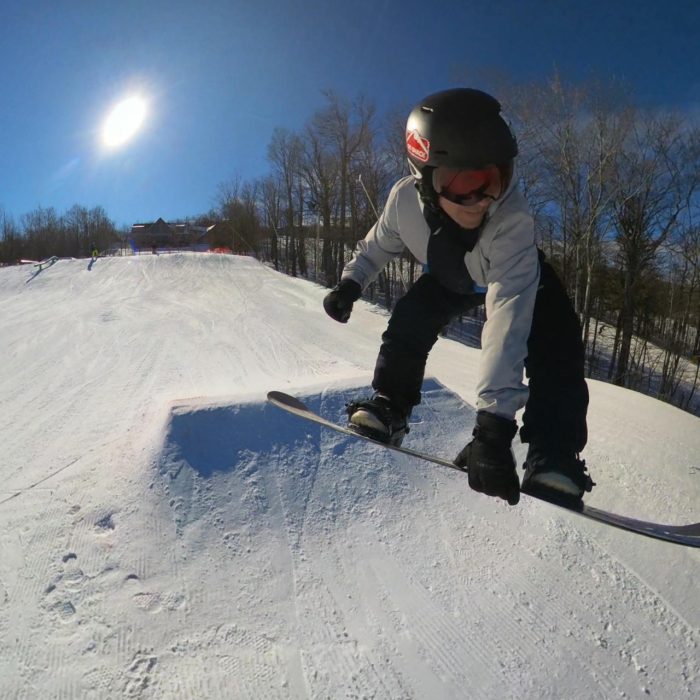
On jumps, the Mystery Lunch feels incredibly stable and noticeably poppy. Thanks to that extra width and the camber profile, you have a solid platform for takeoffs and landings. The Carbon I-Beam gives it an extra 10% boost of pop, which was helpful for clearing the knuckles without needing to put in a lot of effort.
Carving Experience
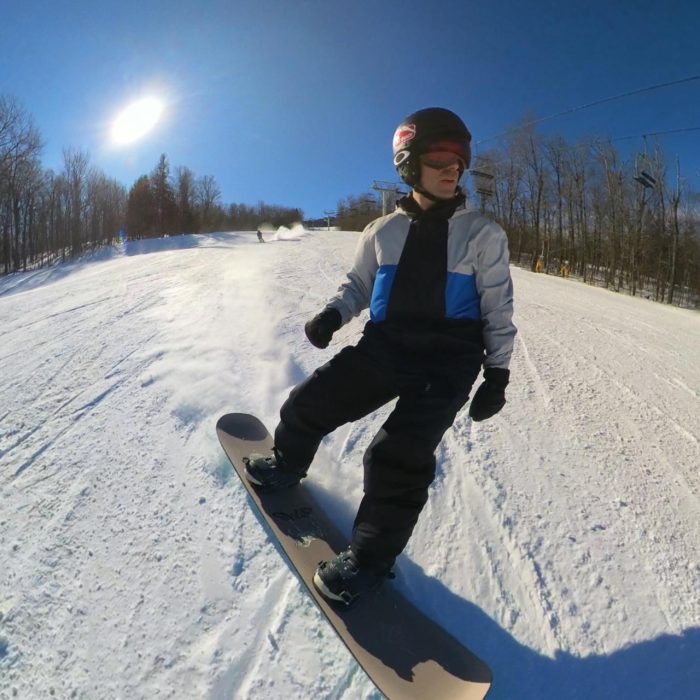
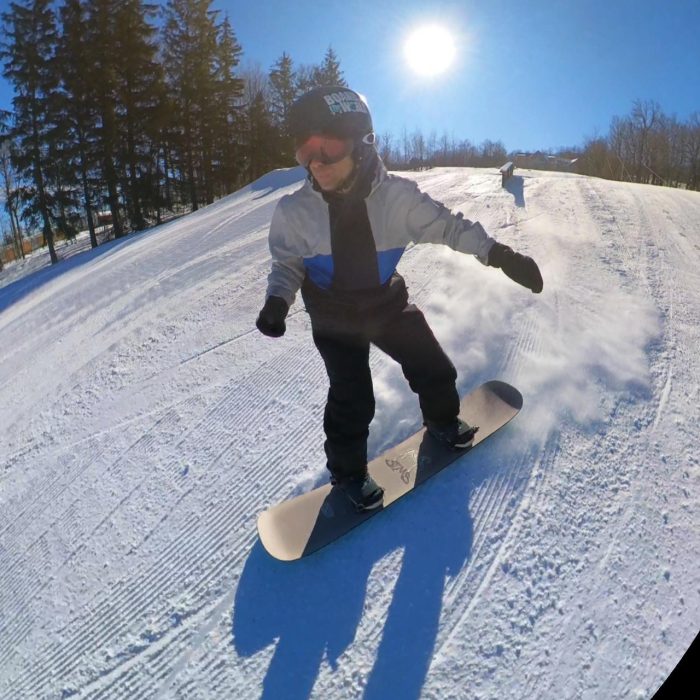
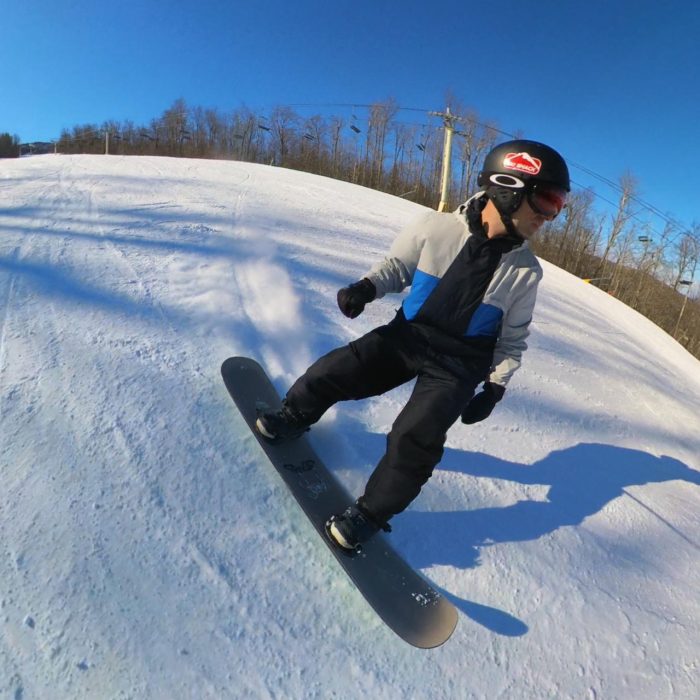
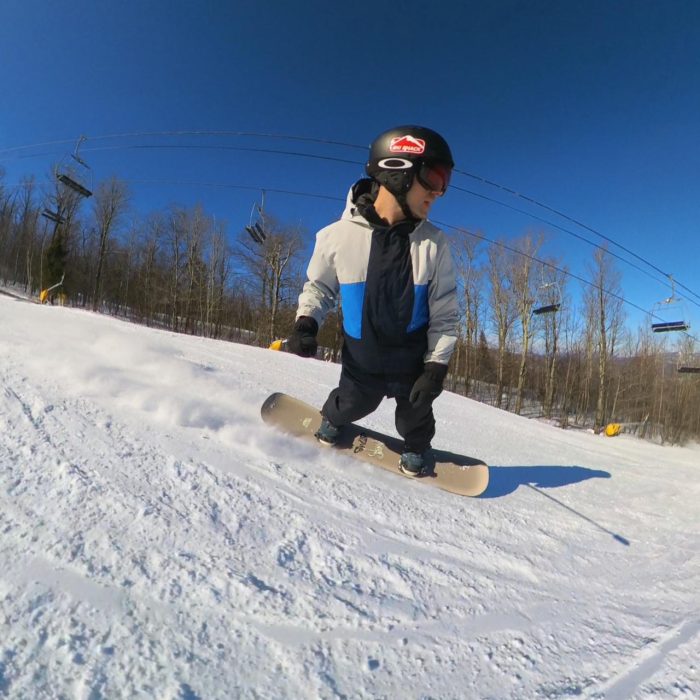
The turning experience with the Sims Mystery Lunch felt surprisingly smooth and locked-in, given how wide and centered it is (it might be the most 90s-inspired twin you’ve ever seen).
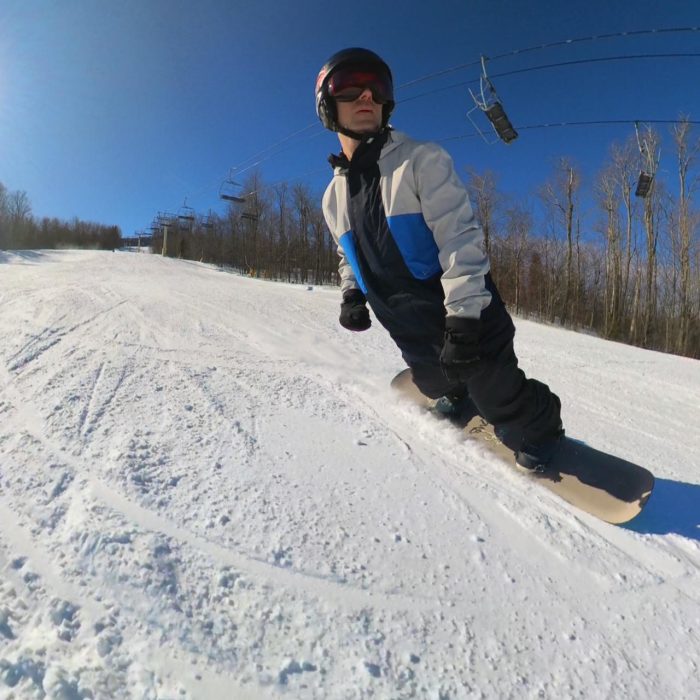
Its also a really easy board to ride and land switch with.
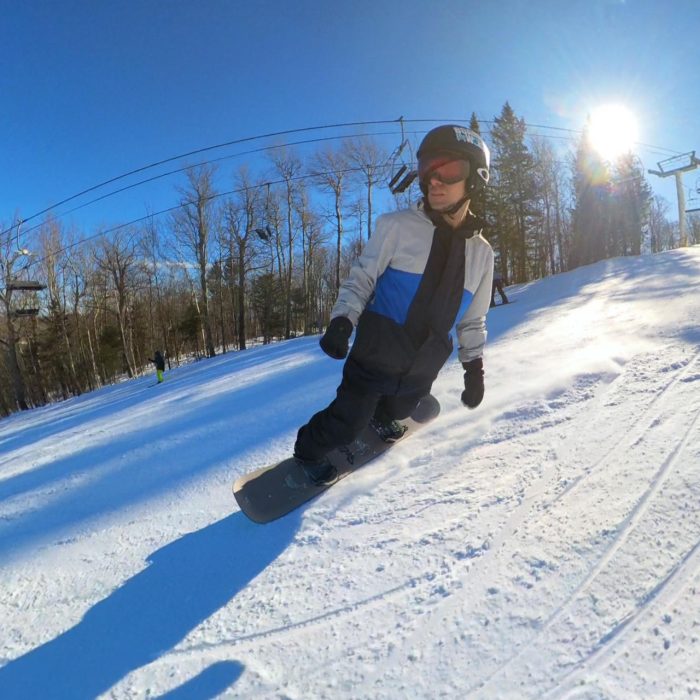
Here’s why it feels so smooth and easy to carve with.
If you look at the spec sheet, you’ll notice the 153cm that I rode has a shorter effective edge at 1130mm than a common board like the Capita DOA 154 at 1223mm. However, the Sims actually feels more stable in a carve because you use every inch of that edge due to it having shorter tips, a wider width, and a tighter sidecut.
How the Carve Feels When Compared to a Standard All-Mountain Freestyle Deck Like the Capita DOA

- You Use The Full-Working Edge of This Board: Because of the traditional camber and the “Lunch Tray” flat zones in this deck, almost every millimeter of that 1130 mm edge is pressed into the snow as you carve. While other boards technically have more metal that could lock into the snow, the Sims Mystery Lunch makes better use of its shape to use more of its edge to lock you into your carve at all times.
- Tighter Sidecut (7.3m) That Locks in When On Edge: The Sims Mystery Lunch has a deeper and more aggressive sidecut than the Capita DOA’s at a 7.9m. This means the Mystery Lunch initiates (or hooks into) turns faster and holds a tighter arc than the Capita DOA, which gives you a more stable, locked-in feel to your turns.
- Leverage From Wider Width: With a 258mm waist (compared to the 154 DOA’s 250mm waist), the Mystery Lunch gives you more leverage over your edges. It’s like having a wider stance for better balance; you can drive more power into the turn with less effort. The only difference with this is that you won’t have to widen your stance to get that added leverage.
Overall, the Mystery Lunch is an easy riding board that rewards you with added stability for leaning into it. Because it’s volume-shifted (shorter and wider design), you can downsize this by 3cm to get a more agile feeling ride. Alternatively, I chose to stay at my usual length (153cm) for this demo, and the result was a board that still felt incredibly maneuverable in tight spots but remained unshakeably stable to ride.
Speed of the Base
This features Sims race grade high-density sintered base. I found it to be noticeably fast for its price range. I’d say it is offered around 15% faster glide than the bases similar priced park boards. This made it easier to get speed for jumps and dial in my speed for jib features.
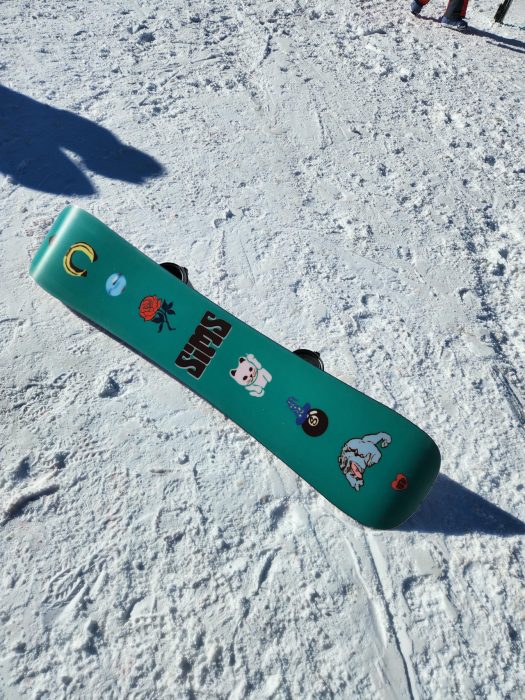
After a few days of jibbing, the base was still in great shape, too. The high-density material held together without any deep gouges from hitting sharper features.
How the Sims Mystery Lunch Compares to the Capita DOA
The Capita DOA is a really popular all mountain freestyle board that’s known for its pop and response. Its tech is similar to the Sims Mystery Lunch because they both have carbon stringers for pop, high-density sintered bases, a blended wooden core, and triax glass. The main difference is the Mystery Lunch’s wider width and configuration that lends itself to feeling more stable and planted, with its shorter effective edge and deeper sidecut making it more locked into its turns. Overall, the wider board is easier to balance on, and the softer flex and the shape of its tips make it feel more playful for jibbing.
So the main difference is the wider volume shifted nature of the Mystery Lunch. That means there is more board under your feet when you’re on edge. Where the DOA feels like it wants to snap you around, the Sims feels like it’s holding you steady.
Now the best part is the Sims Mystery Lunch is $80 less than a DOA, and you’re still getting a very comparable board tech feature-wise.
Who Is the Ideal Rider for the Sims Mystery Lunch?
The Sims Mystery Lunch is for the intermediate park rider who wants the stability of a wider board that can lock you into a press for jibbing. It’s also perfect for the older park rider who loves the ’90s throwback pill shape lunch tray outline.
If you want a board that makes you feel more confident on jibs while still having the tech to boost side hits and hold an edge as it carves, this is one of the best freestyle decks you can get for $470 at the moment.
See Images from the Review
This is a placeholder tab content. It is important to have the necessary information in the block, but at this stage, it is just a placeholder to help you visualise how the content is displayed. Feel free to edit this with your actual content.
About the Reviewer
Where I Rode: I rode the Mystery Lunch at Stratton, VT, on Feb 3rd and 4th of 2026.
Conditions: Park riding on a bluebird day at 21degrees the first day. Conditions were soft and uneven, but fun. Day two was 27 degrees and 3 inches of fresh snow the second day. Conditions were soft and became uneven and icy through the day.
Size Reviewed: 153cm (258mm Waist Width) / I usually would ride a 154, so instead of sizing down, I opted for the added stability.
Rider Weight: 142lbs
Bindings Used: 2025 Union Force in a size medium
Boots Used: Men’s Size 9 ThirtyTwo STW Boa with Remind Solution Boot Liners
Why Trust This Review?
With over 15 years of park riding experience here on the icy East Coast, I know what it takes to have a safe and fun time out on the mountain. I’m an intermediate park rider who can relate to riders of all skill levels. I’ve been writing in-depth reviews just like this one for the past four years, and my main goal with this review is simply to help you find the right board.
I write these reviews as a “for the fun of it” project. They are as unbiased as I can be for someone who tends to ride in an area with icier conditions. You can support this project by making a purchase through any of the links in the post. They point to the lowest offer for the board, don’t cost you anything additional, and tell the retailer I sent you.
Thanks for reading! Please leave a comment below if you have any questions.

Steve Weber is the passionate snowboarder, skateboarder, and author behind Board of the World. He understands that most gear reviews focus on having the perfect snow conditions, but his testing methodology is different. Living in Pennsylvania, Steve describes exactly how a board performs when the conditions aren’t perfect. His reviews cover performance on ice, hardpack, and flat-out brick conditions. In other words, he reviews boards for the conditions that East Coast riders actually face.
Bringing 27 years of East Coast snowboarding and 21 years of skateboarding experience, Steve is a 42-year-old intermediate park rider. His recommendations are informed by decades of battling icy conditions, ensuring every review accounts for the board’s performance on the roughest of terrain.
For the last five years, Steve has poured his passion into writing in-depth, unbiased reviews that help riders make informed decisions about the gear they’ll use. He also works part-time at a snowboard shop in Northeastern Pennsylvania, which gives him a direct line to learning about the new gear tech months in advance. When he’s not writing reviews, Steve is often found riding at Montage Mountain and testing out new boards.
Steve’s goal with Board of the World is simple: to help every reader find the right gear so they can have fun outside from the first time they use it.