
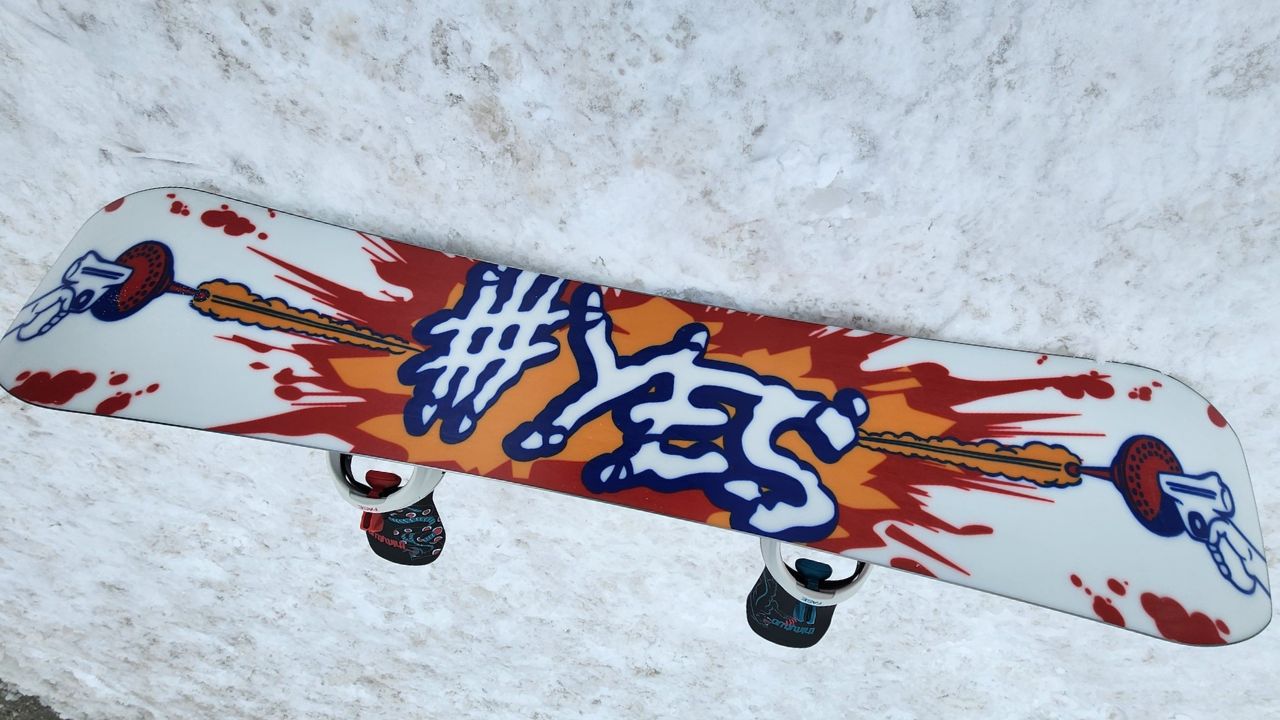

The Yes Sender is a brand new board for the 2026 season that was designed with the new Yes’ pro rider Pat Fava’s style in mind. With this board, Yes’ goal was to create an affordable ($529.95), tried-and-true park board that could also carve well outside of the park.
And that’s what this board is. It’s a park focused all-mountain board with minimal fancy tech features, that’s built to last you, and it will help you jib and jump without costing you an arm or a leg.
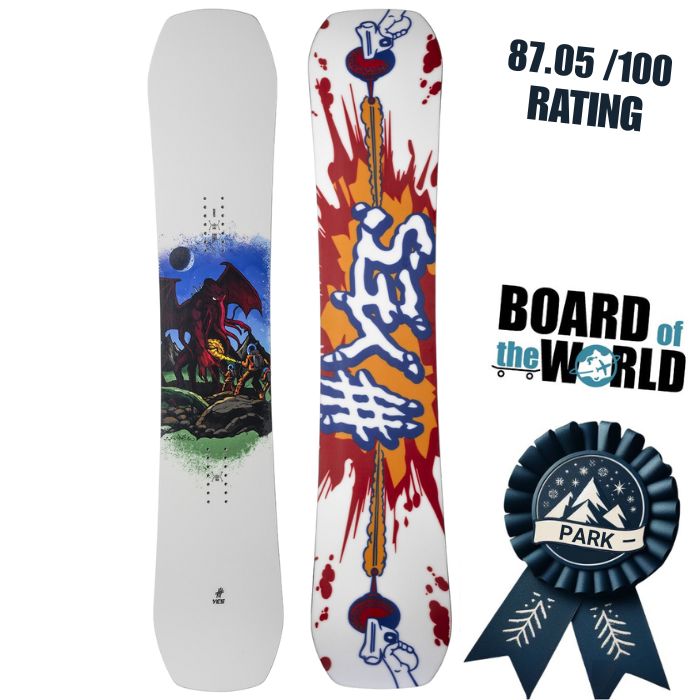
Summary of the Yes Sender Review
The Sender features a poppy, mild camber-dominant profile with flat zones in the tips to help it lock into presses.
If you were to look at its profile from the side it would look like this diagram.

It’s also got a 5/10 medium flex pattern, and a fast sintered base that’s flat (a plain old flat base without any 3d shaping). This gives the board a predictable feel underfoot while giving it some pop for launching you off jumps while still being easy and forgiving to jib and carve with, too.
The noticeable part about the Sender is that it includes some premium features like a sintered base, triax glass, and L-shaped carbon stringers at a very low price. These features all work to improve the board’s pop, response, and stability.
If this were a Burton board, it would probably cost you $750+ for all of the added high-end features.
I really enjoyed riding the Yes Sender, and I’d check this one out if it sounds interesting.
Details of Conditions / Where I Rode It
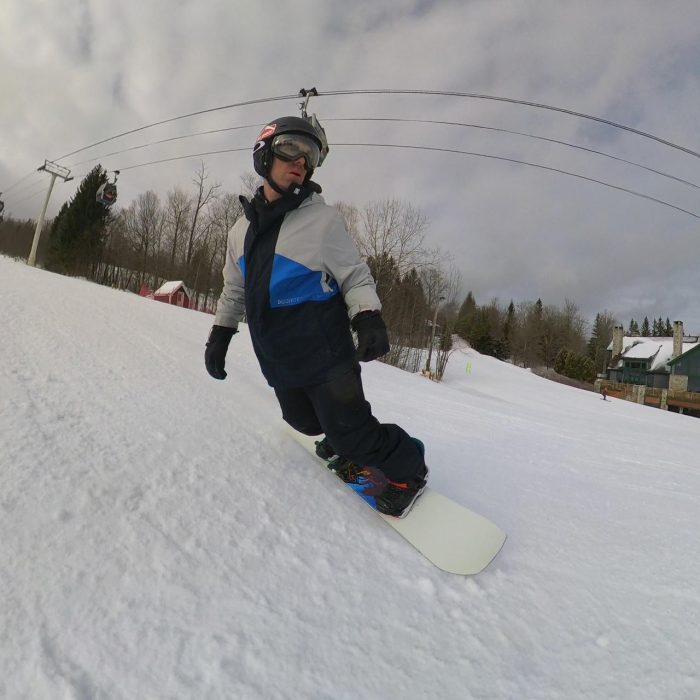
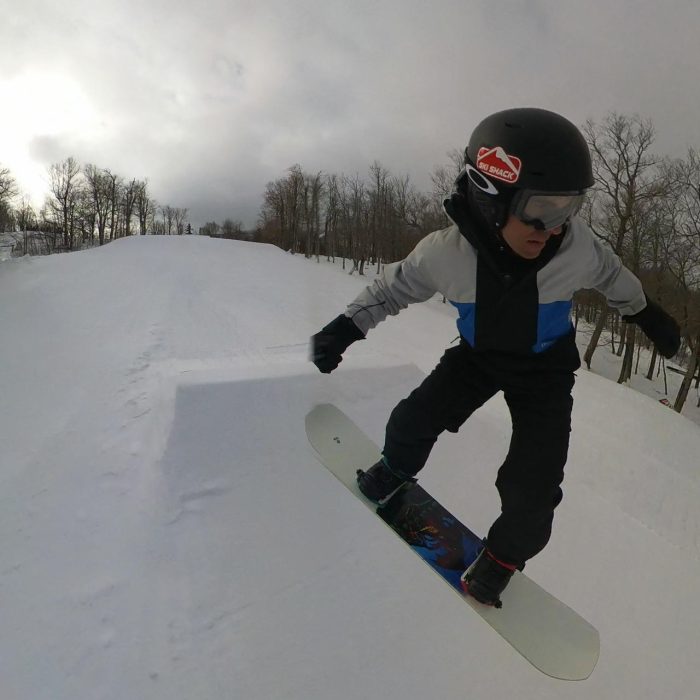
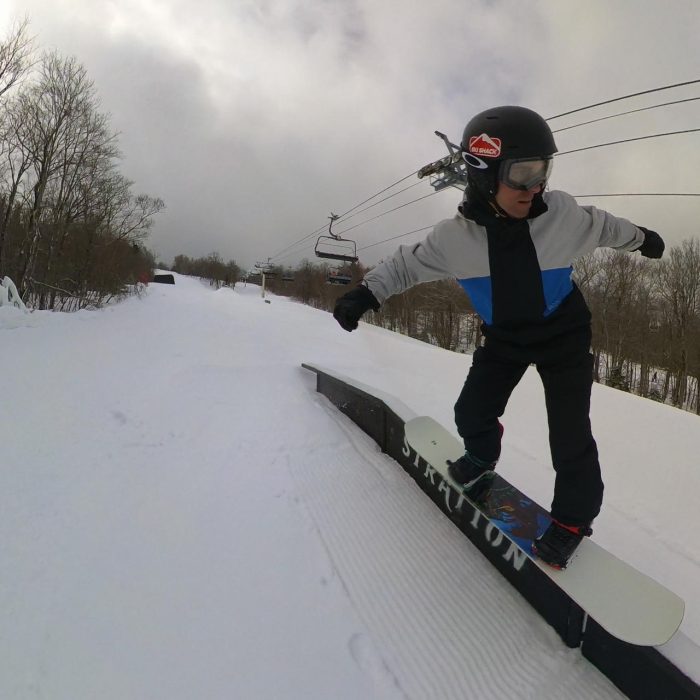
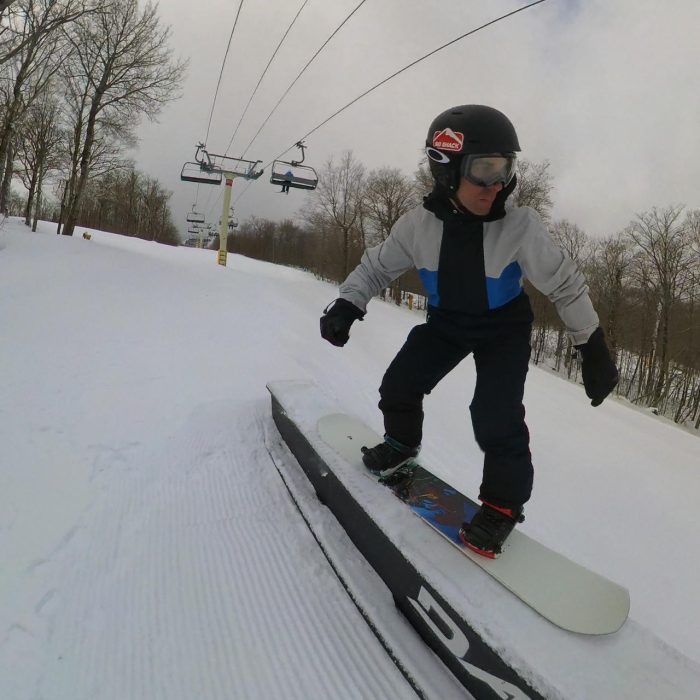
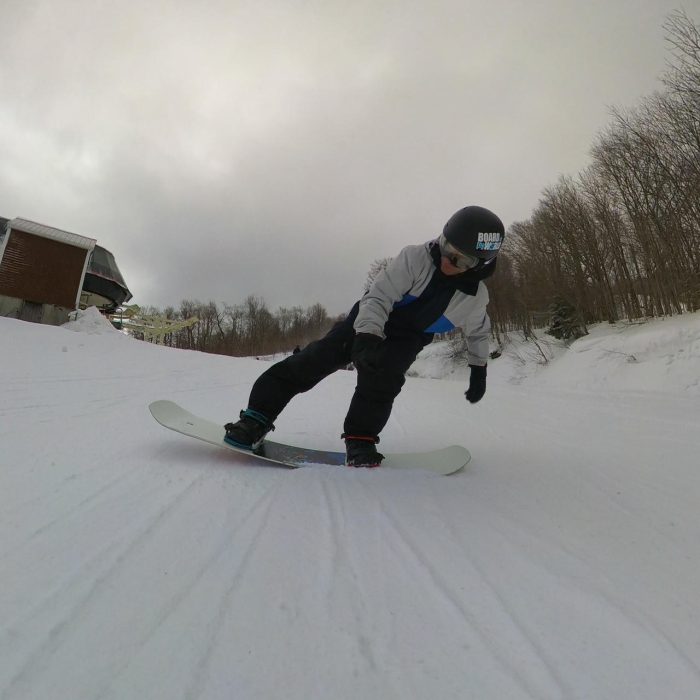
I got to ride it in Stratton VT on a seven degree very icy park day, and it help up for me. The most memorable highlight was it’s pop for how pressable it is. I hit a few medium sized kickers, and the Sender just launched me. All while it easily locks into nose presses, too.
It’s definitely one worth checking out if you’re looking for a camber park board.
Who is the Yes Sender the Right Board For?
The Yes Sender is for the park rider who doesn’t want any fancy 3D base contours or tech features they won’t actually use. It’s for the rider who is looking to jib, jump, and carve while also wanting a durable, mid flexing, plain old park snowboard to help make that happen for them.

- For jumping, the Yes Sender (non-XTRM or Early version) is perfect for hitting small to medium-sized jumps under 60 feet. The Yes Sender XTRM version has the stability to hit massive jumps if you are looking to go bigger.
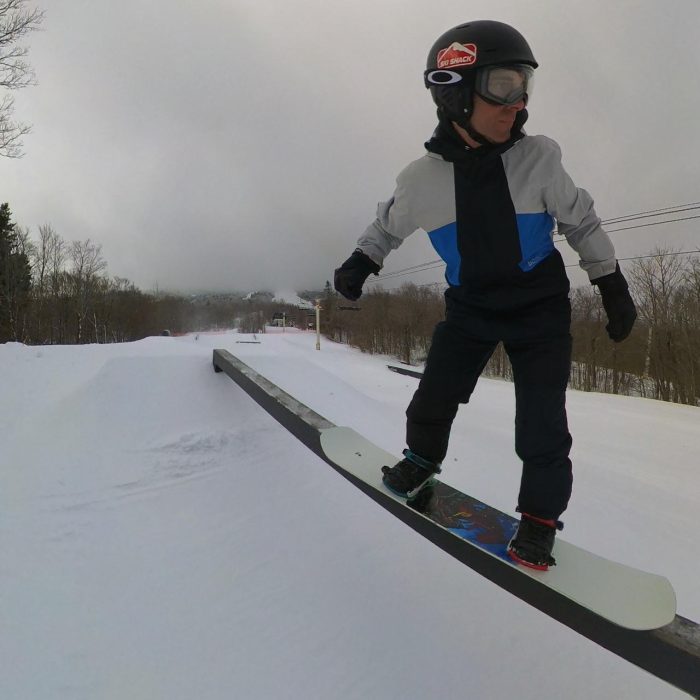
- For jibbing, the board is stable enough to hit features of all sizes. Even though it’s a mid flexing board, you’ll also be able to get it to press without too much effort. The flex rating has it at a 7/10, but it feels noticeably softer than that to my feet, so I think of it closer to a 5/10.
- For carving, the Sender has a unique sidecut (the multi-radius sidecut) that makes turn initiation feel ridiculously simple and helps the board get on its edge quickly. The Sender is great for making all kinds of turns, from quicker, tighter turns (like a zigzag) to smoother, longer turns (like a wider carve), which makes it great for exploring outside of the park, too. It’s not an aggressive carver of a board, but it carves noticeably better than most park-focused boards.
All in all, if you spend the majority of your time in the park, the Yes Sender will be great for you. There’s no fancy 3d shaping or features that you’ll have to get used to. It’s the tried and true camber park board you’re likely used to riding already that’s ready to jib, jump, and carve. It’s stable, poppy, durable, and works the way you need it to without leaning too soft or too stiff.
Pros of the Yes Sender
- High End Features at a Cheap Price: The Sender is a lot of board for just $529.95. You get premium quality features like a sintered base, triax glass and L-shaped carbon stringers at the same cost of an entry level board from other brands (Similar boards from Burton cost around $690 currently).
- Boost of Pop: The Sender is meant to send you off jumps. The pop in this board gives you a noticeable boost thanks to the L-shaped carbon stringers, it’s camber profile, and the triax glass.
- Park Versatility: This board has a forgiving medium flex that works well for both jibbing and jumping. It’s also a true twin that rides phenomenally well switch.
- Predictable Feel That is Easy to Get Used to: This is the quintessential tried and true medium flexing camber park board. If that’s what you’re looking for, this is the Yes board for it.
Cons of the Yes Sender
- Not the Most Beginner Friendly / Can Be Catchy: As a trade-off for its boost of pop and edge hold, the Sender can feel a bit catchy, especially at slower speeds in poor conditions. If you’re brand new to riding and still learning to connect your turns, you will want to check out another flat or more rocker-dominant board to help you with your learning curve. For more experienced riders, this shouldn’t be a note that stops you, though. It’s no more catchy than any other camber park board.
- Requires Waxing Regularly: This board is for the park rider who doesn’t mind waxing (approximately every three times they ride). The sintered base feels noticeably faster than most park boards at this price tag, but it will require you to wax and maintain it often to keep its faster glide.
- Not Great in Powder : This board is versatile enough to cruise the entire resort, but it’s going to have its limits if you’re trying to ride it in deeper snow (over 18 inches). If you will be riding it in pow, I’d recommend setting your stance back closer to the tail.
Review Rating of the Yes Sender Snowboard
| Considerations | Rating Out 5 | Score Out of 100 | Weight / Importance to Score |
|---|---|---|---|
| Resort Riding / Versatility | 4.25 | 85 | 5 |
| Pop / Power | 4.5 | 90 | 10 |
| Powder | 3 | 60 | 3 |
| Carving / Turns | 4 | 80 | 5 |
| Responsiveness | 4.25 | 85 | 5 |
| Speed | 4.25 | 85 | 10 |
| Ice / Poor Conditions | 3.75 | 75 | 5 |
| Switch | 5 | 100 | 10 |
| Jibs | 4.25 | 85 | 15 |
| Jumps | 4.75 | 95 | 15 |
| Dampness | 4 | 80 | 5 |
| Buttering | 4.25 | 85 | 10 |
| Fun to ride | 5 | 100 | 2 |
| Weighted Score | 4.3525 | 87.05 | 100 |
The Yes Sender earned an overall rating score of an 87.05 out of a possible 100 points. This is a score of a 4.35 out of 5 stars. This board held up exceptionally well in the park, held its own carving all of the resort, and offered a solid value for being relatively cheap.
If you’re looking for a cheaper park and resort board with some higher end tech features, you should consider the Yes Sender.
Summary Stats
Board Reviewed: 155 Yes Sender 2026
Price of Board: $370.96
How the Price Compares to Others:
The Yes Sender costs -$97.05 less than the average snowboard price of $468.01.
Our Rating Score: 4.35 out of 5
How the Yes Sender Ranks Against Others:
Ranks 14th out of the 36 boards reviewed in the park category.
Sizes Available
This board is available in the following sizes.
- 149 cm
- 152 cm
- 155 cm
- 156W cm (Wide)
- 158 cm
- 159W cm (Wide)
- 161 cm
The Size I Reviewed
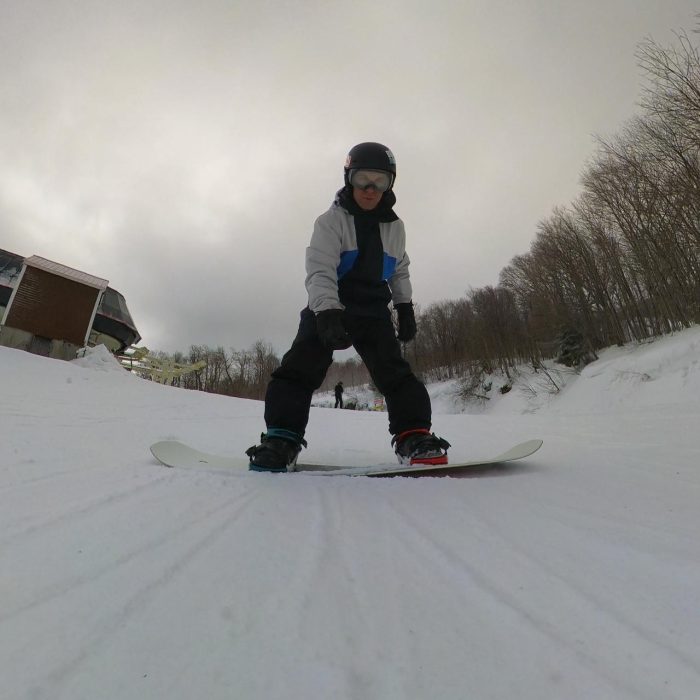
I rode the 155cm size, which is very close to my usual 154cm size. For reference, I am 142lbs with a men’s size nine USA boot.
Actual Feel of the Flex Rating:
- 5/10 Flex (and not a 7/10 as its listed)
To my feet, this board feels like it’s a medium 5/10 flex pattern, maybe even a 4.5/10. It’s easily pressable thanks to the mild hybrid camber profile having a flat sections right before the contact points that acts like a leverage point for you to really lean into.
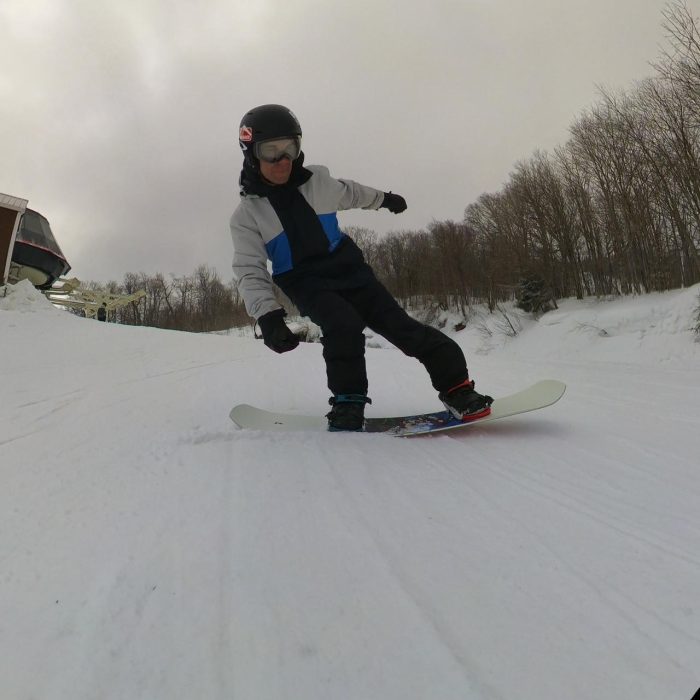
With that said, the Yes website has the flex rating of this board at a 7/10 medium-stiff flex pattern. I don’t think that’s correct, so I wouldn’t let that stiffer rating steer you away from this board. It’s probably a typo. For how simple it is to press into the tips of this board, I would consider the Yes Sender’s flex a 5/10 medium flex pattern when compared against any other park board. It is not on the stiffer side as a score of 7/10 might lead you to believe.
It’s likely that the Yes Sender XTRM with the additional carbon built into it is the version with the 7/10 flex rating. The regular version (not the Yes Sender XTRM version) of the Yes Sender, that I am reviewing, is noticeably softer than that.
- Longitudinal Flex: 5/10
To me, the board’s longitudinal flex (from nose to tail) feels like a medium 5/10.
- Torsional Flex: 5.5/10
The torsional flex (from toe to heel), it is a bit stiffer, at a 5.5/10 flex.
Altogether, the Yes Sender is a very pressable board that still feels stable and responsive underfoot. It isn’t overly soft nor is it too stiff. It’s right in the middle, and that’s what makes it feel so well balanced to jib and jump.
How Does it Feel to Ride the Yes Sender?
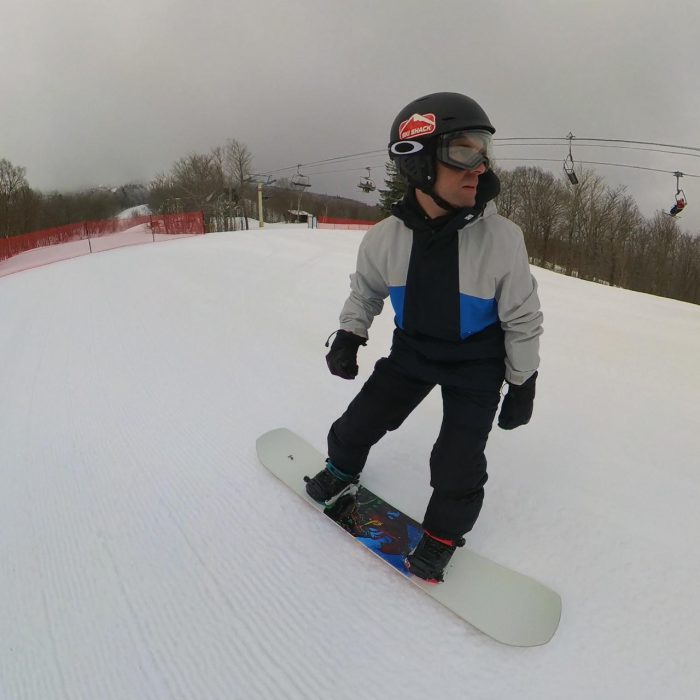
It feels predictable, and it’s easy to get used to. If you have ever ridden a mild camber, mid-flexing freestyle board, that’s what you’re in for with the Yes Sender. There are no surprises to trip you up. The main tech in this board is just with its sidecut helping it have an easier turn initiation. Other than that, you’ve likely ridden something very similar to this over the years.
All-Mountain Riding
It works well for cruising outside of the park, too, but you’d really get more out of the Yes Sender if you spend the majority of your time (80% or more) in the park and (20% or less) outside of the park cruising the rest of the resort.
I say this because it’s tuned more for hitting jumps and rails over just carving around.
Carving
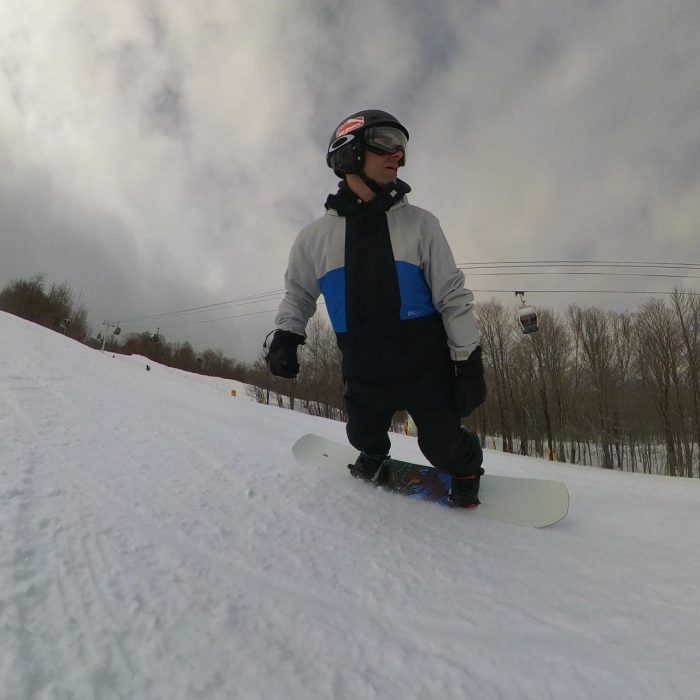
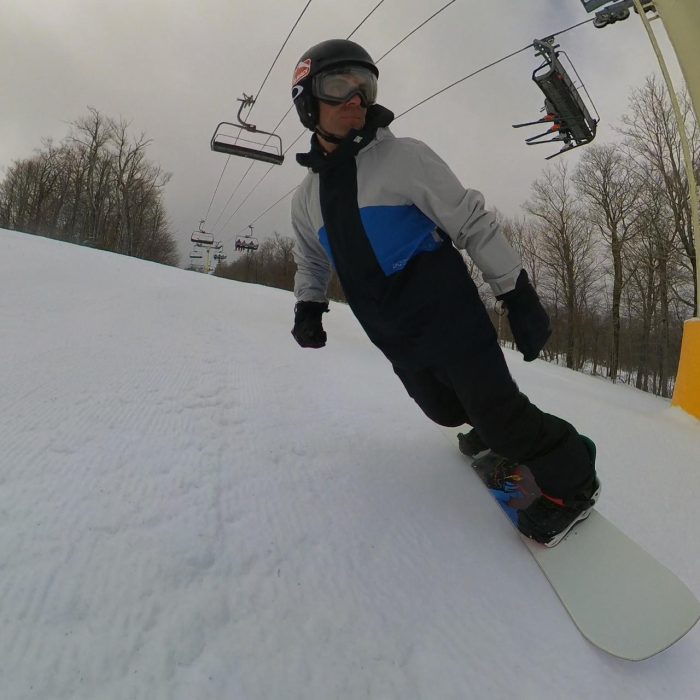
With how well this board performed in the park, I was really surprised by how well this board carves. While it’s not a dedicated carver you can get really aggressive with, it still holds its own for taking cruisy style runs at moderate speeds all over the resort.
For me, here were the highlights for how this board carves.
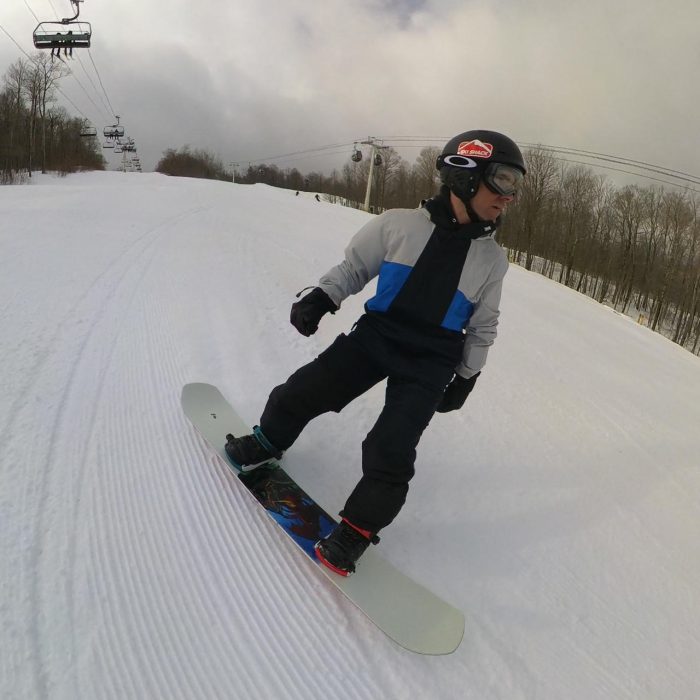
- Easy Turn Initiation: The Multi-Radius sidecut (the sidecut has multiple angles strategically built into it rather than being one fluid arc) makes for initiating your turns feel effortless, allows the board to get on edge easier, and you can change direction on a dime if you need to.
- Makes Turns of All Sizes: This board’s sidecut allows the board to make all kinds of turns really well. It works best for quicker, tighter turns (like a zigzag through choppy terrain) or you can open it up for a smoother, medium-sized carves (like wider arcs on the groomers). It lets you change your turn shape easily, which is why it’s so fun out of the park, too.
- Feel and Stability: The board feels stable at moderate speeds, locks firmly into turns, and the boost of pop helps you snap out of each carve with energy.
- On Ice / Edge Hold Grip – Good Enough Not the Strongest or the Weakest: The edge hold worked decently well for me on ice. It had a standard level of grip, while the edge was sharp. I wouldn’t say it’s as much as a board with added edge technology, like Magne-Traction or Traction-Tech, but it held its own with how it gripped. I never felt like I fell out of a turn, no matter how slick the conditions got.
- Stable at Moderate Speeds: If you’re looking to go as fast as possible, this isn’t the deck for you. The Yes Sender is stable, responsive, and controlled when its ridden at moderate / casual speeds. At Mach 9, you’ll start to feel some chatter at the tips. You don’t feel that while cruising at normal speeds or with your knees bent, though.
Jumping
This is a highlight of why you get this board. It launches you off jumps, and it will feel stable enough to help you land.
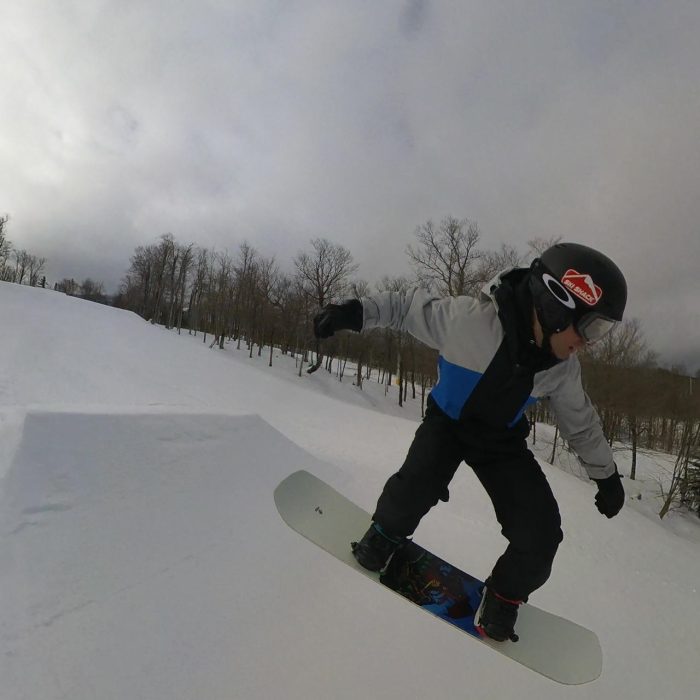
I’d rate the level of pop in this board at a noticeable above average of a 9/10. And if you want to take that pop to an 11/10, check out the Yes Sender XTRM version.
Jibs
This is the other reason you would get this board. It isn’t overly soft, but it’s soft enough to help you balance on features. Saying that another way, it’s pressable, but you’ll need to give it some muscle to get a really tall press (and minimal effort for a lower press).
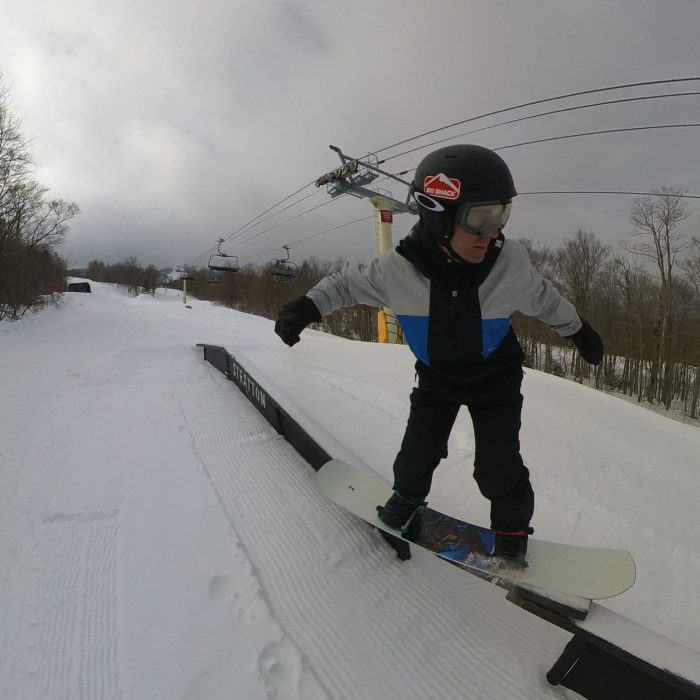
The camber profile has flat sections out towards the tips which give you a few sweet spots to lock into, too.
Buttering
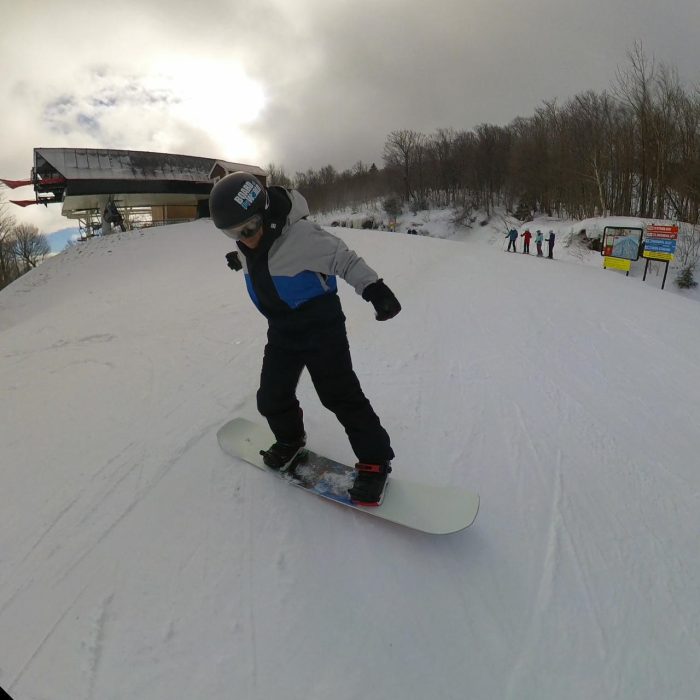
It can butter easily thanks to the medium flex and flat sections in the tips. Just like with jibbing, it isn’t overly soft, nor is it too stiff. It’s right in the middle, so you can butter it with some effort and practice.
Speed & the Base
The sintered base is noticeably faster than most other park boards at this price. I’d just recommend that you keep it waxed and maintained it.
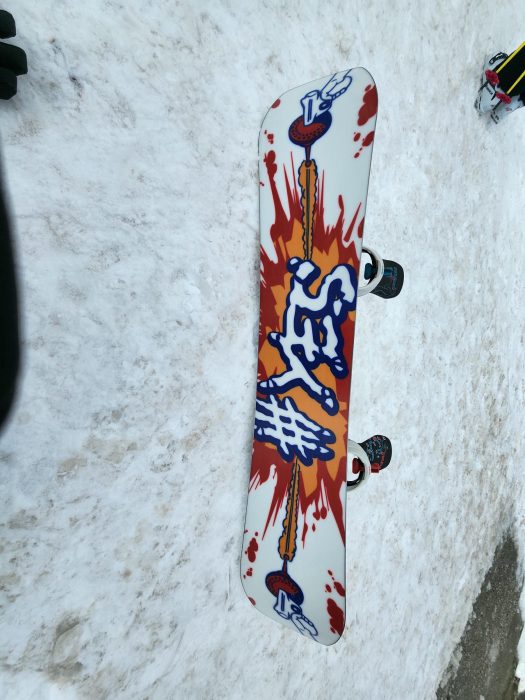
Usually under the $600 range, you get an extruded or hybrid sintruded base (extruded material that’s packed to be denser like a sintered base). In the Sender, it’s a higher end full sintered base at the low price of $529. That’s a main details to consider when you’re looking at this board.
Similar Boards to the Yes Sender
The Yes Sender feels similar to the Salomon Huck Knife and the now retired Yes Jackpot that the Sender replaced in the lineup. Here is how the Yes Sender compares to the Huck Knife.
Yes Sender Vs. Salomon Huck Knife
Both the Yes Sender and Salomon Huck Knife are very similar boards. They are both excellent mid-flex park boards, and really won’t go wrong with either choice.

They are both true twins, mid-flexing camber boards that are perfect for all freestyle riding. However, the key differences lie in their sidecut and carbon design, which make the Yes Sender the slightly more versatile and responsive carving outside of the park.
Here’s how they compare
| Feature | Yes Sender | Salomon Huck Knife |
| Sidecut | Multi-Radius (Progressive) | EQ Rad (Blend of Radial & Straight) |
| Carbon Reinforcement | L-Shape (Freestyle L Glass) from inserts to tip – L shape adds to torsional rigidity for more response | Straight Stringers (Popster Booster) in tip and tail |
| Camber Profile | Jib Camber (Hybrid Mild Camber flat in tips) | Quad Camber (Aggressive Camber Blend with Rocker in tips) |
| Flex Rating | 6/10 (Yes’s rating) / Feels like a 5/10 | 6/10 (Salomon’s rating) / Feels like a 4.5 /10 |
| Feel of Ride | Great for Jibbing & Jumping / Slightly more responsive between the two boards. Its a versatile carver with easy turn initiation and tons of pop. (The better carver / more stable of the two.) | Great for Jibbing & Jumping – Decent carver with some added pop. (The more pressable of the two.) |
Main Differences Explained
The main differences between the between the Salomon Huck Knife and the Yes Sender are in their Sidecut Design and in their Carbon Configuration.
- Salomon Huck Knife (Has the More Park Focus / Predictable Feeling Ride):
It features Salomon’s EQ Rad Sidecut that has a predictable and consistent feel. Its also got straight carbon stringers (Popster Booster rods) that are focused purely on adding pop and response to get the board in the air without making it too stiff. - Yes Sender (Has the More All-Mountain Freestyle Focus / Easy to Carve / More Grip):
Uses a Multi-Radius/Progressive sidecut for better versatility across the whole resort, quicker turn initiation, and smoother, varying carves of all sizes (it can change direction on a dime). It’s also got L-shape carbon stringers rode (instead of just straight ones) that get the board an explosive level of pop, but they also add some torsional rigidity to help make the board more responsive for carving.
So Which One Should You Buy?
Either of these boards is going to be incredible in the park, but if you’re looking to take runs outside of the park, the Yes Sender is the more versatile and responsive carver.
So, Is the Yes Sender Worth Buying?
Yes, the Yes Sender is perfect for the rider who wants a board that’s not going to cost too much that will be able to press into rails, launch you off jumps, and still have some tech to help you carve outside of the park with your friends.
Bindings to Pair With the Yes Sender
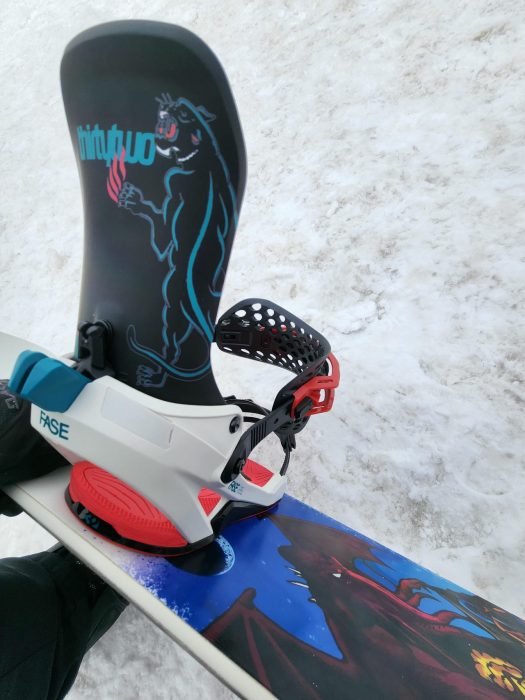
I rode the Sender with the new Thirty Two Fase bindings. I think it paired very well. However, I ran into a few problems with the FASE system not feeling super secure. With that in mind, I’d just recommend a similar strap in binding, like the Union Ultra for the Yes Sender.
Where to Buy the Yes Sender
You can buy the Yes Sender from Blauer Boardshop (lowest price), Evo, or Amazon.
These partner links all point to the lowest-priced offer that I could find for the Yes Sender, and there are no additional costs or fees to use them. By using these links, you support this website because when you make a purchase through them, I make a very small referral commission from the sale of your board, just like if I were your shop’s salesman.
While the commissions are nowhere near enough for me to quit my day job, they do help cover the hosting fees for this website, and any remaining funds then go back into the reviews in the way of lift tickets or purchasing more gear to test out.
Thank you for your support and for reading this far. I hope you enjoy every second you get out on hill this upcoming season.
PS please leave a comment at the bottom of this page if you found this helpful or have a question.
-Steve
Image Gallery for the Review

About the reviewer
Rider Name: Steve Weber
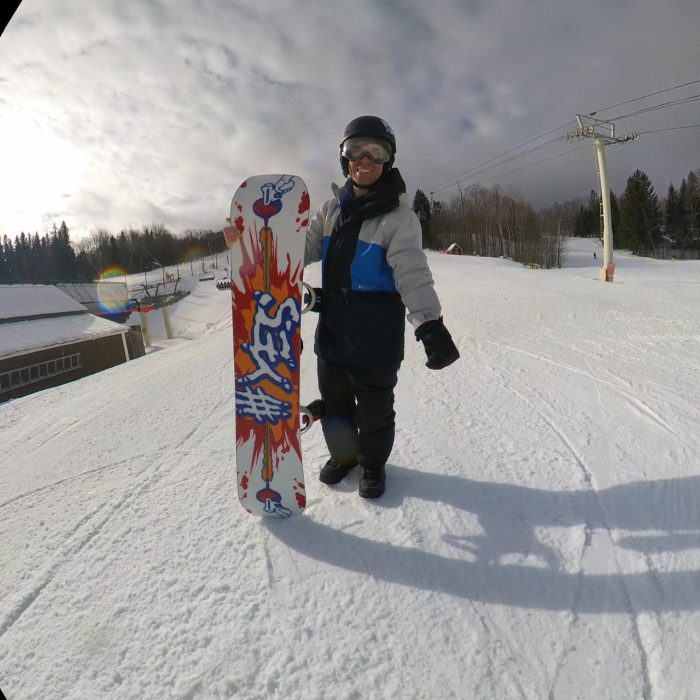
Field Test Notes: I rode the 2026 Yes Sender at the EWSRA on snow demo in Stratton VT on February 4th and 5th 2025.
Rider Experience Level: Intermediate to advanced – I’ve been riding for over 16 years. However, I lean more freestyle than freeride. I prefer hitting jumps and rails over making the perfect turn.
Rider’s Preferred Terrain: The park with small to medium sized features
Size / Model: The board I reviewed was a 2026 Yes Sender in the 155cm size.
Rider Weight: 144lbs

Steve Weber is the passionate snowboarder, skateboarder, and author behind Board of the World. He understands that most gear reviews focus on having the perfect snow conditions, but his testing methodology is different. Living in Pennsylvania, Steve describes exactly how a board performs when the conditions aren’t perfect. His reviews cover performance on ice, hardpack, and flat-out brick conditions. In other words, he reviews boards for the conditions that East Coast riders actually face.
Bringing 27 years of East Coast snowboarding and 21 years of skateboarding experience, Steve is a 42-year-old intermediate park rider. His recommendations are informed by decades of battling icy conditions, ensuring every review accounts for the board’s performance on the roughest of terrain.
For the last five years, Steve has poured his passion into writing in-depth, unbiased reviews that help riders make informed decisions about the gear they’ll use. He also works part-time at a snowboard shop in Northeastern Pennsylvania, which gives him a direct line to learning about the new gear tech months in advance. When he’s not writing reviews, Steve is often found riding at Montage Mountain and testing out new boards.
Steve’s goal with Board of the World is simple: to help every reader find the right gear so they can have fun outside from the first time they use it.