



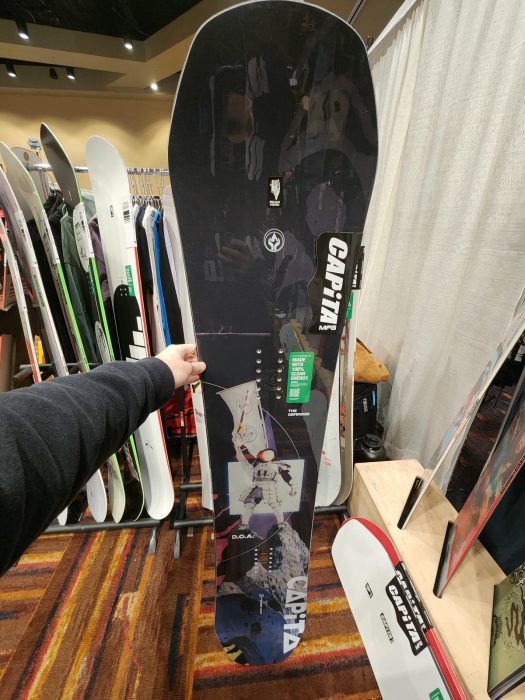
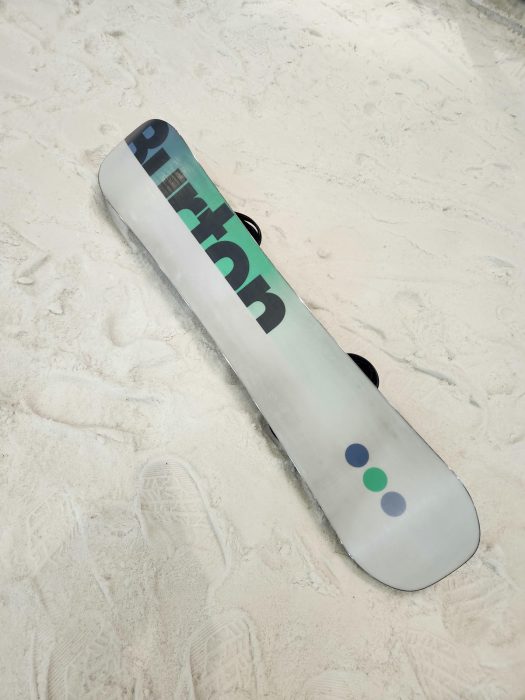
Both the Burton Custom Camber and Capita DOA are incredible, award-winning snowboards from two of the most popular snowboard brands. If you were to stop reading this right now, and buy either of these snowboards, you would have made a great decision, and you’ll enjoy your time on the hill with either option.
With that said, there are two differences in these snowboards that will make one of them better than the other, depending on your riding style and the terrain you get to ride in most often.
The goal of this article is to help you figure out which one of these boards is the better option for you.
Burton Custom Camber – Full Specs

Read Full Burton Custom Camber Review – Rated 89.52 / 100

Read Full Capita DOA Review – Rated 90.0 / 100
The Comparison Chart
This chart is to show which board is better in a specific category or style of riding. If there is a number one indicated under both boards for the category, it just means both boards are equally as strong in that category, and there is no clear winner. The important detail is more in the categories that matter for you, my goal with this is just to point you to the board that would work better for you in that category. That’s not to say if there is no number one indicated in a column that the board wouldn’t work at all, it just means the other board has a specific tech feature or shape that makes it a little bit better for that category. Underneath the chart, I’ll explain why I chose one board vs the other.
So, let’s compare the Burton Custom Camber against the Capita DOA.
| Considerations | Burton Custom Camber | Capita DOA |
| Resort Riding | 1 | 1 |
| Powder | 1 | |
| Carving / Turns | 1 | |
| Responsiveness | 1 | |
| Speed | 1 | |
| Ice / Poor Conditions | 1 | |
| Switch | 1 | |
| Jibs | 1 | |
| Small Jumps | 1 | 1 |
| Medium to Large Jumps | 1 | |
| Durability / Quality | 1 | 1 |
| Buttering | 1 | |
| Fun to ride | 1 | 1 |
| Total Points | 10 | 9 |
Summary of Their Comparison Scores
The Burton Custom Camber is a hair more versatile than the Capita DOA, so it scored a 10 while the Capita DOA scored a 9 out of a possible 13.
Both of these are exceptional snowboards, they just have certain strengths that make them cater to slightly different riders (aka the all-mountain rider vs the all-mountain freestyle rider.
The Burton Custom Camber is the powerhouse all-mountain board. In our versatility comparison across 13 categories, the Burton Custom Camber won as being the more versatile option, winning 10 categories over the Capita DOA.
The Custom Camber board excels in precise carving, speed, cruising through some light powder, hitting small to medium-sized jumps, and side hits, all while still offering an excellent level of response for more aggressive riding. The Custom Camber’s construction promotes powerful, stable turns across the entire resort, and this board is ripping fast. Overall, it feels like a high-end resort board, and it’ll work well for 95% of the intermediate riders who read this.
The Capita DOA is a jump-focused park board that’s also capable of being your all-mountain board. In our head-to-head versatility comparison with the Custom Camber, the Capita DOA earned 9 out of 13 possible points. This is just one point shy of the Custom Camber. It shows just how solid of an all-mountain board the DOA is, even while its strengths are intended to shine in the jump line.
While the DOA is a board that carves exceptionally well out of the park, it’s primary benefits are found in its tech features that give it an explosive level of pop off jumps. If you’re looking for a board that has an extra springboard-like pop, this is that board. Its got a true twin shape that works well as a resort board in groomed and icy conditions, but this board will scream at you to, “Get me in the air immediately.”
Here’s the cheat sheet summary for everything you will read about below.
- If you prioritize carving, riding in light powder, going fast, and still being able to hit jumps, go with the Burton Custom Camber.
- If you spend most of your time in the park, love jumping and jibbing, and want a versatile twin resort board, go with the Capita DOA.
How to Think About the Similarities Between the Boards
In terms of tech, think of these boards like this:
- The Capita DOA is similar to the Burton Custom Camber but with a centered true twin stance and more park-focused features to help you jump and jib.
- The Burton Custom Camber is also similar to a Capita DOA but with a slight setback directional twin stance and features that help it carve better, float better in deeper snow, and be the overall more versatile option across various types of conditions you’ll ride at your local resort.
Overview of the Capita DOA
- Versatile All-Mountain and Park Board: A true twin snowboard known for excelling in both all-mountain and park riding, offering a balanced feel.
- Explosive Pop: Carbon construction provides impressive pop and lift off jumps, making it a springboard for getting higher in the air.
- Lightweight: Features a P2 Superlight Core (combines durable and lightweight wood) to improve its durability, flex pattern, and make it easier to steer or maneuver in the air.
- Freestyle Focused: A go-anywhere, do-anything freestyle board that feels lively and responsive.
- Durable: Known for solid build quality and reliable performance.
Overview of the Burton Custom Camber
- Versatile Higher End All-Mountain Resort Board: Celebrated for its award-winning performance and ability to excel across all resort conditions. Think of it as an all-mountain / resort board first, and a park board as a second type of board.
- Responsive and Powerful: Offers strong power and pop for carving and jumps, boosting rider confidence.
- Damp Feel: Features 45° Carbon Highlights to absorb vibrations, providing a smooth ride and filtering out chatter.
- Durable: Built lightweight and durable with a 3-year warranty and eco-friendly Super Sap epoxy.
- Really Fast Base: Utilizes a Sintered WFO Base for noticeable speed and excellent wax retention.
- High-End Feel: This board feels like a premium snowboard underfoot, delivering a fast, smooth, and stable ride.
The Primary Differences of These Boards
While these boards are similar, here are the most notable differences.
Their Shape & Stance: DOA is a Twin vs Custom Camber is a Directional Twin
- The Capita DOA: Park-Focused True Twin Shape / You Can Land and Ride Switch Easier
The Capita DOA is a true twin symmetrical board, which means you stand perfectly centered on it. Additionally, this snowboard has identical specs and dimensions in the nose and the tail. The tips are the same shape regardless of which stance you’re in. The twin shape has a huge advantage in the park, because if you land switch coming off a feature, the board will feel exactly the same as it does in your regular stance. This makes landing spins and jibbing feel a little more balanced than it does with the Burton Custom Camber’s Directional Twin shape.
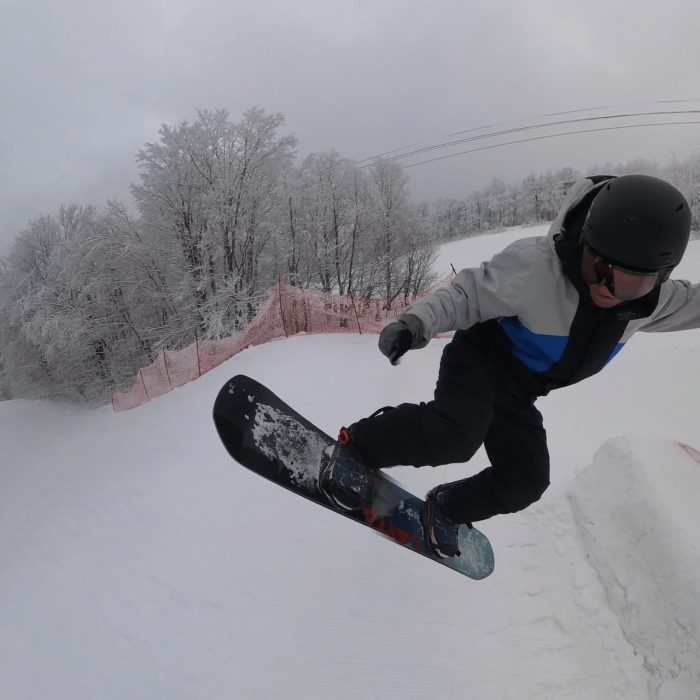
- Burton Custom Camber: Resort-Focused Directional Twin Shape / Better for Carving and Cruising in Powder
The Burton Custom Camber has a directional twin shape with a setback stance, which positions you almost half an inch (.49″) back closer towards your tail. This means the nose of the board is slightly longer than the tail. The benefit of having a longer nose is that it adds to the carving performance of this snowboard. The benefit of having a longer nose with a shorter tail is that it allows you to apply more concentrated pressure to the tail section of your edge. This additional pressure gives you more leverage and results in a more powerful, stable feeling, turning experience in the Burton Custom Camber over the Capita DOA.

The directional shape of the Burton Custom Camber is also the feature that makes the Custom Camber a better board to float in powder.
Here’s why.
With your weight continually towards the tail of the Burton Custom Camber, the board keeps its nose up and out of the snow (as the tail sinks in). By having the nose continually stick out of the snow, rather than have the snow pile on top of it, you can steer easier in deeper snow on the Burton Custom Camber than you can with the Capita DOA.
Their Carbon Construction
The other main difference in these boards is their carbon construction technologies.
The Capita DOA features carbon booster rods that are designed to get you in the air, while the Burton Custom Camber features 45° Carbon Highlights, which are designed to make the board carve better out of the park.
Capita DOA: Carbon Boosters for Explosive Pop
The Capita DOA features two Carbon Boosters that run the length of the board. These significantly add to the pop, power, and rigidity of this snowboard. These booster rods work with the traditional camber profile of this snowboard to give it a springboard-like level of pop. Basically, the carbon helps the board rebound back into its original shape rapidly, which gives the board an extra boost of pop as it rebounds. This makes the board the better option for jumping or for spring out of jib features so you can get that extra 180 off a feature.
The carbon construction of the Capita DOA looks like this.

It’s the third layer of the construction that shows what the carbon boosters look like. These boosters are where this board gets its jumping power from, while it does translate to also giving the board some carving power, too.
I’d just classify this board more as a board to jump with first and a board to carve with second, while it’s the other way around with the Burton Custom Camber.
Burton Custom Camber: 45° Carbon Highlights for Enhanced Carving and Stability
The Burton Custom Camber’s 45° Carbon Highlights are sheets of carbon fiber that are integrated directly into the board’s core. This integrated design significantly improves the board’s carving performance by improving the board’s torsional stiffness (its stiffness from toe to heel) and its edge hold. The Custom Camber’s carbon layers make the board lighter, incredibly durable, too.
The main benefit of the carbon highlights in the Burton Custom Camber is that it makes the board more predictable, responsive, and controlled for carving at high speeds.
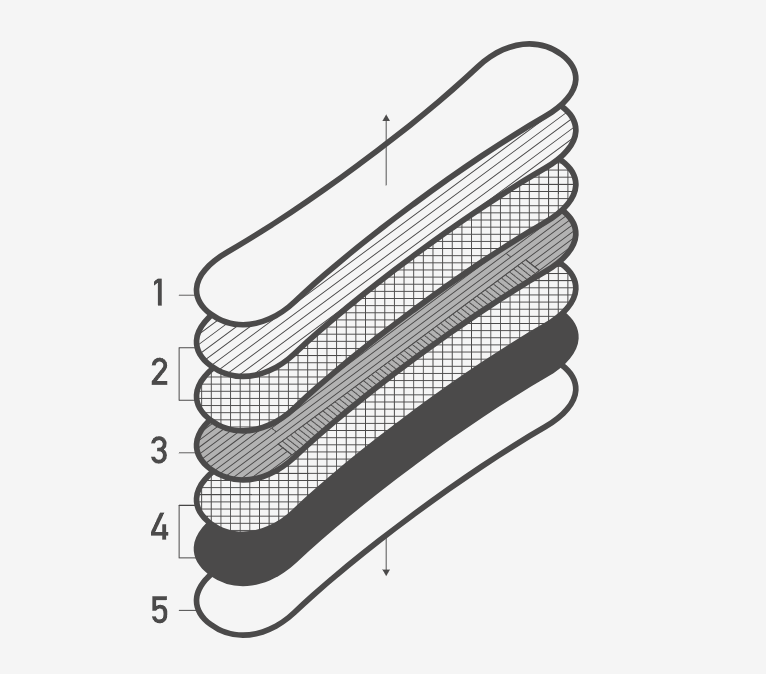
The 2nd and 4th layers showing the crisscross pattern are the 45-degree carbon highlights.
These carbon highlights are a main reason the Burton Custom Camber such a versatile resort board. These give the boards its pop, predictable feel, and help improve its carving performance and stability.
How These Boards Compare Categorically
Now that you see how the tech helps each of these boards in their own areas, let me explain how they felt under my feet when comparing both of them in each riding category. I’ll call out which board was the better one in the category to help you decide between the two boards.
For Groomed Resort Riding: It’s a Tie, But the Custom Camber is the Better Carver for Aggressive Riders
Both are incredibly good on groomed resort runs. However, the Burton Custom Camber is the better feeling carver if you like to carve aggressively on groomed terrain.
The Burton Custom Camber’s setback stance and directional flex felt predictable while still being powerful to carve groomers.
The Capita DOA also works really well on groomed runs, too. It’s a damp-feeling ride that holds a decent edge for cruising out of the park.
If you’re looking for a board that will be outstanding on groomed runs, either board works, but I would steer you more towards the Burton Custom Camber for this category.
For Powder Performance: The Custom Camber Wins
While neither board is a dedicated powder board, the Burton Custom Camber has better powder/float performance over the Capita DOA.
It comes down to their shape. The DOA is completely symmetrical, so you stand centered on it, and the nose and tail are exactly the same. There are no tech features to help keep the nose pointed up and out of the snow like there are in the Burton Custom Camber.
The Custom Camber has a directional twin shape with a .49inch (12.5mm) setback stance. That’s the feature that makes it float in powder better than the DOA. The setback stance helps point the nose up and out of the snow so you can steer easier through light powder that’s under 18″.
For Carving: The Custom Camber Wins
The Burton Custom Camber offers a more aggressive and precise carving experience. In addition to the carbon highlights mentioned above, it also has one more feature that really helps you get a response as you dig your edges into the carve.
It’s got the Dualzone EGD technology. This means the Custom Camber has a core that strategically aligns the grain of the wood along the edges to go perpendicular to the rest of the core.
It looks like this.
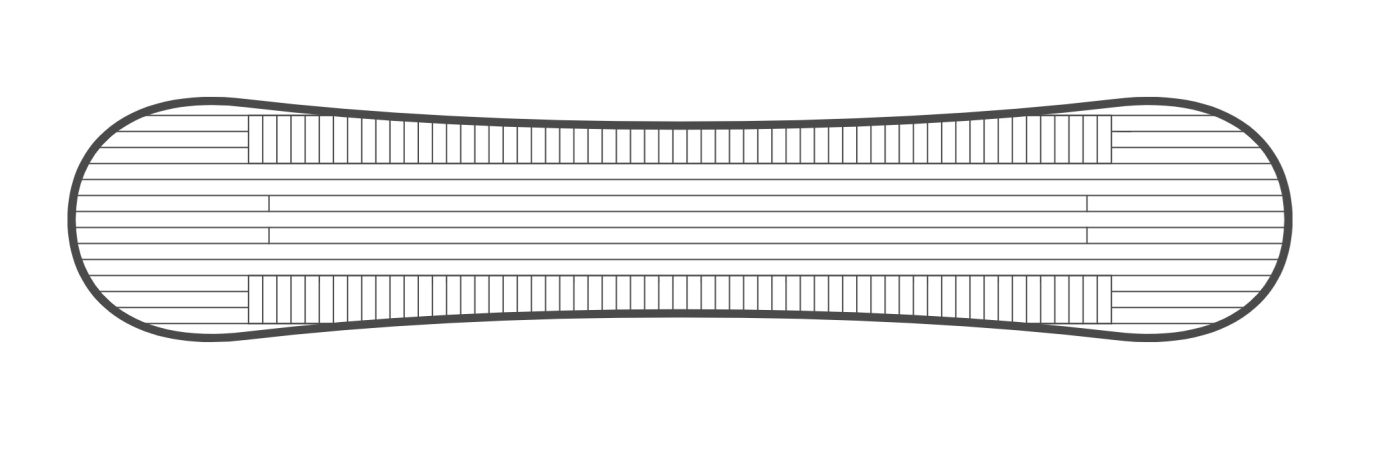
The benefit for this is that when the wood grain goes in the same direction as where you put pressure on it to carve, you get noticeably more response and power in your turns over the Capita DOA.
It was the combination of the Dualzone EGD and the directional shape of the Burton Custom Camber that made it a better board for carving.
That’s not to say you can’t rip an aggressive carve with the Capita DOA. Oh you definitely can, it’s just if carving performance is a main decision factor for you, the Burton Custom Camber is the better board for the category over the DOA.
For Responsiveness: The Custom Camber Wins
The Burton Custom Camber is the more responsive board. This is due to the Dualzone EGD feature as well as the board’s carbon highlights in its construction.
While the DOA is also known for its quick edge-to-edge responsive feel, the Burton Custom Camber is the more responsive board of the two.
For Speed: The Custom Camber Wins
Both boards have fast bases, but the Burton Custom Camber’s Sintered WFO Base is faster than the Capita DOA’s Quantum Drive.
The Burton Custom has a sintered base, which is quicker but needs to be waxed every three times you go snowboarding. The Capita DOA’s sintruded base is a hybrid mix of extruded and sintered base materials. The benefit is that its still quite fast, requires fewer waxing (around every five times you snowboard), and it’s more durable to jib with in the park.

All in all, the Burton Custom Camber has the faster base, but the DOA is the more durable base that won’t require as much wax.
For Ice and Poor Conditions: The Custom Camber Wins
Both of these boards are great on ice when you keep your edges sharp. That said, the Burton Custom Camber would be my pick for cruising through ice. The Custom Camber has the tech that promotes more powerful carves, and when you’re on slippery conditions, those features can help you get a little extra grip when you need it.
For Switch Riding: The DOA Wins
The Capita DOA is a true twin symmetrical board, so it rides exactly the same in either stance. Where the Buston Custom Camber does not, it rides decently well switch, but it still has a longer nose than tail.
For Jibbing: The DOA Wins
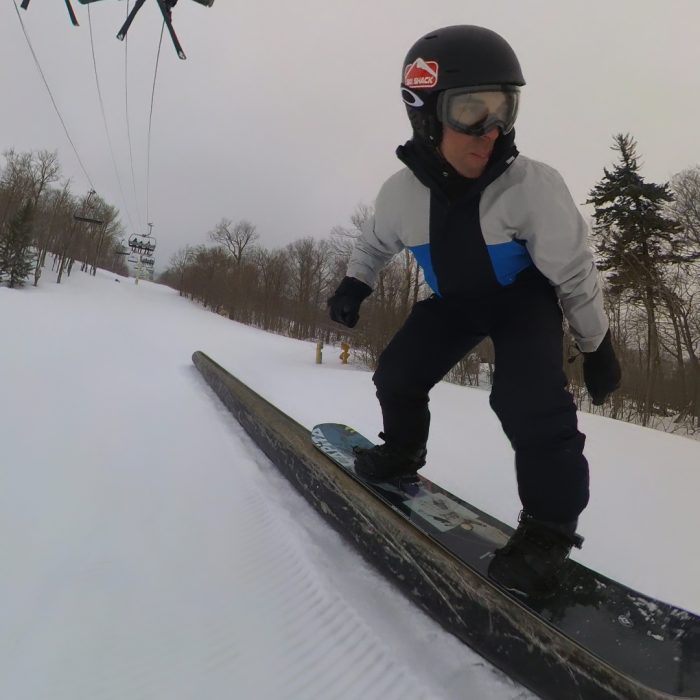
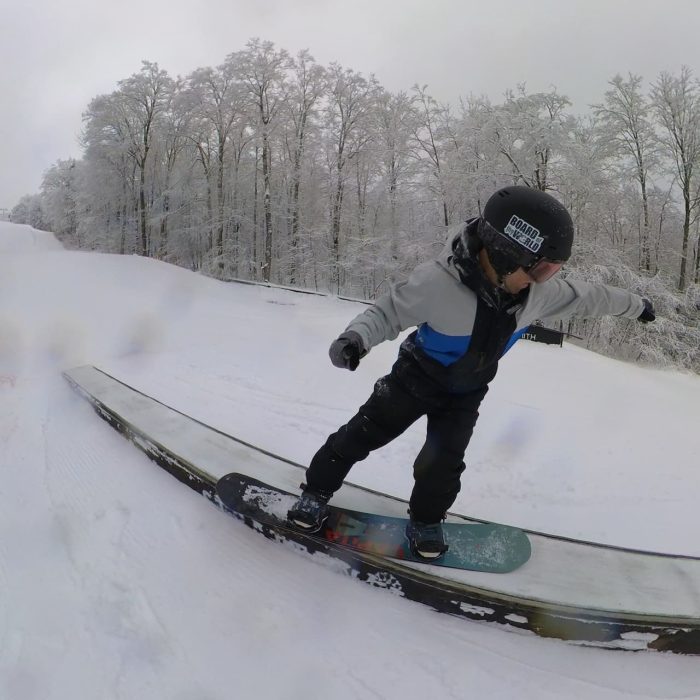
The Capita DOA is the better board for jibbing over the Burton Custom Camber.
The DOA has a sweet spot in its flex pattern in the nose and tail that can lock you in perfectly into a nose or tailpress. Additionally, the base of the Capita DOA was built to withstand the abuse of jibbing better than the Burton Custom Camber.

Both of these boards can jib, but if jibbing is a focus, I’d go with the Capita DOA over the Burton Custom Camber.
For Jumping: The DOA Wins (Though Both Boards Work for Small Jumps)
Both of these snowboards can hit small to medium-sized jumps very well.
However, for jumping benefits, I’d go with the Capita DOA if jumps are your focus. The DOA has two carbon booster rods that give it an extra boost of pop off jumps. This extra boost of pop makes the DOA perfect for larger jumps, too, so you get a little extra air to clear the knuckle or flat section.
While the Burton Custom Camber is versatile enough to jump, it’s the Capita DOA that was specifically designed to launch you.
For Durability and Quality: It’s a Tie
Both of these boards are durable and will last you in terms of their quality.
Both the Burton Custom Camber and the Capita DOA are built with high-quality materials and with decades of proven craftsmanship practices and tech upgrades to make them both the phenomenal boards they are today. Additionally, both of these snowboards have durable wooden cores that are reinforced with carbon fiber, strong and durable bases, and comparable warranties that cover any manufacturing defects.
For Buttering & Flat Ground Tricks: The Custom Camber Wins
Surprisingly, the Burton Custom Camber is the easiest board to butter with. Burton gave the board a softer nose and tail than the Capita DOA. So while the Custom Camber is still powerful and responsive for making turns, the nose and tail itself are easier to press and swivel around on than the Capita DOA.

The DOA’s carbon booster rods give the board an explosive level of pop off jumps, but they do force the board to rapidly snap back into its original shape. It winds up making buttering a little difficult, but definitely still doable with practice.
While neither of these boards is a soft board that can butter with no effort, the Burton Custom Camber is the easier of the two to butter with.
The Fun Factor: It’s a Tie
Both of these are incredibly fun boards to ride. Whether you’re hitting the park, exploring powder, or cruising groomed runs, you’re in for a fantastic time with either of these decks.
Both boards inspire confidence and will make you want to push your limits and enjoy every second on the snow. They just cater to two slightly different riders.
So Which Board Do I Prefer?
You’ll see above that the Burton Custom Camber won out in terms of overall points. However, I actually prefer the Capita DOA.
Here’s why, and what you should take into account as you compare both of these boards, too.
It’s because I like to hit park features and blast off jumps more than I like to carve around and cruise outside of the park.
I prefer the DOA because it gives me an extra little boost of pop off park features that the Burton Custom Camber doesn’t have. Additionally, I prefer a twin-shaped board that I stand dead center on to one that is slightly directional (has a longer nose than tail).
Don’t get me wrong, the Burton Custom Camber is an outstanding snowboard for all styles of riding, too. It just comes down to me appreciating the tech that goes into the freestyle aspects of my board more than the all-mountain versatility aspects, and that’s the main decision factor, though.
Will you be hitting park features primarily and looking for a board that still carves well out of the park – that’s the DOA. Or will you be riding primarily outside of the park in all types of conditions and want a board that can ride park features occasionally, too? – That’s the Burton Custom Camber.
The majority of readers of this will prefer the Custom Camber for its all-mountain versatility and carving features, though.
Conclusion
If you’re still wondering which of these two boards to get, it’s pretty simple.
If you plan on hitting jumps and park features often, go with the Capita DOA.
If you’re looking for more of a board that can do a bit of everything, the Burton Custom Camber is the more versatile “one board quiver” resort board.
Ultimately, either of these boards rip and you won’t make the wrong choice.
Where to Buy These Boards
If you found this board comparison helpful in any way, please consider purchasing your boards through one of the linked buttons below. Both links will point you to the lowest priced offer I could find for each board, and it will not cost you anything extra.
Why use these links? These links are embedded with my affiliate partner tracking code. This shows EVO or Burton that my article helped you make your decision.
In return, they share a small commission with me for your board purchase. While these commissions are nowhere near enough for me to quit my day job, they help cover the hosting fees for this website and the remaining proceeds go towards lift tickets and more gear to review.
And most importantly, thanks for your support and for reading as far as you have.

I know you’ll have fun out there with either of these boards.
Image Gallery




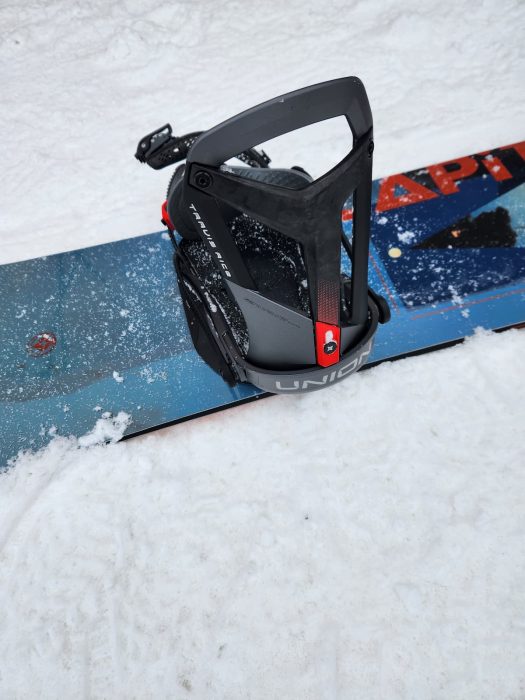

Here are some additional frequently asked questions about both of these boards.
Are these boards suitable for beginners?
Both boards are designed for intermediate to advanced riders due to their responsive nature and performance features. In other words, you would enjoy these boards more if you already had carving down, as these are snowboards designed to take your riding to the next level and not necessarily make learning to snowboard any easier.
While a beginner could technically learn on either the Burton Custom Camber or the Capita DOA, they will find a softer (more flexible), more forgiving board to be easier to learn on.
With that said, the Burton Custom also comes in a more beginner-friendly version called the Burton Custom Flying V. That version has the same tech features as the Burton Custom Camber. However, it’s just in a rocker rather than a camber profile. Rocker profile boards are typically easier to learn on because the profile is shaped like a lowercase “u,” where the tips of the “u” represent the board’s contact points. With the contact points pointed up and off the snow, the board is less catchy and precise, making it more forgiving to learn on. (This is as opposed to the Custom Camber version, which is shaped like a lowercase “n” where the contact points are always pointed towards the snow for a precise, grippy, in-control feel.)
Which board is more budget-friendly?
Altogether, the Capita DOA is the less expensive board with better deals.
The Capita DOA is more budget-friendly at $439.96 compared to the Burton Custom Camber at $535.96. The DOA is approximately $96 cheaper than the Custom Camber.
Additionally, if you buy these boards between June through September, you can likely find last season’s graphic on sale. The DOA’s last season model has historically been on sale for 40% off its retail price while the previous season Custom Camber has historically been on sale for 30% off its retail price.
Do I need a specific binding for these boards?
No, you won’t need a specific or compatible binding as long as you are using a binding from a well-known company in the last decade. (There were some old mounting systems that got wacky over a decade ago, but most are universal now.)
There is one important detail to know, though. -If you already have Burton Bindings, read this.
The caveat here is if you already have a Burton snowboard with bindings that match a Burton board currently and want to switch to a non-Burton board like the Capita DOA. So here’s what to look for. If you already have Burton bindings and want to switch to a non-Burton board, then make sure there aren’t the three letters “EST” in your Burton Bindings model name. If there is, these are only meant to work with your Burton board’s EST channel slider system and will not work with the Capita or any other board with the 2×4 or 4×4 drilled mounting pattern.
Why?
Burton boards, like the Burton Custom Camber, feature Burton’s Channel slider mounting system. This is a slider mounting system that can work with multiple types or brands of bindings. However, Burton made a specialized type of binding that pairs with this type of mounting system specifically. You can tell if your Burton bindings are slider system only bindings by looking for three letters in their model name. If you see “EST” in the model name, that means these are only intended to be used with the Burton channel slider system and would not be compatible with a universal drilled-in hole mounting pattern like a 2×4 or 4×4 mounting system, a non-Burton board, like the Capita DOA has.
Can I use these boards for backcountry riding?
No, I would not recommend either the Burton Custom Camber or the Capita DOA for extended backcountry or freeride use. These are resort boards that are intended to be used at your local mountain, where the terrain is patrolled and groomed.
Neither of these boards is designed to handle all of the various terrains and extremely deep snow you might encounter in the backcountry. If dedicated backcountry riding, deep powder touring, or extreme terrain outside the resort is your primary focus, you should look for a more freeride focused board or splitboard.

Steve Weber is the passionate snowboarder, skateboarder, and author behind Board of the World. He understands that most gear reviews focus on having the perfect snow conditions, but his testing methodology is different. Living in Pennsylvania, Steve describes exactly how a board performs when the conditions aren’t perfect. His reviews cover performance on ice, hardpack, and flat-out brick conditions. In other words, he reviews boards for the conditions that East Coast riders actually face.
Bringing 27 years of East Coast snowboarding and 21 years of skateboarding experience, Steve is a 42-year-old intermediate park rider. His recommendations are informed by decades of battling icy conditions, ensuring every review accounts for the board’s performance on the roughest of terrain.
For the last five years, Steve has poured his passion into writing in-depth, unbiased reviews that help riders make informed decisions about the gear they’ll use. He also works part-time at a snowboard shop in Northeastern Pennsylvania, which gives him a direct line to learning about the new gear tech months in advance. When he’s not writing reviews, Steve is often found riding at Montage Mountain and testing out new boards.
Steve’s goal with Board of the World is simple: to help every reader find the right gear so they can have fun outside from the first time they use it.