


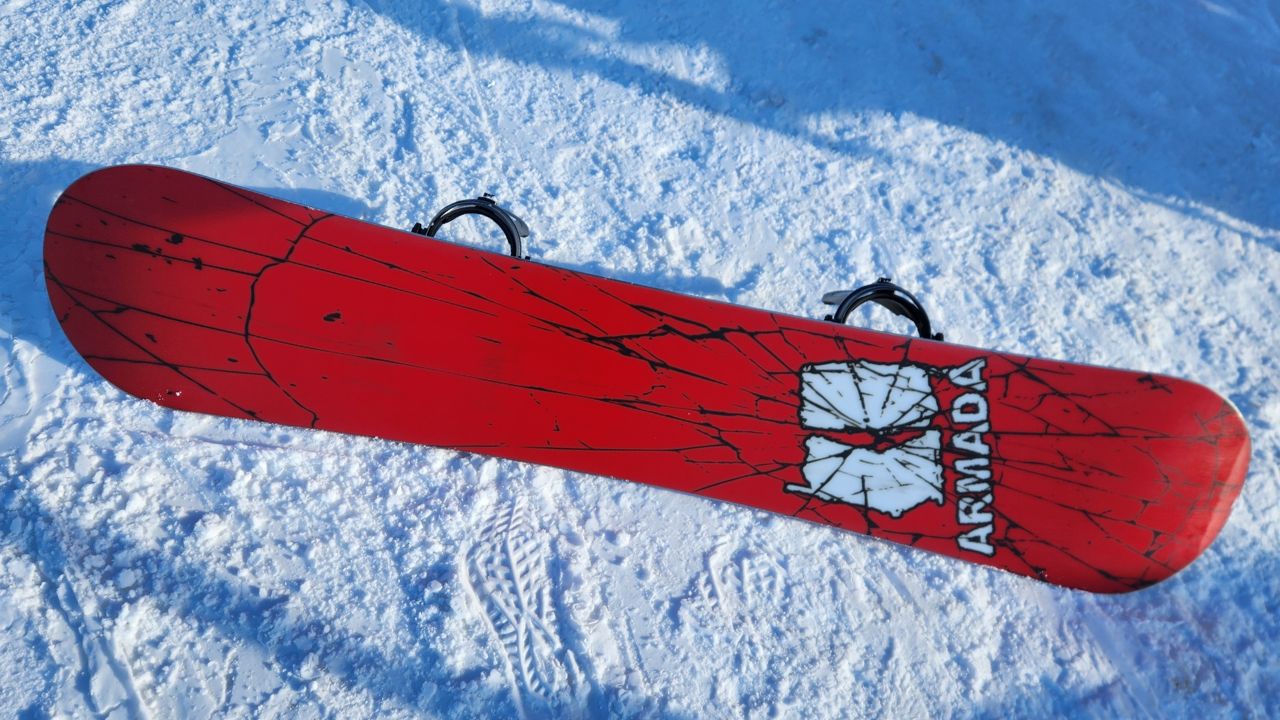

A Versatile Weapon of a Board That’s $100 Cheaper Than Anything Like It
Chapters
| Board Reviewed: | Armada Beatnik 2027 |
| Price: | $579.95 |
| Shape / Profile: | Directional twin, traditional camber with early rise nose and tail, 0mm setback, no taper |
| Pro Rider Who Rides This Deck: | The Beatnik is Danmimals (Dan Leidahl) pro model board. Dan worked with the Armada team on the board’s shape and construction. |
| Actual Flex Rating: | Rating: Armada rates this board at a 7 out of 10 flex. Actual Feel: It feels a hair softer at a 6.5 out of 10 flex, with a softer, pressable sweet spot just past the bamboo and carbon rods that extend about 5 inches past the insert packs. Get your weight past those, and it will flex easily. |
| Type of Rider Who Will Love the Armada Beatnik: | The all-mountain freestyle rider who wants one board for park laps, carving, side hits, and everything else. |
| Size I Rode: | 153cm at 142lbs, mens size 9 boot / the size worked perfectly for me |
Pros
- Has one of the fastest bases that I rode all season in a board that’s $100 – $220 cheaper than comparable boards
- Tons of pop for jumps and side hits / Easy and intuitive to time perfectly
- Carving experience felt controlled and powerful / Rode as well on groomers as it did on ice and hardpack
- Great in the park / Locks into a press once you find the sweet spot
- Smooth damp-feeling board / No chatter passed through underfoot
Cons
- Felt a hair catchy in choppier terrain
- Sizing properly is critical for this deck. Its flexing sweet spot extends past its bamboo and carbon boosters. You’ll need to get your weight beyond those for it to flex as it was intended to. If you go too small or large, it will throw off the whole feel of the board.
- It is not meant for really deep snow / It has zero setback and no taper.
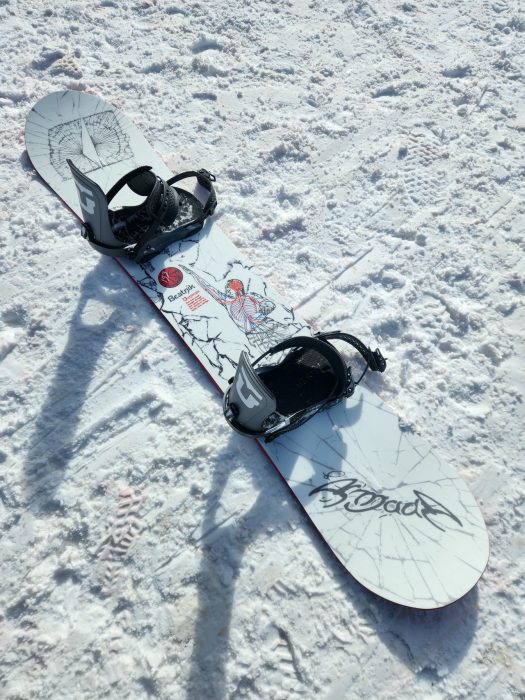
The Beatnik earned a 87.4 out of a possible 100 in our All-Mountain / Freestyle boards rating scale. Here are the stats from the review.
Summary: My Overall Impression of the Armada Beatnik Snowboard
The Armada Beatnik was a stellar all-mountain freestyle board, and I enjoyed every second that I got to ride it for this review. It does everything you would need a directional resort twin to do, and it will impress the living hell out of you along the way.
The Beatnik is outstanding in the park. It’s got an incredibly fast base, and it’s a strong, damp, and responsive carver for exploring all over the resort, too.
The Beatnik has a traditional camber with early rise in the tips, some carbon and bamboo for an extra boost, and you get a lot of board tech for your money at its $579.95 price tag (and the closest similar decks cost $680+).
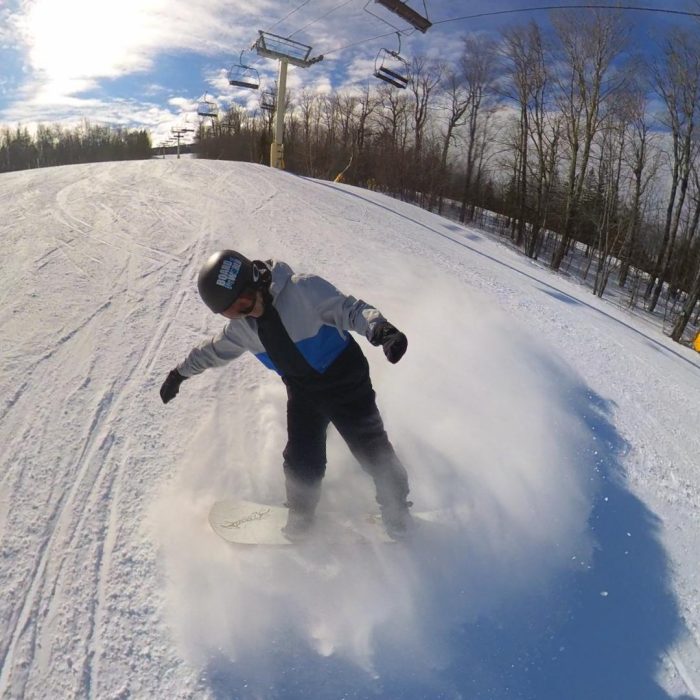
I rode the Armada Beatnik twice at Stratton, VT on both February 3rd and 4th, 2026. Both times we were on the 153, and I got to test it out in two completely different sets of conditions.
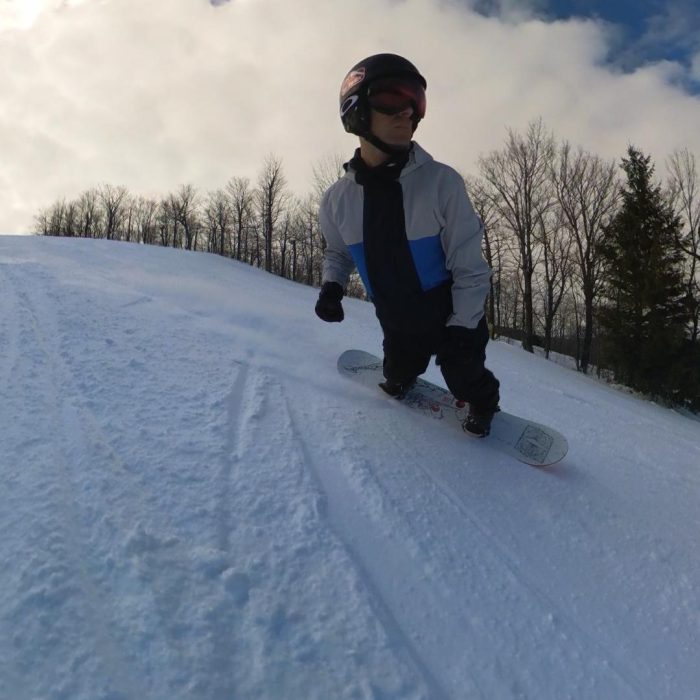
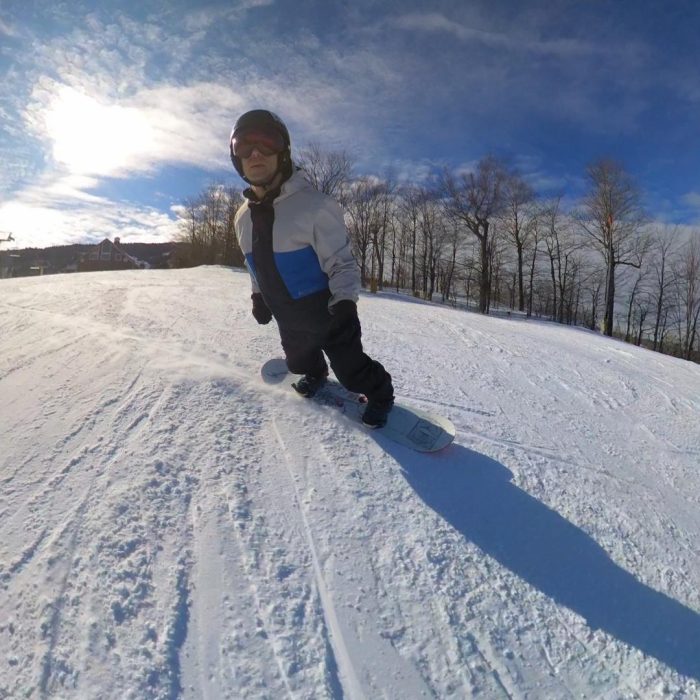
The first session was around noon, when it was a sunny, bluebird type of day. The snow was soft with a few hardpack spots in the shade. The Beatnik carved beautifully through the softer conditions. Then, the second session was at the other end of the spectrum, where it was late in the day as the sun was going down. The conditions were icy and firm, and the Beatnik still held its edge perfectly through the poor conditions, too.
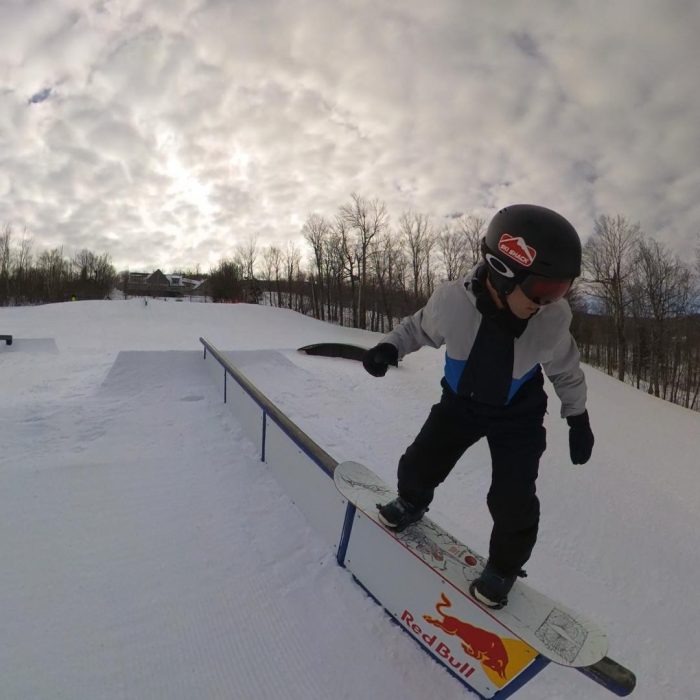
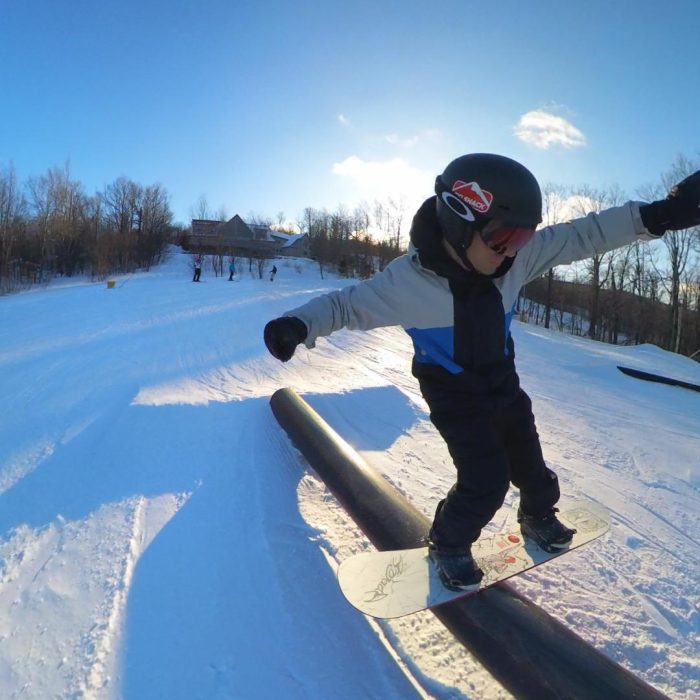
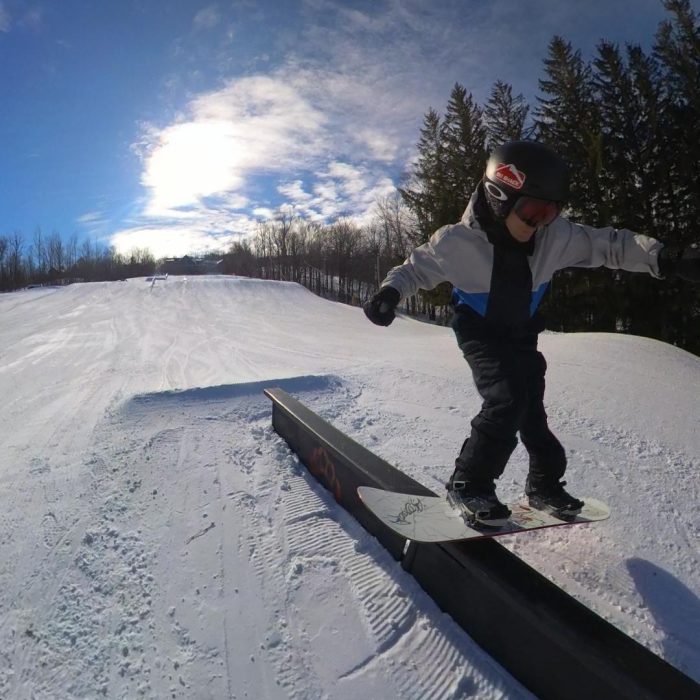
I spent a decent amount of time in the park for both sessions, and it became a favorite deck to jib and jump with. On jumps, it gives you an extra boost of pop, and for jibbing, the early rise tips made it forgiving to nose and tailslide, while the booster rods give the Beatnik an extra boost of pop as you come off the feature.
The one detail you’ll want to know about the Beatnik is that the flex pattern is uneven through the length of the board. What I mean is, there’s a soft
pressable sweet spot further out than you’ll expect it to be if you are trying to press or butter the Beatnik. Once you find where it is, this board becomes an all-mountain weapon. However, if you ride the wrong size, you’ll struggle to find that sweet spot. I think that’s why some other reviewers have called the deck stiff. It isn’t stiff. It’s just stiff in a few important places.
Let’s cover more about why that is next.
The Flex Is Uneven, and That’s the Whole Story With the Beatnik’s All-Mountain Versatility
The Beatnik can feel stiff under your feet even though it really is not a stiff board.
Armada rates the Beatnik with a 7 out of 10 flex rating. To me, it’s actually about half a point softer overall, and it earns a flex rating that’s closer to a 6.5 out of 10 flex. However, giving this board one single flex rating number is really not that useful, though, because its flex pattern actually varies throughout the length of the snowboard.
I think of the Armada Beatnik more as being stiff only in the places you need it to be stiff to get a powerful-feeling turning experience, but then it’s softer in all of the places where you need it to be more playful for riding in the park.
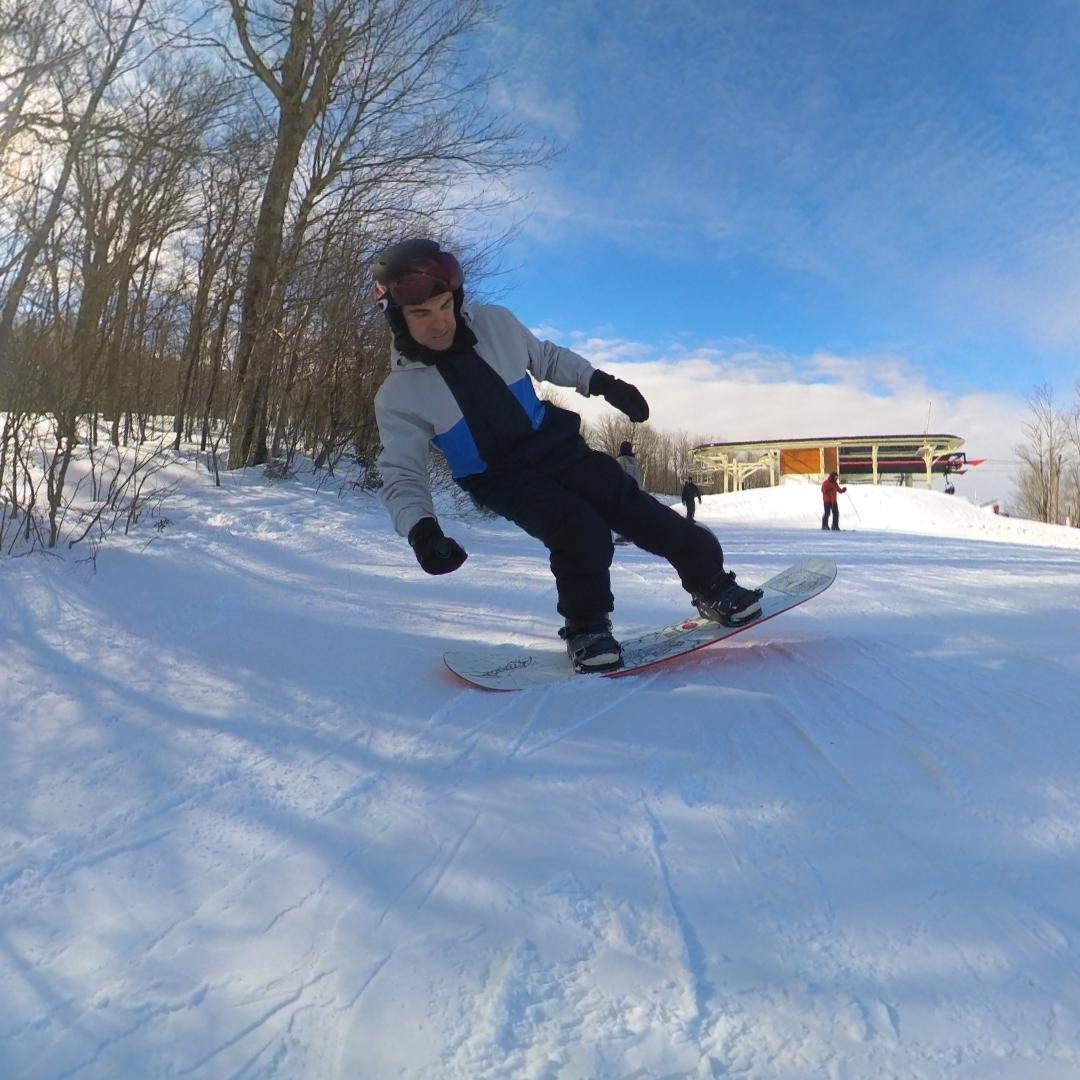
The trick is knowing exactly where those pressable and then stiffer sections of the board are, so you can better wield the Armada Beatnik like the versatile All-Mountain weapon that it really is.
So here’s my best description of what it feels like to flex this board, and where it feels its most pressable. The easiest way to illustrate it for you is to show you this diagram showing the construction and carbon configuration of the board.
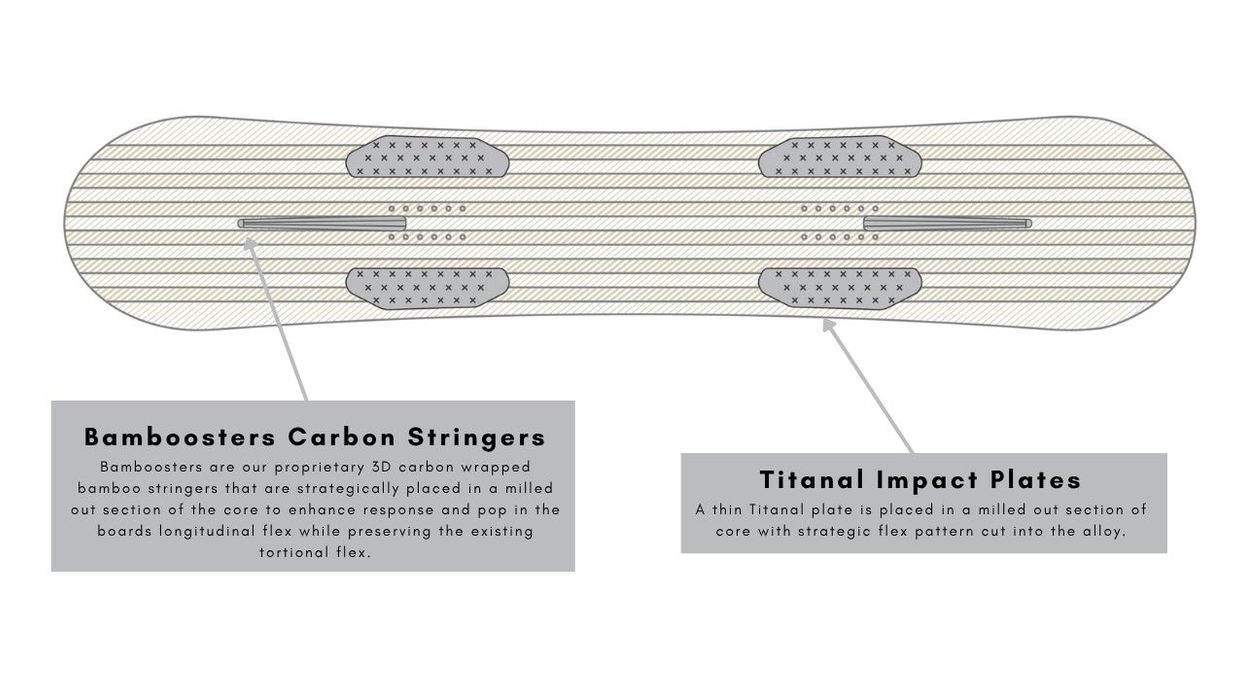
The diagram highlights the two tech features that alter the flex pattern of the Beatnik. Those features are the Bambooster carbon stringers that give the board its springboard-like pop, and the Titanal Impact plates that give the board some added shock absorption and extra carving power as you drive your toes or heel down into your turns.
Those two features make the board stiffer in a few places, though.
- Between Your Teet: The Beatnik’s flex feels like a medium 6/10 flex. There are no tech features running through the middle of the board to fight you.
- Right Under Your Feet: The flex feels stiffest at a 7.5/10 flex. That’s the Titanal Impact Plates under your bindings fighting you.
- 1-5 Inches (25mm – 127mm) Past the Insert Packs: It still feels stiff at a 7.5/10 flex. That’s the Bamboosters Carbon Stringers fighting to rebound against your press. This feature is really what makes the board feel stiff when you first try to flex it. It’s the section of the board you’d usually flex into to get a nose or tail press, and it’s got tech there fighting against your press.
- 5 Inches+ (127mm+) The Bambooster Stringers In The Nose or Tail: It feels like a pressable, medium 6/10 flex pattern. This is the sweet spot where you need to get your weight out over to press and butter the Beatnik.
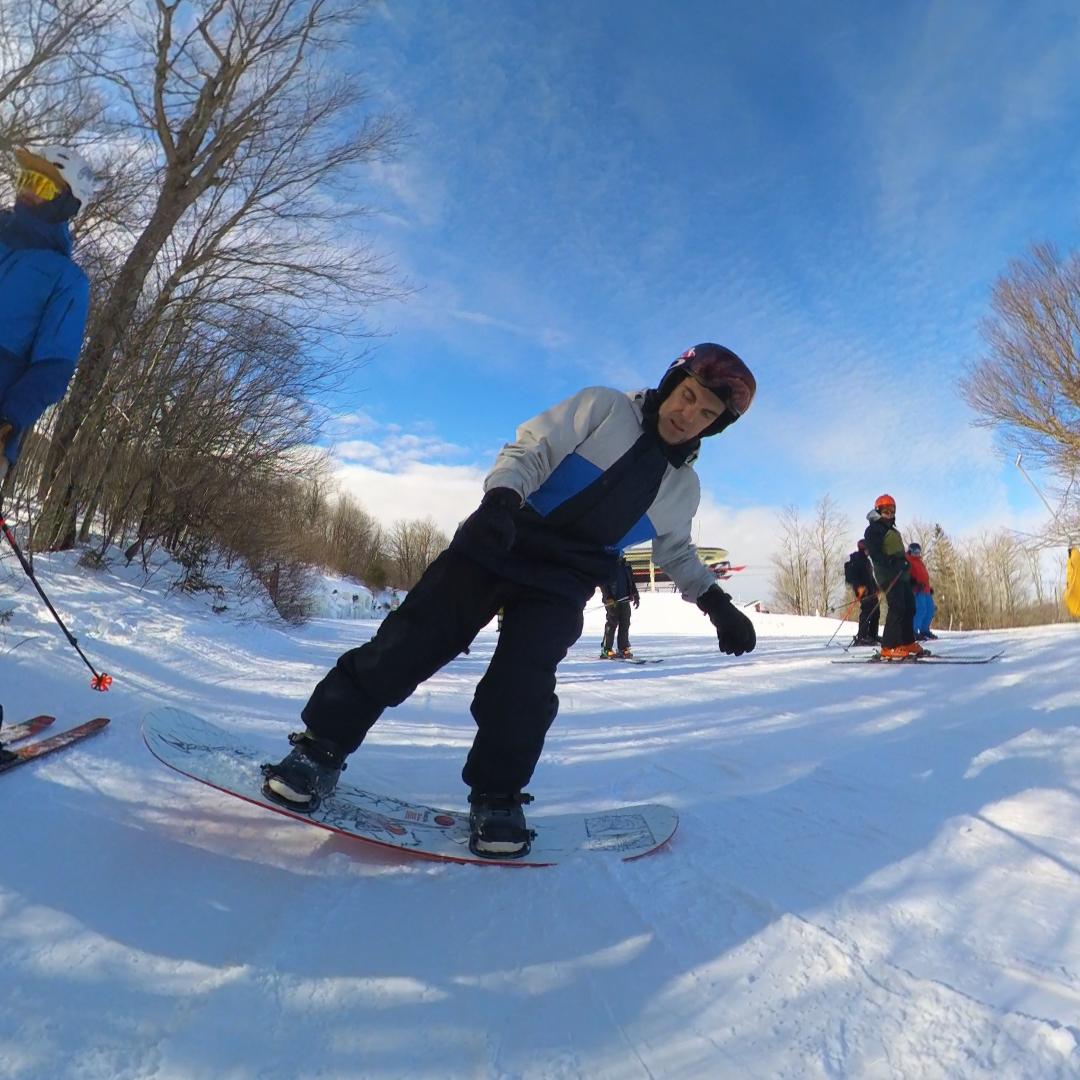
If you look at where my shoulder is in relation to the hinge point where I am pressing the board against the snow, you’ll get an idea of where the sweet spot to press or butter this board is. It’s about five inches past the insert packs.
When you get your weight beyond that spot, the Beatnik just locks down into a press that’s relatively easy to hold. And when you don’t, and you try to just nose or tail press it immediately underfoot, it feels stiff.
Overall, the Beatnik is a medium-flex rated board, and it’s easy to press and butter once you know exactly where to do it. So take another look at that construction diagram above, understand it, and get a feel for if those resistance points will help or hurt your riding.
They’re important features to understand, because they are what makes the Beatnik such a versatile board.
I Got The Feel of the Flex Wrong the First Time Myself
Something worth admitting here is that I actually wrote this board down as being “too stiff” for me at first, too. I kept riding it and did the flex test again. Once I got a better feel for the board, I liked it more and started to press and butter more easily. You will likely do that too.
That’s likely why some reviews say this board is “too stiff.” It really isn’t. The reviewer likely had the wrong-sized board or didn’t know where to press it.
How I Tested the Flex of the Armada Beatnik
In all of my reviews, I flex the nose and the tail separately against a fixed point, then twist the board across the waist to get a read on torsional flex, and I do all three before and after riding so the on-snow feel has something to check against.
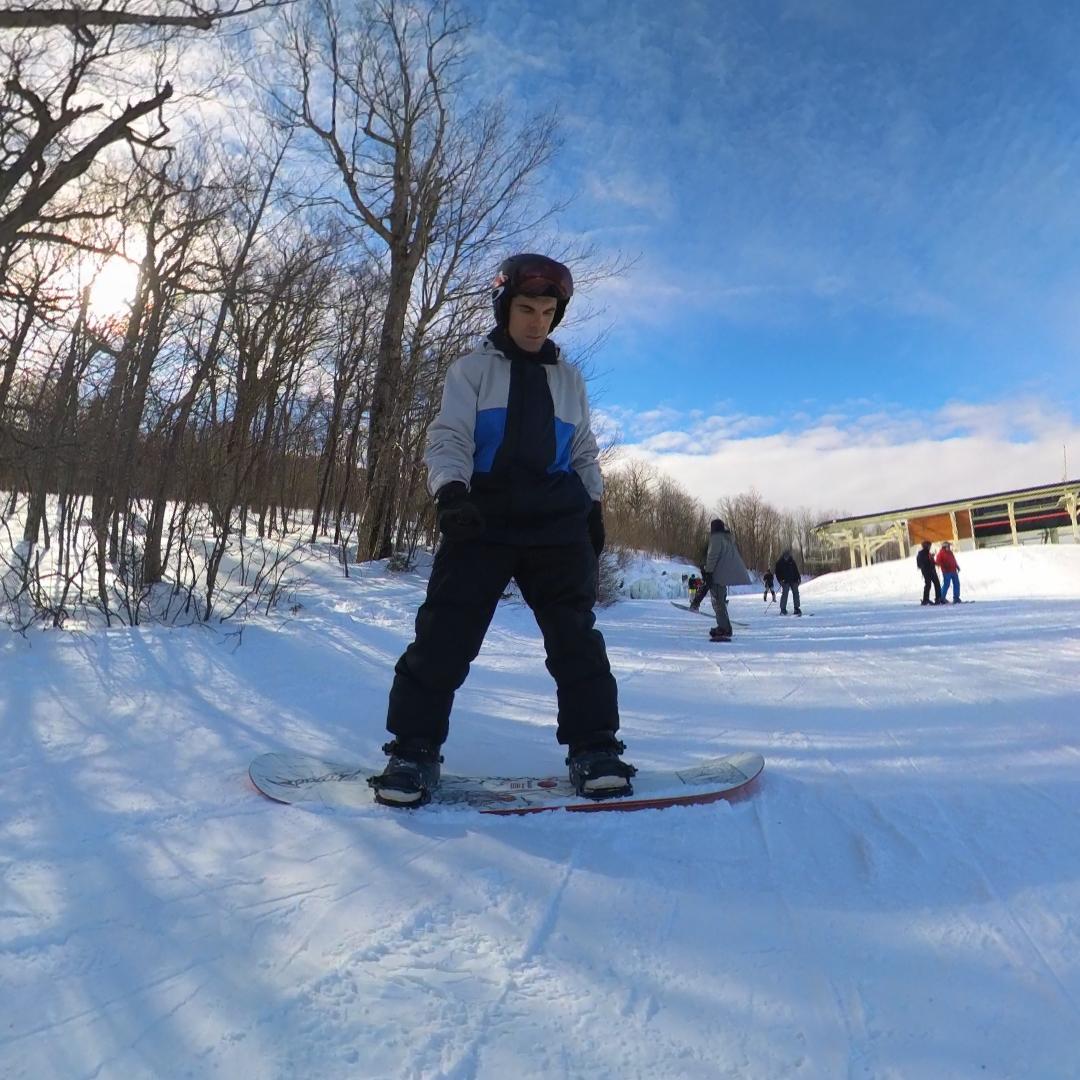
How Does the Armada Beatnik Perform Across the Entire Resort?
Speed and the Base: It Beat Almost Everything Through the Flat
The Beatnik had one of the fastest bases that I got to ride for the 2027 season.
There’s a long flat section that you have to cross to get over to the park at Stratton. Most of the boards I rode this season weren’t able to make it across this section without me needing to push. The Beatnik went straight through it, and I never had to take my foot out.
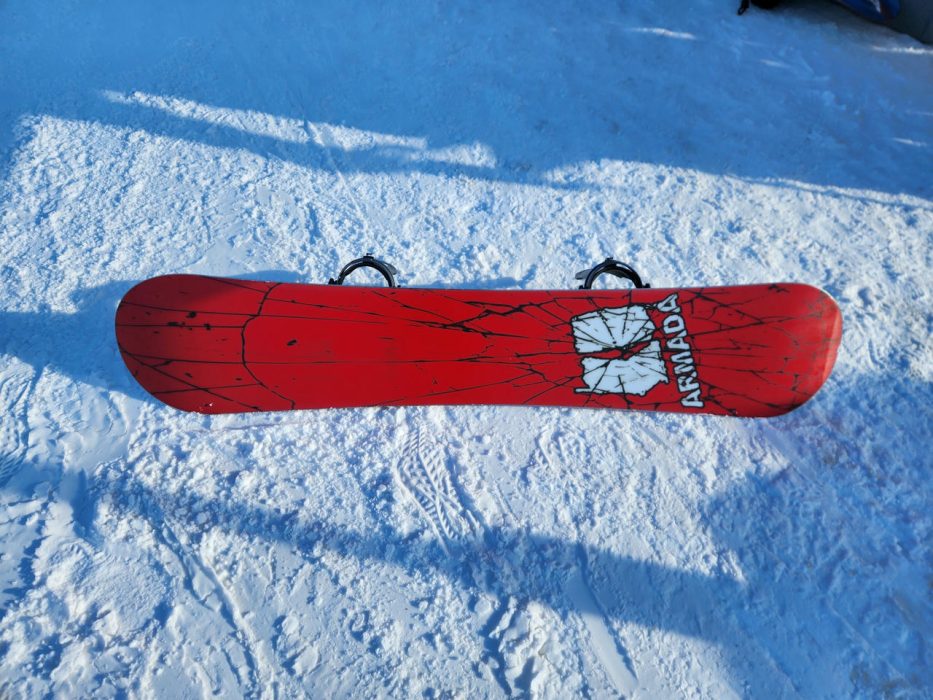
Out of everything I got to ride while I was in Vermont, I counted only three all-mountain boards that were able to clear that section. It came down to the Armada Beatnik ($579.95), the Burton Custom Camber ($679.95), and the Capita Super DOA ($799.95). Those were the only boards that had bases fast enough to make it through that section, and the Beatnik is by far the least expensive of the group.
More specifically, the Beatnik runs a sintered PTEX3000 base. It’s fast, durable, and holds its wax well. You’ll need to wax it every 3 to 5 days for it to hold its glide.
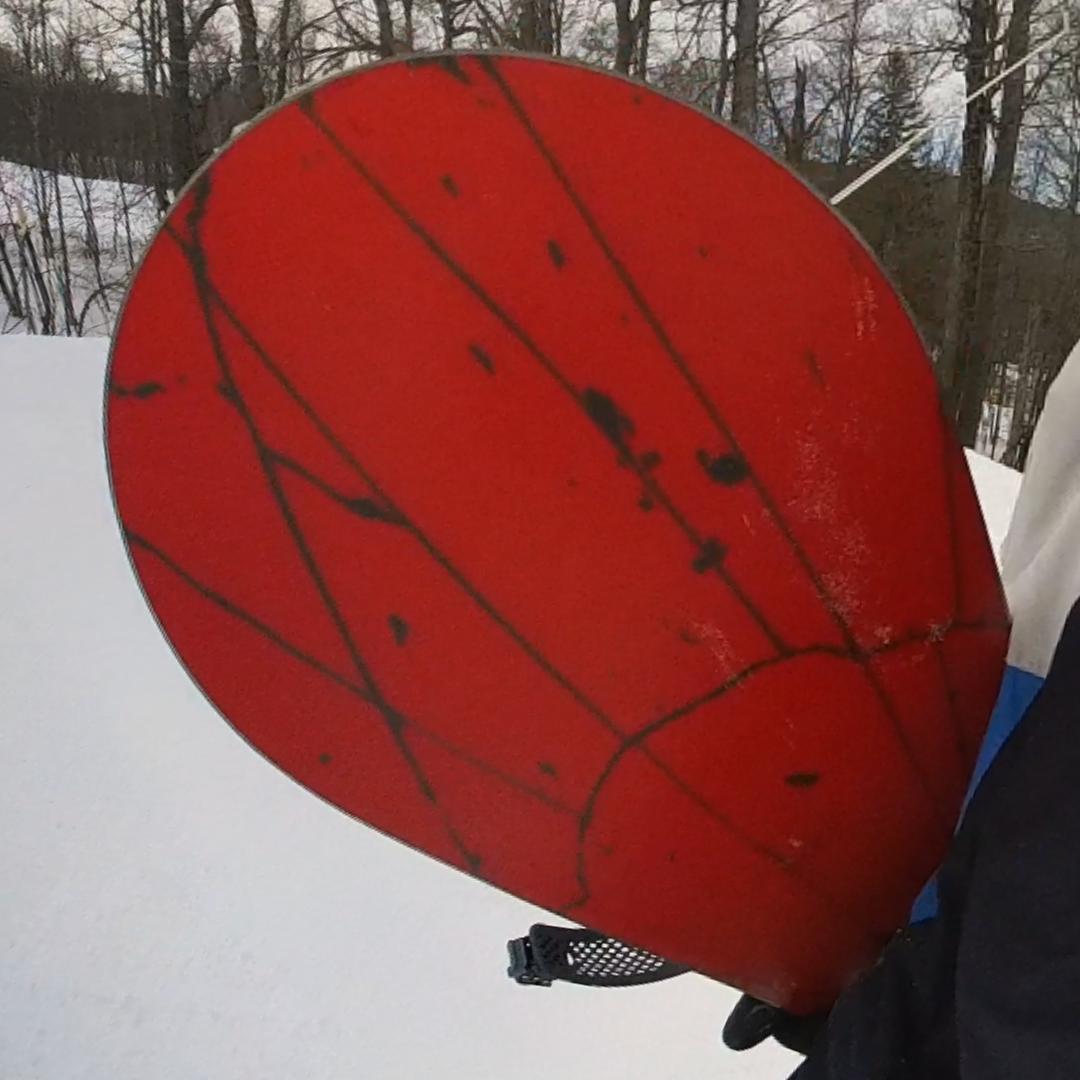
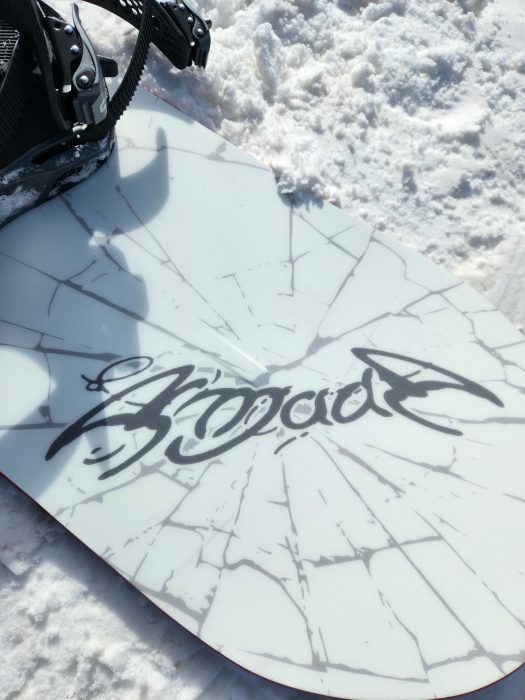
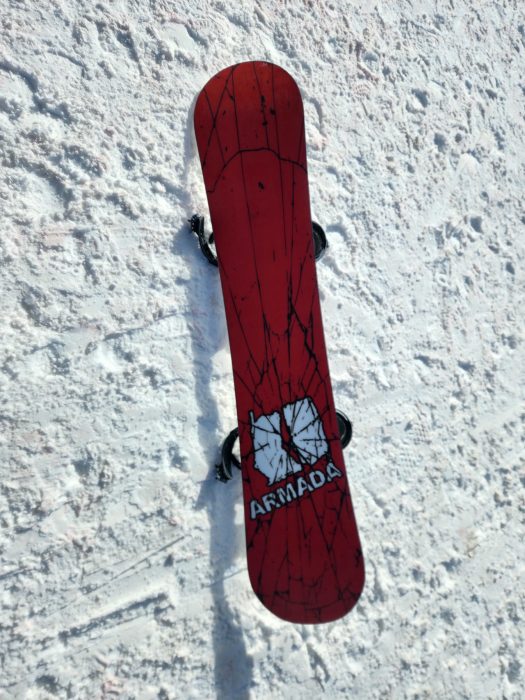
Here’s a close-up of me holding the base near my camera.
Carving
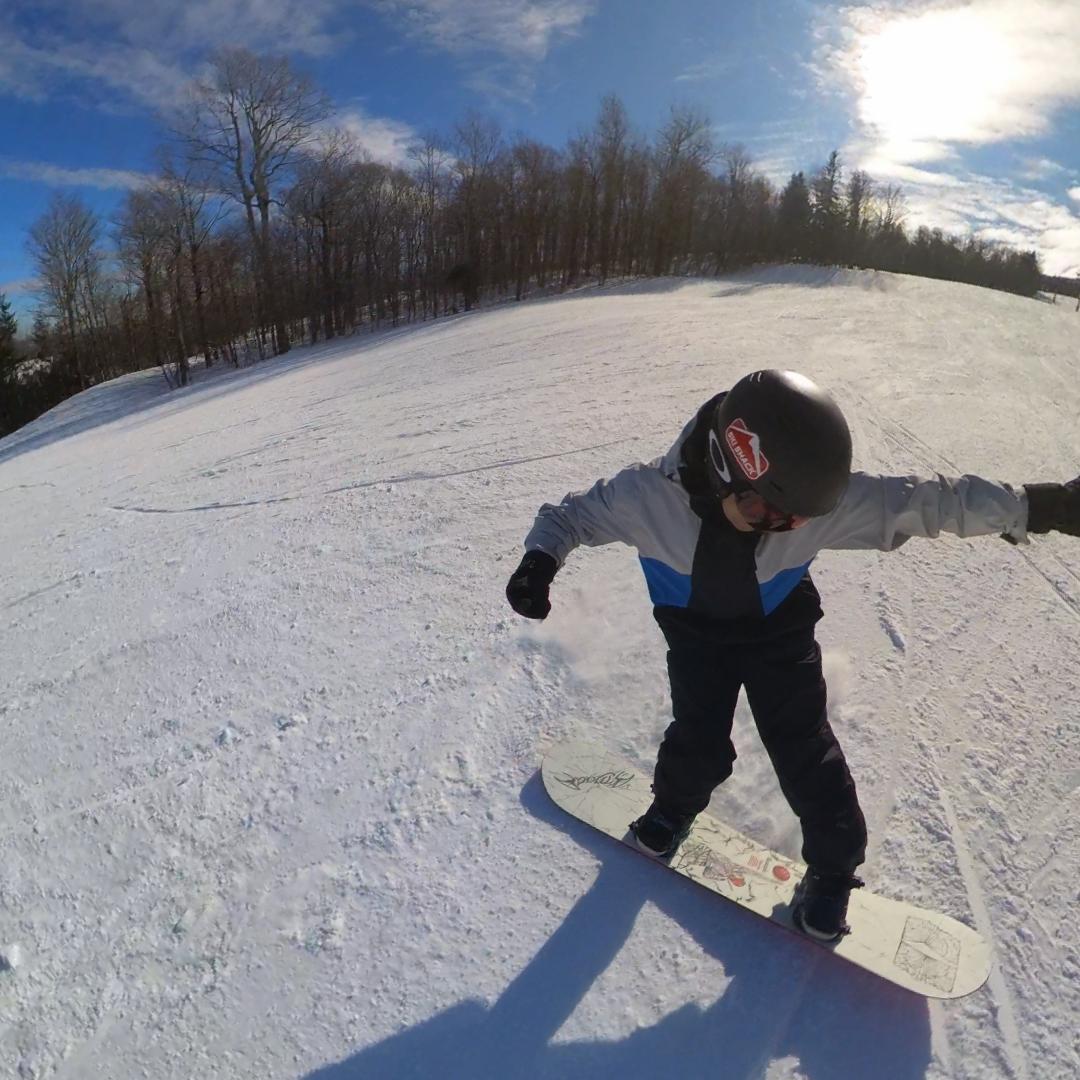
This board has some serious carving power behind its turning experience.
The extra turning power added comes in from the combination of the board’s generous camber section between your feet, the impact plates under your toes and heels, and the carbon booster rods that are just outside of the insert pacts in the nose and tail.
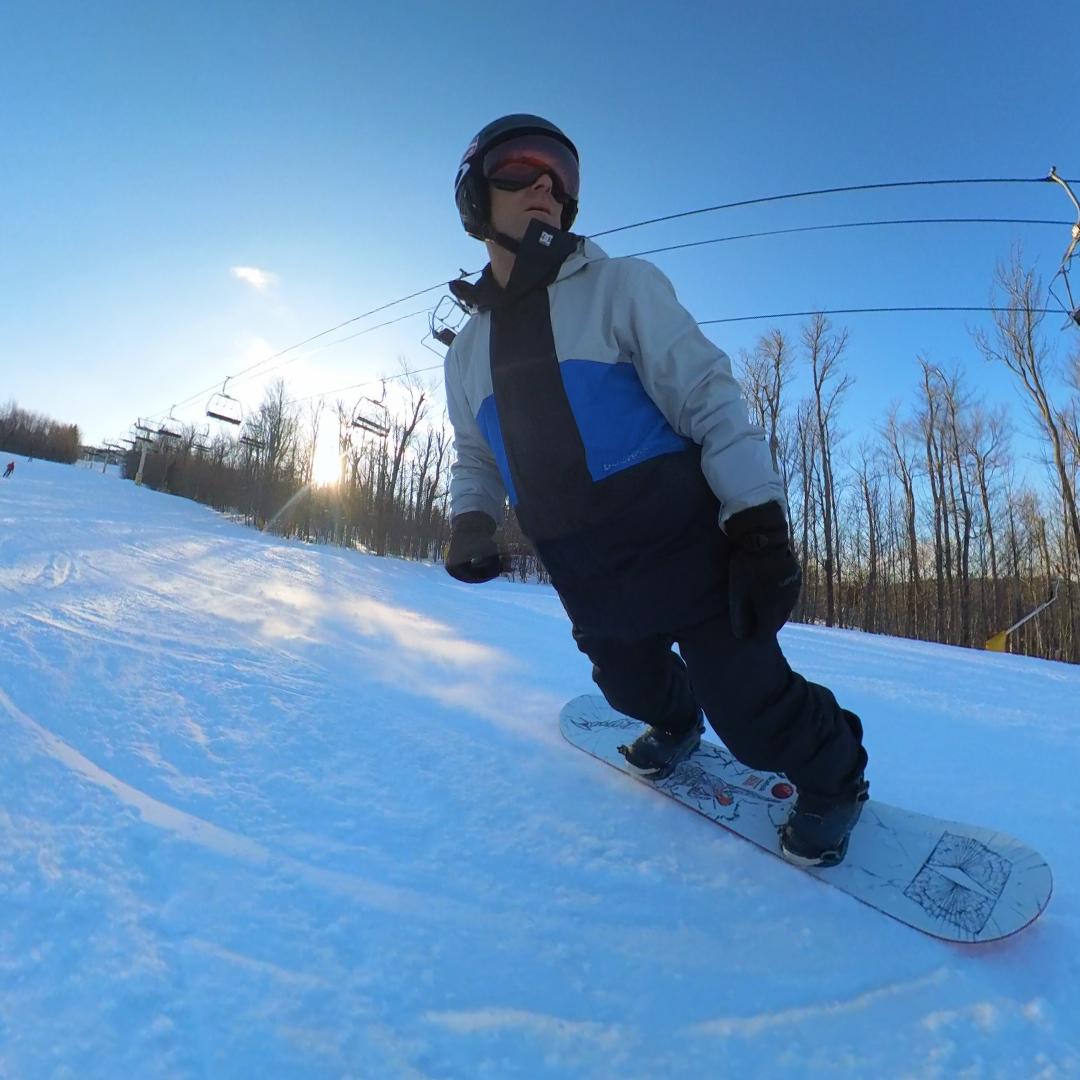
Thanks to early rise in its nose and tail, the Armada Beatnik is an easy board to get on its edge, and its radial sidecut gives it a smooth feeling turn that locks into its arc and then it gives you this little extra slingshot-like boost as you come out of it and into your next turn.
The Beatnik is easy and stable to carve with, so you’ll push yourself to go a little faster and charge a little harder with it.
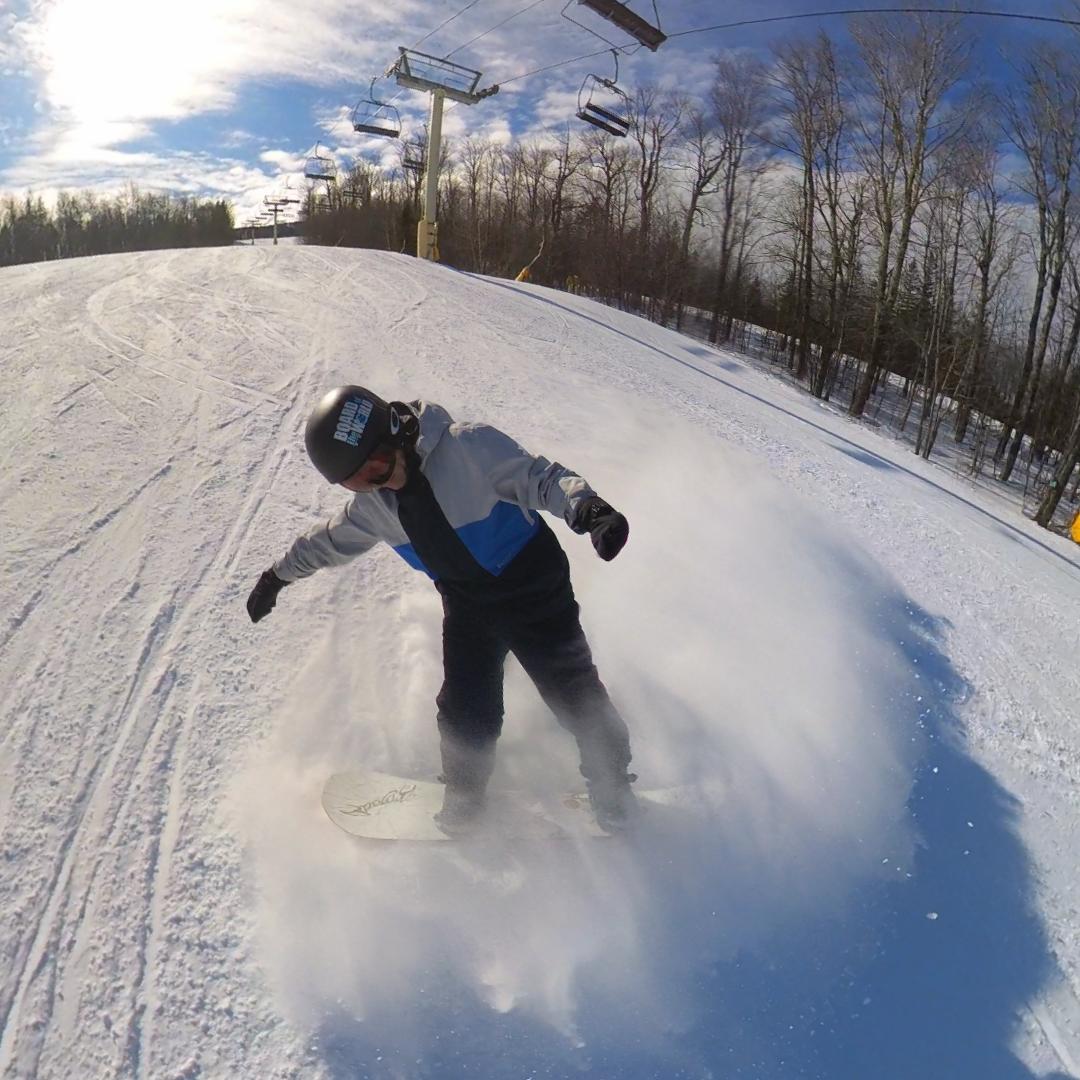
At the end of day two, it started to get icy as the sun went down, and the Beatnik still held a strong edge in the icer conditions, too.
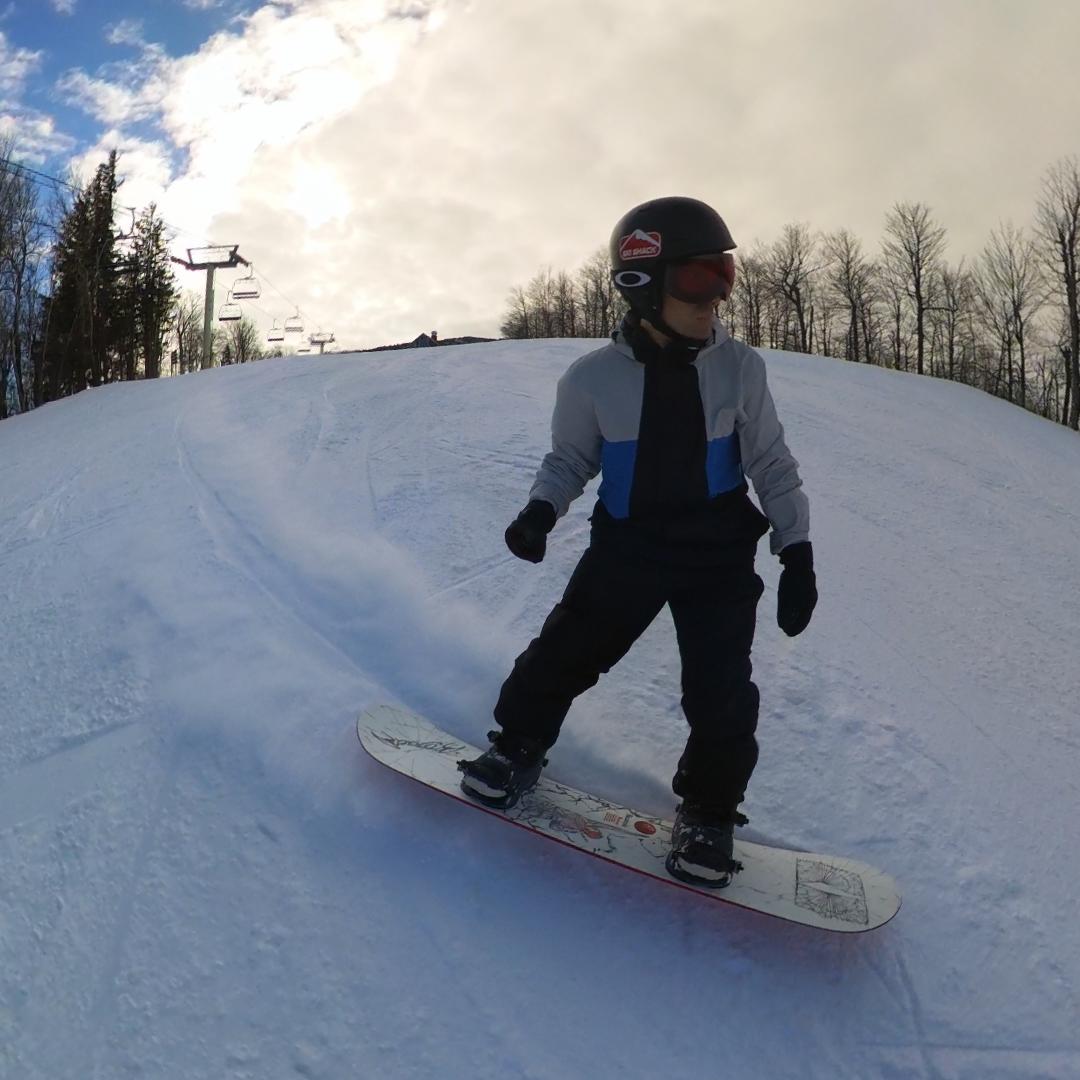
This deck performed well for tighter, medium sized carves, so it would be fine for all types of resort carving and the occasional tree run.
Jumping
The Beatnik is also a great deck for hitting jumps and side hits of all sizes. It’s also really simple to time the pop in this board perfectly. You load up the camber, pop off the lip, and then Bamboosters Carbon stringers work to rebound the board back into its original shape. The added rebound give you an extra boost to go a little further and higher than you would have expected to go.
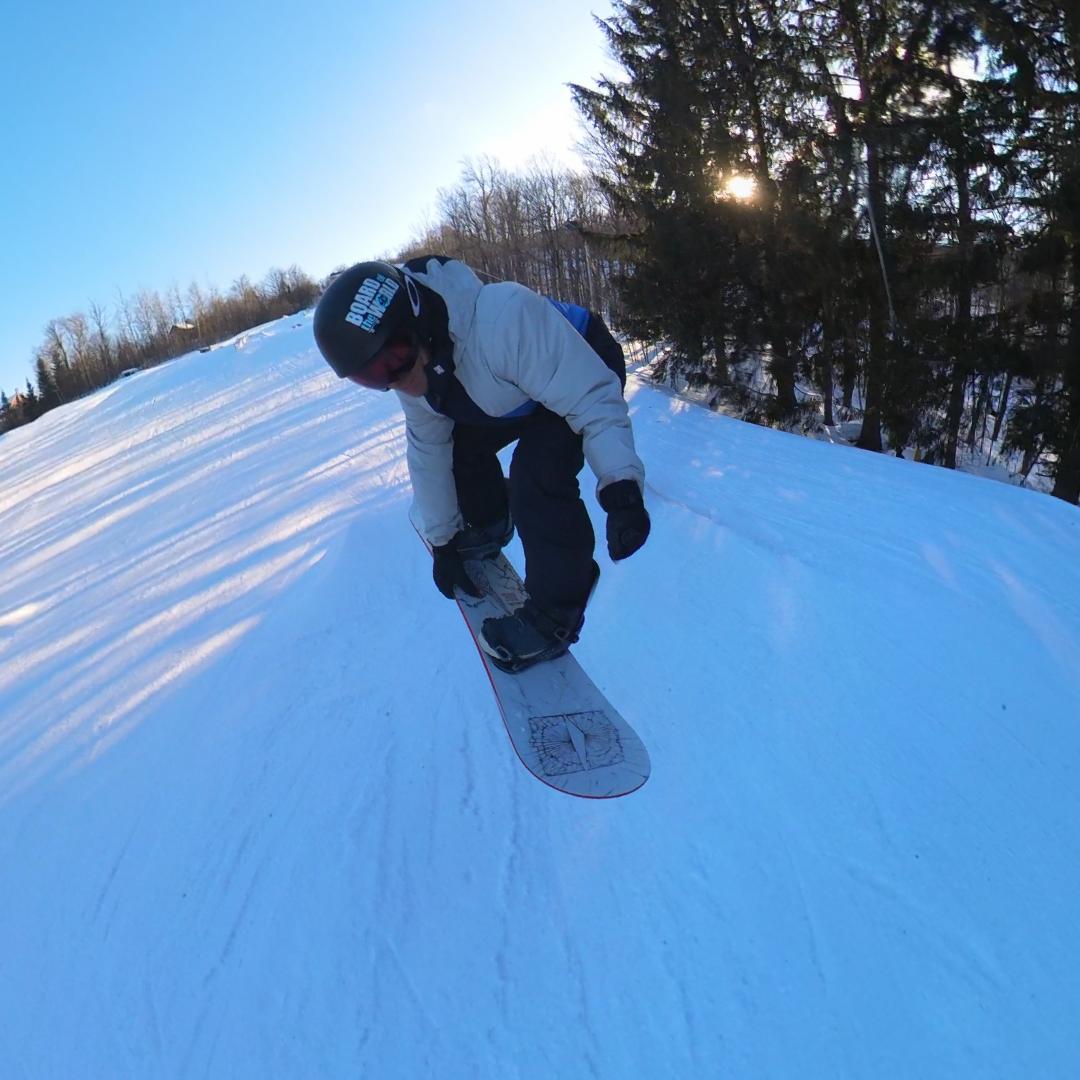
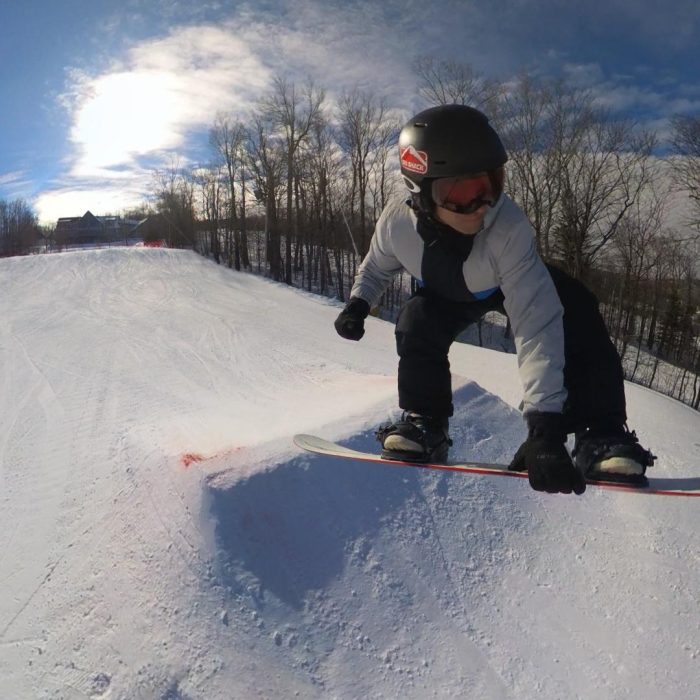
With last season being such a crummy season for a lot of our friends out west, a few of the other reviews I saw for this deck mentioned they didn’t really get to hit a lot of park features or jumps with it.
I did, and I assure you the Beatnik delivers the extra boost it promises.
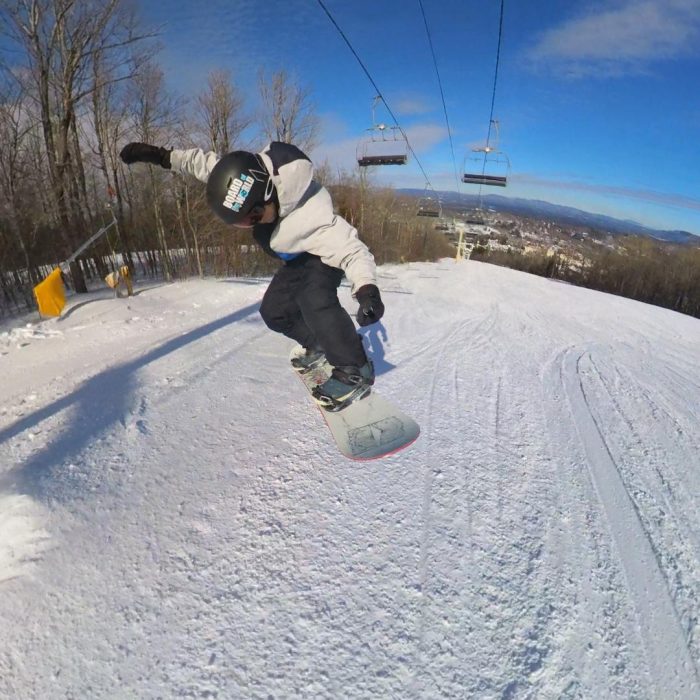
The Armada Beatnik is also a really forgiving board to land with, too. There were a few times when I was a bit off-axis with my spins, and the early rise in the tips allowed me to pivot my way around and ride away.
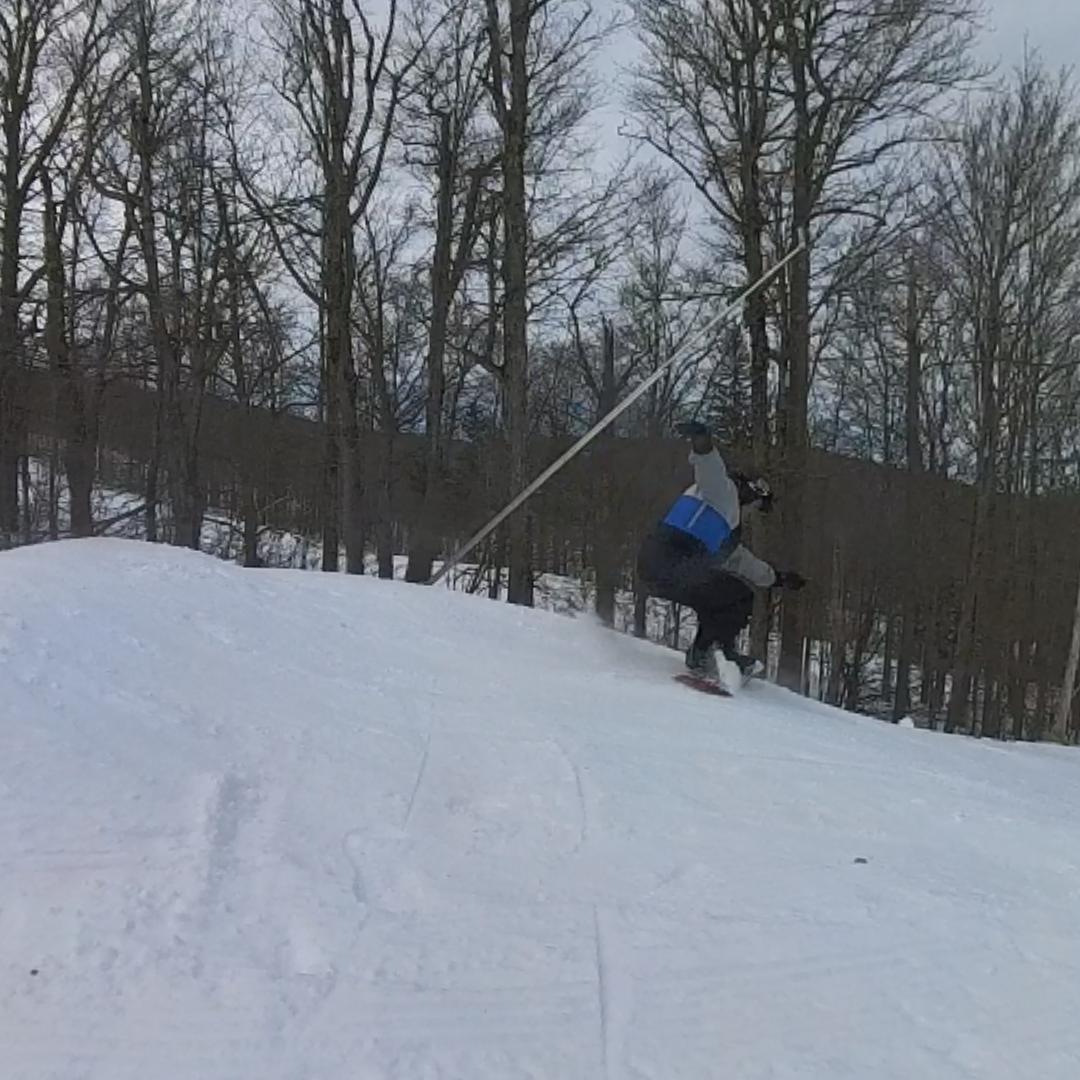
A catchier board would have caused me to slam if I landed like that.
The last jumping feature to mention is that the Beatnik has some added shock absorption built into it. Danimals and Armada added in Titanal Impact plates to absorb the energy from heavier landings, and these work to protect your knees as well as the board’s core.
Jibbing
The Beatnik jibs so much better than I thought it would. The main reason for that comes right back to those softer flex zones that I covered earlier in the flex is uneven section.
When you put your weight out in the right places, the Beatnik gets pressable, while still having that added stability a softer jib board lacks.
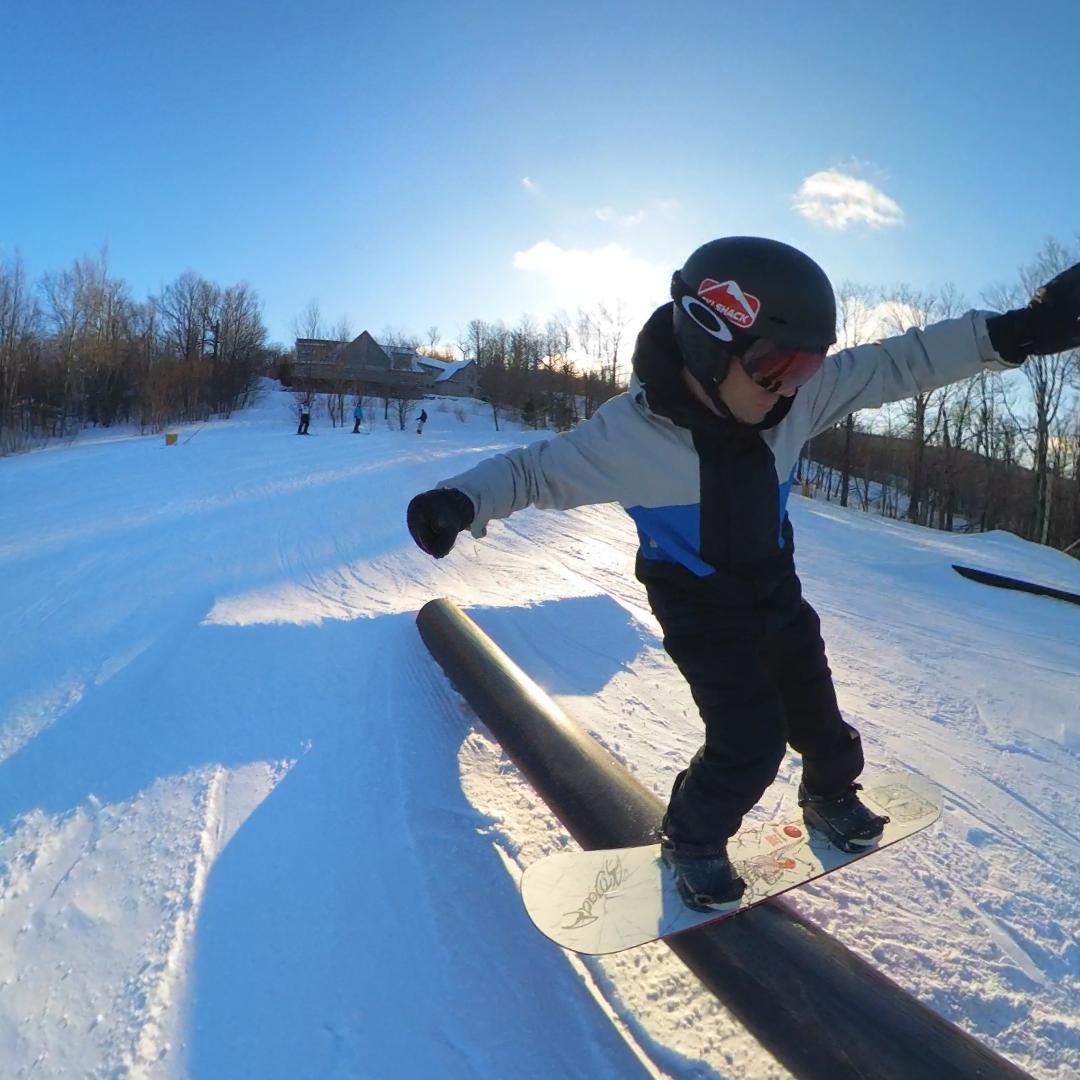
The early rise in the the nose and tail makes it forgiving / feel catch-free to nose and tailslide with, and once you get your weight out past the Bambooster Carbon stringers, it locks into a press.
And when you’re ready to come off of the feature, those same carbon stringers give you an extra boost of pop out.
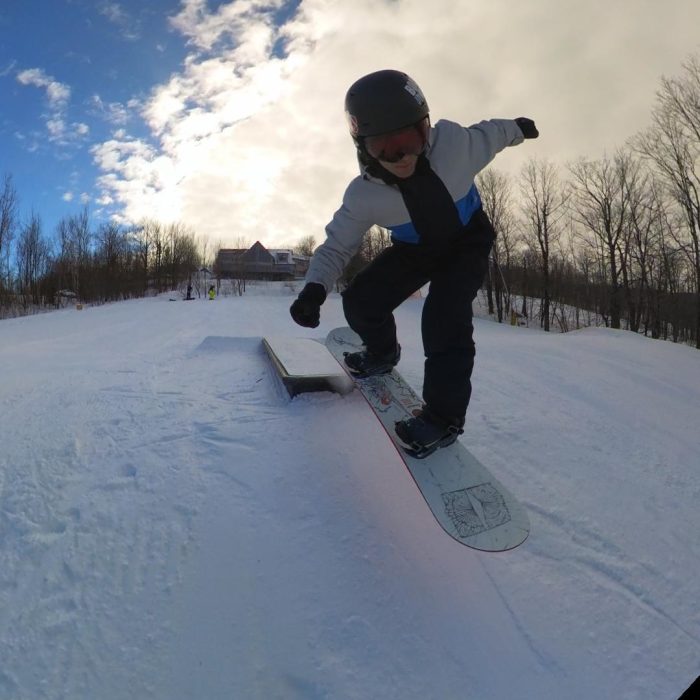
Now would I get this board to jib with? No way.
You get this because it can jib, jump, and carve. Most boards tend only to tick one of those boxes.
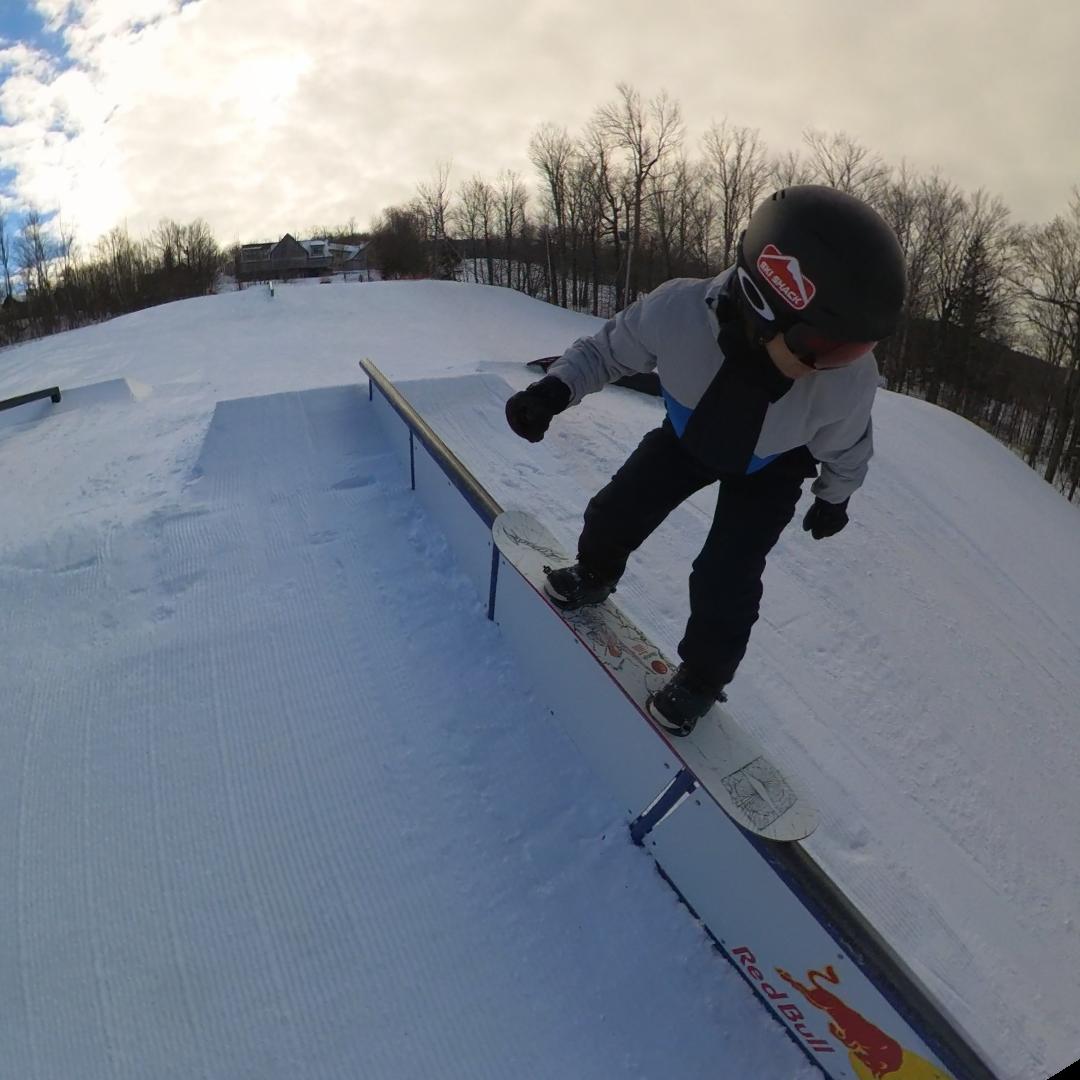
Buttering
It’s the same story as jibbing. Once you know where to press it, this board butters so easily.
To put a scale on it against other boards I’ve been on for the season, it’s not as easy to butter as say the Rome Boneless, but it’s easier than the Burton Custom Camber. That’s more the category of boards this lives in.
Riding Switch
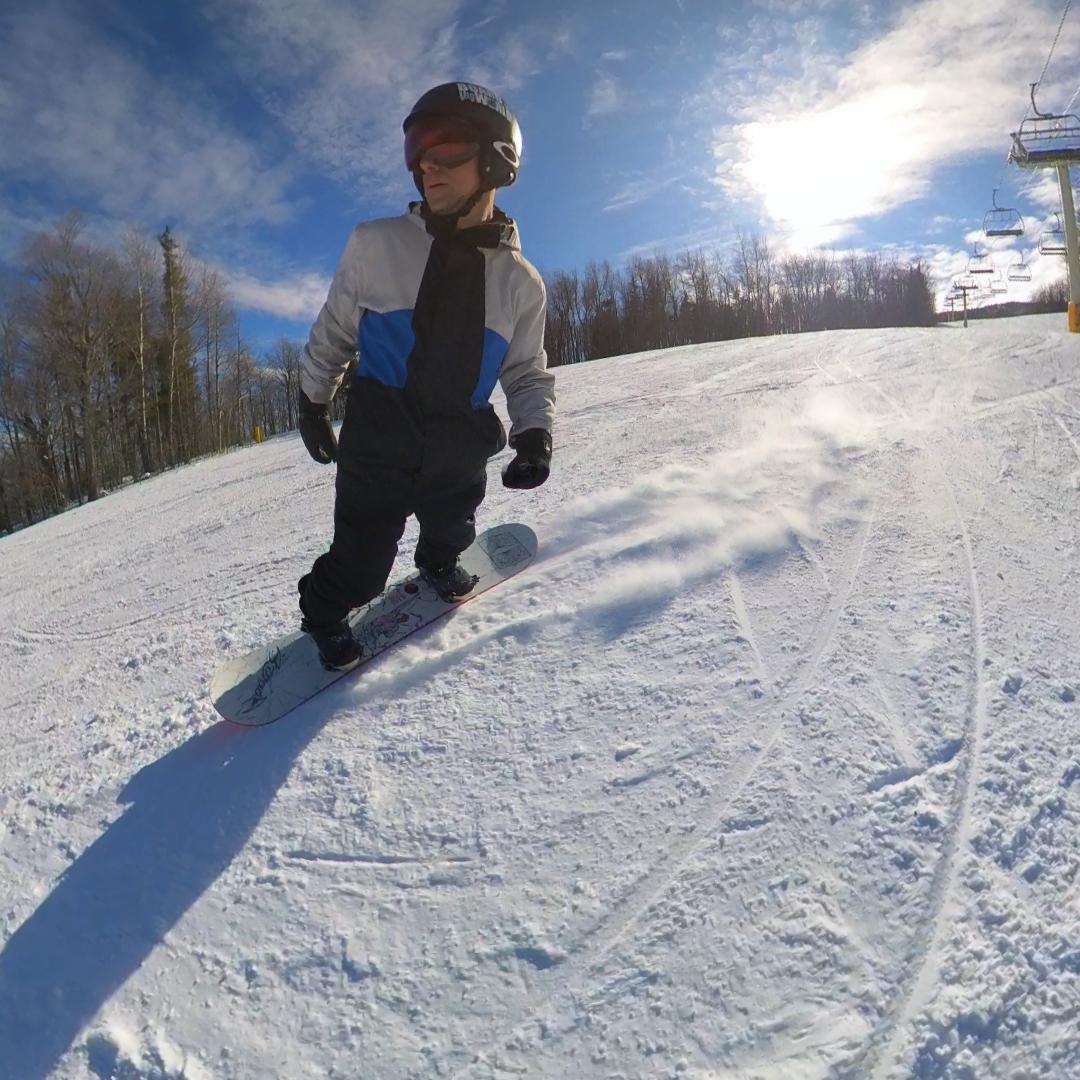
Riding switch feels easy on this board, and I never had to think about which end was in front. The Beatnik has a centered stance, no taper, and a nose and tail that flex the same, regardless of which foot is in front. Even though the nose is slightly longer and more rockered, it basically rides like a twin.
Dampness
No chatter, even in chopped up snow. Those Titanal impact plates are an aluminum alloy that brands use specifically to kill vibration, and it’s a premium feature at this price. It’s a big part of why the Beatnik feels like a more expensive board than it is.
Powder
This isn’t the board for it, and I’ll push back on Armada a little here. Their product video has the pro rider calling it capable of being a powder board. It has a zero setback stance and no taper, so there’s nothing in the shape helping you float. It’ll get you through soft snow just fine. You’re not going out looking for a powder day on it.
Weight of the Board
This board felt on the lighter side to me. I looked up its weight, and see it runs .3lbs lighter than the average all mountain board.
Armada lists the 159 at approximately 6.2 pounds, and they didn’t publish the weights for the other sizes yet. I am estimating the 153 I rode would have weighed 5.9 to 6.0 pounds. or .3lbs lighter than the average deck for my size.
Armada Beatnik vs. Capita Mercury
While I was riding the Beatnik, the board it kept reminding me of was the Capita Mercury. It’s the same style deck, and it feels similar to ride. They’re both fast. They carve with some oomph behind them, they both jump and jib phenomenally well. They’re just versatile and good at what they do.
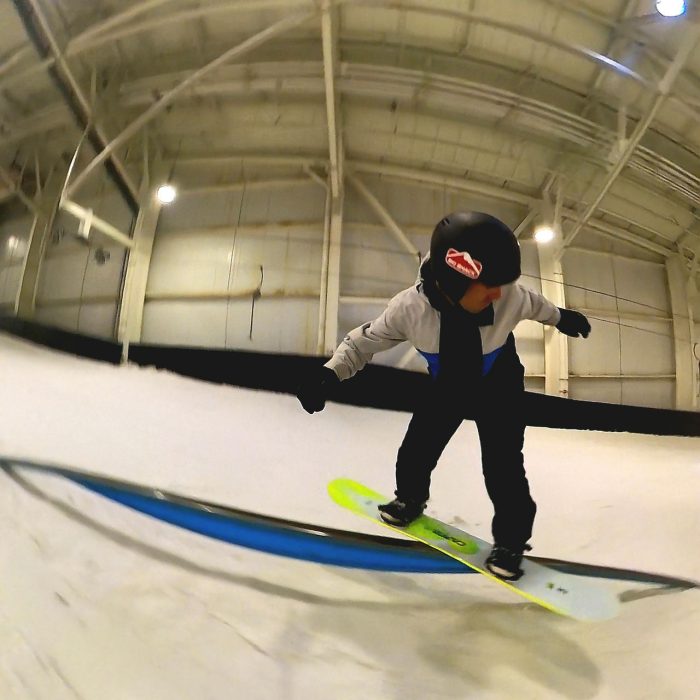
So here’s the way that I’d steer you if you were stuck deciding between both of these boards.
Consider Their Price
The difference that matters most is the price. The 2027 Capita Mercury costs $699.95. The Armada Beatnik is only $579.95. That’s a $120 between them, and it’s worth knowing what that $120 actually buys you, because you might not even notice it.
| Spec | Armada Beatnik 2027 | Capita Mercury 2027 |
|---|---|---|
| Price | $579.95 | $699.95 |
| Shape | Directional twin | Directional twin |
| Camber Profile | Traditional camber with early rise nose and tail | Resort V2, camber dominant with early rise tips |
| Setback | 0mm, centered | 0.5 inches (12.5mm) |
| Brand Flex Rating | 7 / 10 | Medium-stiff, around 6.5 / 10 |
| My Flex Rating | 6.5 / 10 overall, 6 in the pressable zones and 7.5 underfoot | 5.5 / 10 overall, the nose feels softer and closer to a 5 / 10 |
| Edge Hold Tech | None listed (keep your edges sharp for ice) | New Age Progressive Death Grip (an extra serrated bump for added grip on ice between your feet) |
| Damping Tech | Titanal impact plates in the binding zone | Carbon Flax Amplifiers |
| Ability Level | Intermediate to Advanced | Intermediate to Advanced |
| My Score / All-Mountain Freestyle Category | 87.4 / 100 | 92.4 / 100 |
What the Extra $120 Actually Gets You If You Buy the Mercury
Two additional things, and I want to be fair about both of them because they’re real.
A setback stance for improved pow performance. The Mercury sets you back half an inch. The Beatnik riding stance is dead centered. That half inch means the Mercury floats a little better when it gets deep. Neither are a dedicated powder board by any means, but the Mercury floats better than the Beatnik in deeper snow.
Death Grip edge tech for added grip on ice. Capita’s sidecut adds in an extra contact point into the board’s edge between your feet. This extra bump gives you some additional grip on ice and harder surfaces. Now, the Beatnik still grips to ice and hardpack better than I expected, but the Mercury has added feature to give it a little extra grip on ice.
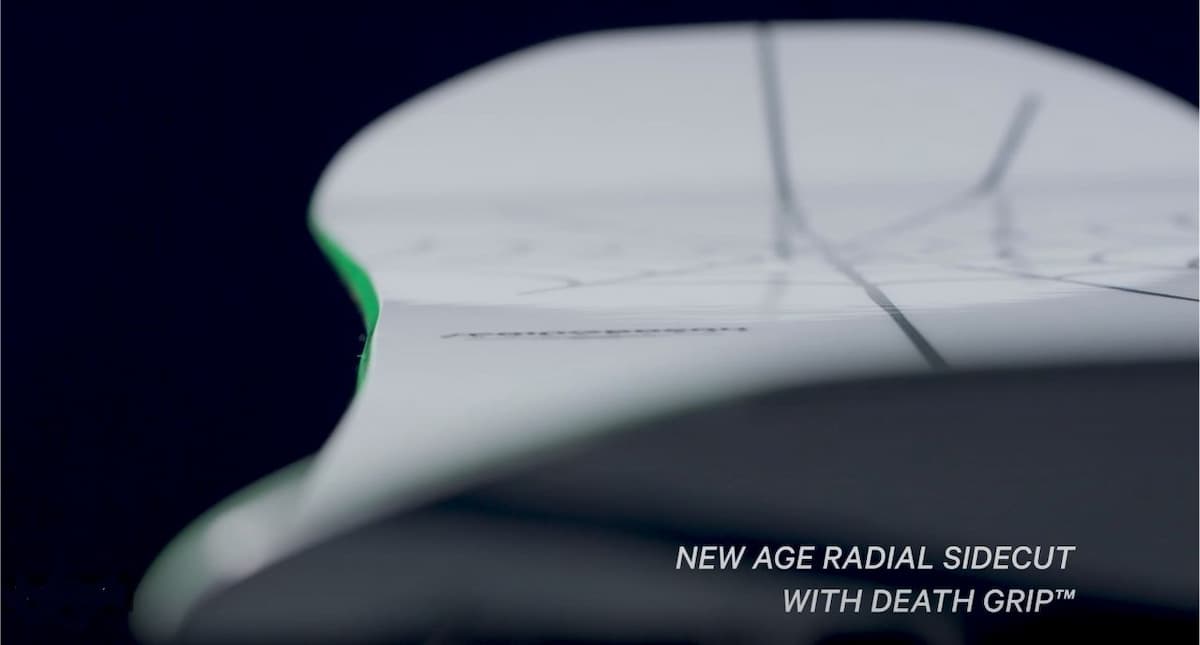
That’s the main difference. If you ride a lot of deep days or your home mountain is a total sheet of ice, those two things are worth paying for.
Choose the Capita Mercury if
- You get real powder days and want the setback stance for helping you float
- Your home mountain is icy and you want the Death Grip for added grip
- You want the higher scoring board and the extra $120 isn’t a factor
Choose the Armada Beatnik if
- You want to save $120 without sacrificing much.
- The park is where you spend most of your day. The Beatnik is more fun in the park.
- You ride switch a lot. The centered stance makes it a little easier riding switch than the setback in the Mercury.
- You want the Titanal plates, which is a genuinely premium damping feature at this price.
My take is for $120, go with the Beatnik, and you’ll likely not miss those other features. Manually set your stance back on the deeper days and keep your edges sharp for the icier days.
You can read my full review of the Capita Mercury to learn more.
Who Is the Armada Beatnik Good For?
The Beatnik was made for the all-mountain freestyle rider who wants a single board for the whole resort. It’s perfect for park laps, side hits, rollers, and carving groomers in between.
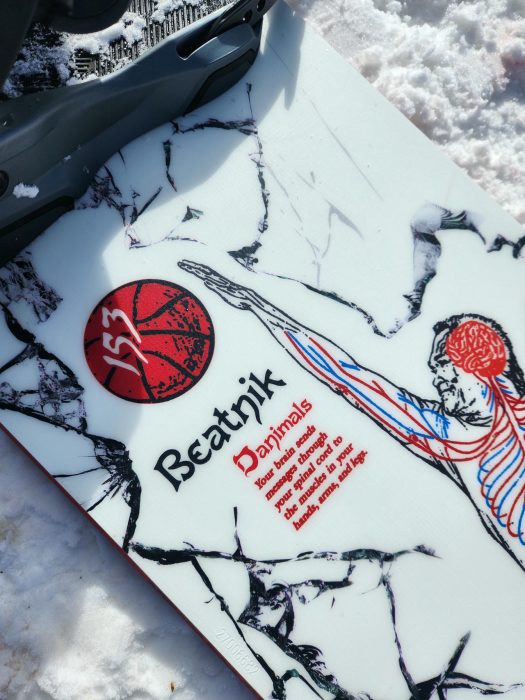
Experience wise, it will be best for the intermediate rider who already knows how to turn. Any rider can learn to ride this board, but the intermediate to advanced rider will have the most fun on it.
You don’t need to be great rider to enjoy this one, but you do need enough time on snow to figure out and appreciate its strengths.
So Who Is the Beatnik Not For?
The rider who only wants to jib with it. It presses better than a cambered board usually does, but at $579.95 there are cheaper and softer boards built just for rails. Get this one more for its versatility (not just in the park to jib and jump with but across the entire resort).
The rider who can’t find their actual size and sized up or down to get a deal. I keep coming back to this because it matters more on the Beatnik than on any board I’ve reviewed for the season. If you get your sizing wrong, you’ll struggle to find the pressable zones.
The powder rider. It’s got a centered stance and no taper with no added float features, so you’ll have more fun on a board designed to float.
Bindings I Rode It With
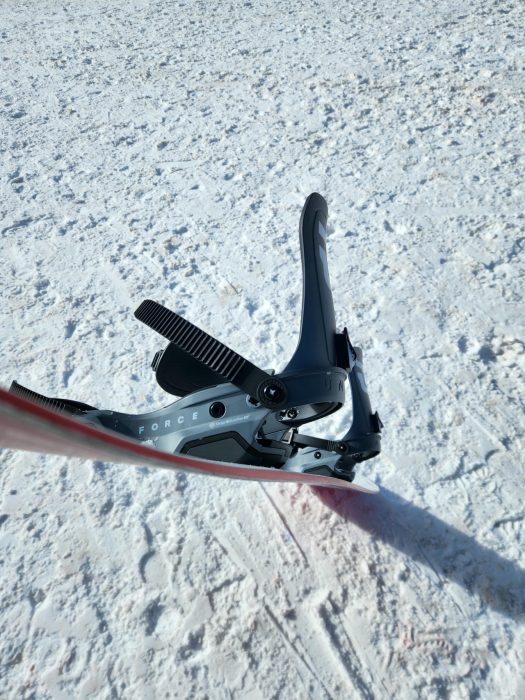
I rode the Beatnik with my own Union Force bindings and it was a good match. The Force has enough response to get the most out of the camber and the Bamboosters without being so stiff that it kills the playfulness you get out of the tips. If you’re building this setup, that’s where I’d start.
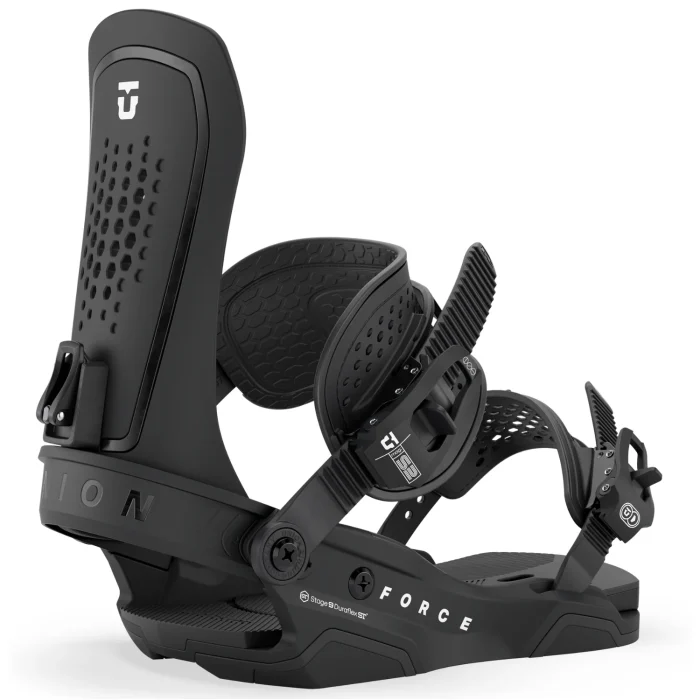
You can check out our full review of the Union Force bindings to learn more.
Review Wrap-Up: So Is the Armada Beatnik Worth It?
Yes, as long as you can get your size. The Beatnik scored an 87.4 out of 100 on my all-mountain freestyle scale.
This is a fast, poppy board that carved beautifully in soft snow and held its edge when everything turned to ice. Its base beat out almost every other deck I rode for the season on a long flat section. The Titanal plates and the sintered base are why it feels higher end than its price tag suggests, and both of those are features you will actually use rather than just read about.
The thing to know going in to the Beatnik is about its unique flex. It’s stiff underfoot and just past your inserts, and then medium (and pressable) past that. Learn where those zones are and this board is a weapon you can carve, jump, and press with. However, if you size it wrong, you might never find those zones to appreciate what the Beatnik can truly do.
Where to Buy the Armada Beatnik
You can buy the Armada Beatnik at Backcountry, Evo, or Blauer Boardshop.
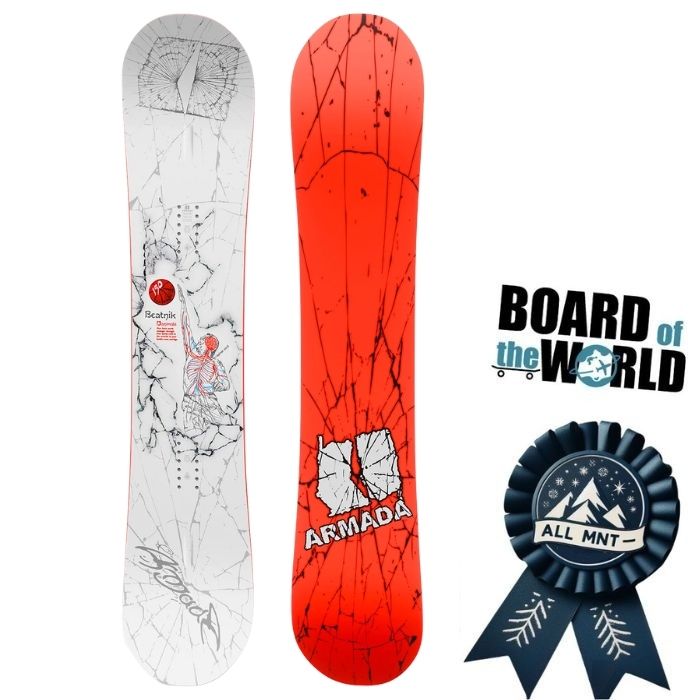
There’s also a deal on this board for $350 for of an all black pre-release version of it here. It’s the same deck construction-wise. It just has the proto-type graphic.
The shopping liks above are affiliate links. It doesn’t cost you anything additional to use them, the retailers I linked to just shares a small commission from your purchase with me, and that goes towards more gear to write about on this site and our new mobile app.
Sizes Available and What Size I Rode
Sizes Available and What Size I Rode
The Beatnik comes in 150, 153, 156, 157W, 159, and 161W. I rode the 153 at 142 pounds, which sits in the lower half of Armada’s 119 to 180 pound range for that size, and that turned out to matter. Read the flex section above before you pick a size on this one.
| Size | Waist Width | Effective Edge | Sidecut Radius | Rider Weight |
|---|---|---|---|---|
| 150 | 250mm | 1140mm | 7.4m | 99 to 161 lbs |
| 153 | 252mm | 1170mm | 7.6m | 119 to 180 lbs |
| 156 | 254mm | 1200mm | 7.9m | 130 to 189 lbs |
| 157W | 264mm | 1210mm | 7.9m | 141 to 200 lbs |
| 159 | 255mm | 1230mm | 8.0m | 150 to 209 lbs |
| 161W | 266mm | 1250mm | 8.1m | 180 to 220 lbs |
Armada’s recommended stance range is 510mm to 560mm, which works out to 20.1 to 22.1 inches.
Armada Beatnik Specs
Armada Beatnik Specs
| Model Year | 2027 |
| MSRP | $579.95 |
| My Flex Rating | 6.5 / 10 overall. 6/10 between the feet and out past the Bamboosters, 7.5/10 underfoot and through the Booster zone |
| Armada Flex Rating | 7.0 / 10 |
| Shape | Directional twin |
| Camber Profile | Traditional camber with early rise nose and tail |
| Setback | 0mm |
| Taper | None |
| Core | Pop-Lownia, 60% poplar and 40% paulownia |
| Laminates | Biax glass |
| Carbon | Bamboosters, 3D carbon wrapped bamboo stringers set into a milled section of the core |
| Damping | Titanal impact plates in the binding zone |
| Base | Sintered PTEX3000 |
| Category | Resort Freestyle |
| Ability Level | Intermediate to Advanced |
| Sizes Available | 150, 153, 156, 157W, 159, 161W |
| Recommended Stance | 510 to 560mm (20.1 to 22.1 inches) |
| Weight (153) | Around 5.9 to 6.0 lbs, estimating from Armada’s 6.2 lb figure for the 159 |
About the Reviewer
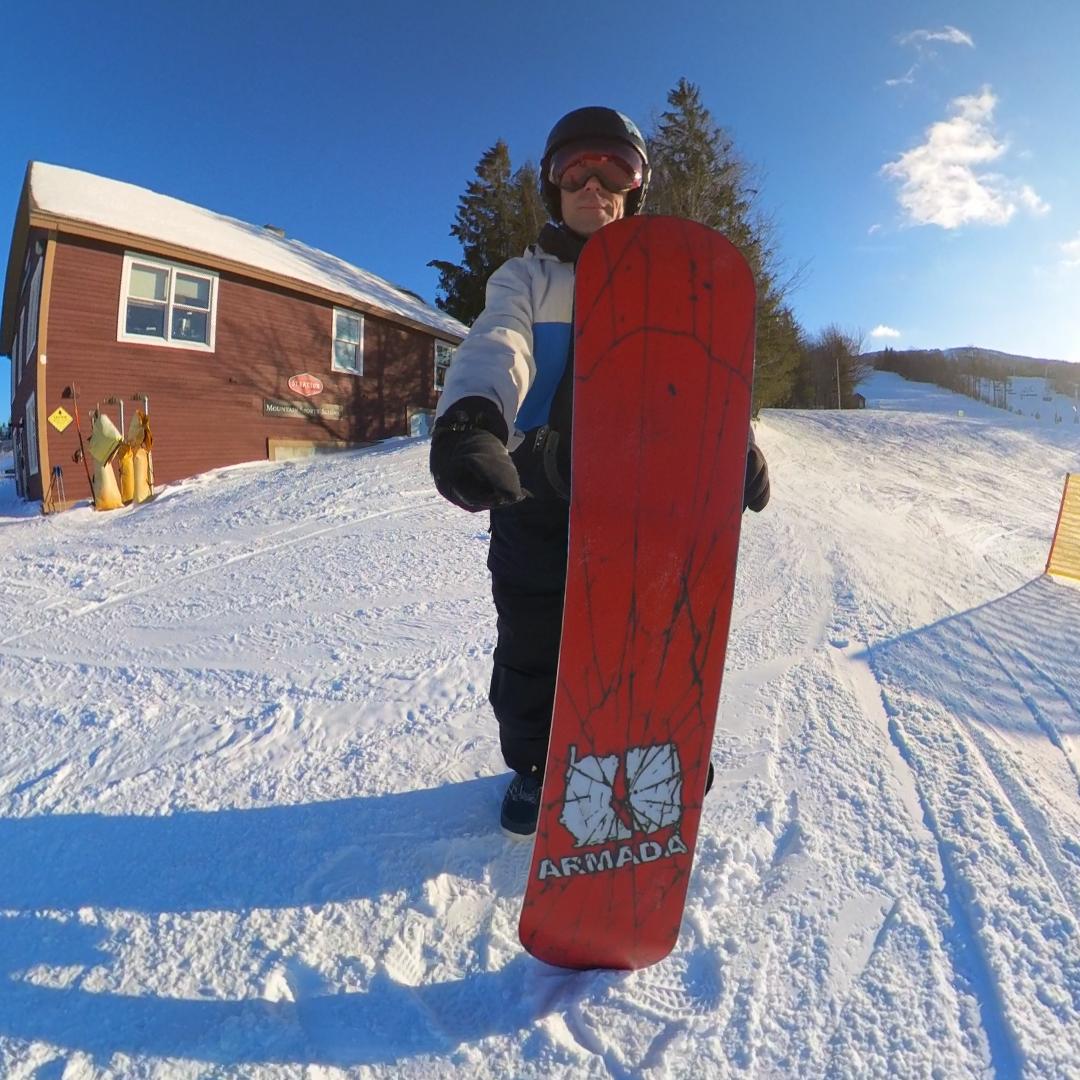
Rider: Steve Weber
Where I Rode This: Stratton, VT
Rider Weight: 142 lbs
Experience: 27 years snowboarding and works at a local shop here in NEPA
When I Rode These Boards: February 3rd and 4th of 2026 for this deck. I was at the EWSRA On Snow 2027 gear demo. Armada had a demo tent with a few sizes of the Beatnik to try.
Conditions: A bit of everything, but mostly sunny soft snow and hard pack and ice in the shade and as the day went on.
Sizes ridden: 153cm
Bindings used: Union Force Bindings
Boots used: ThirtyTWO STW Men’s Size 9
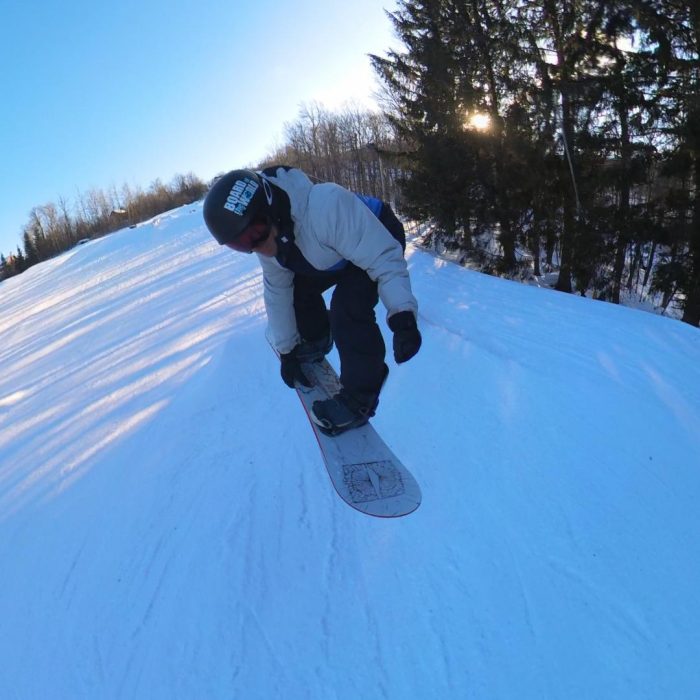
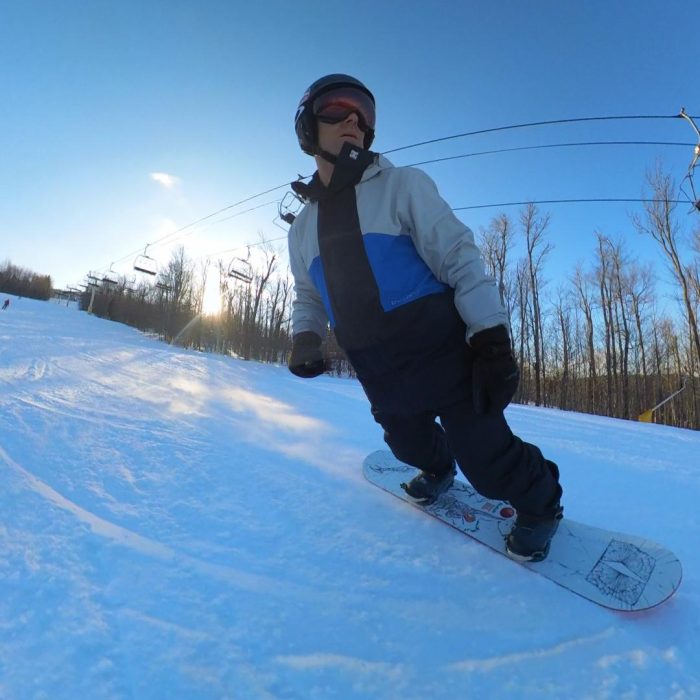
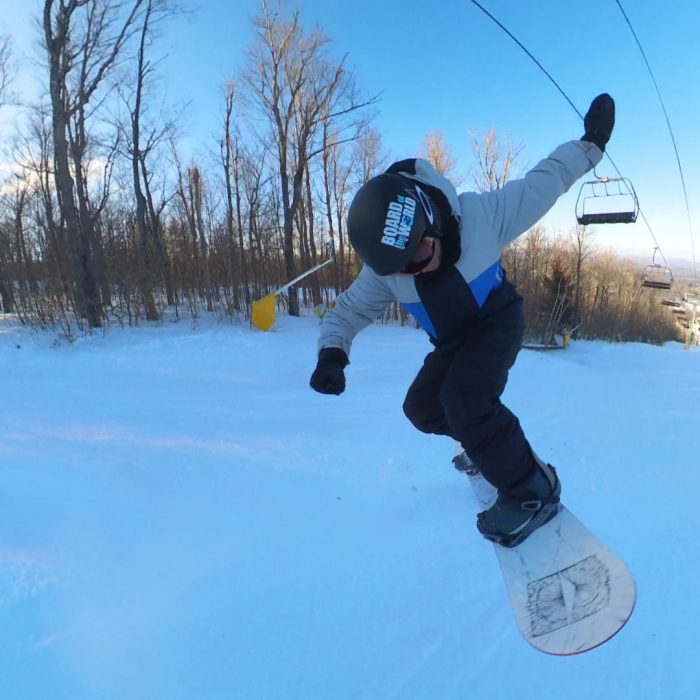
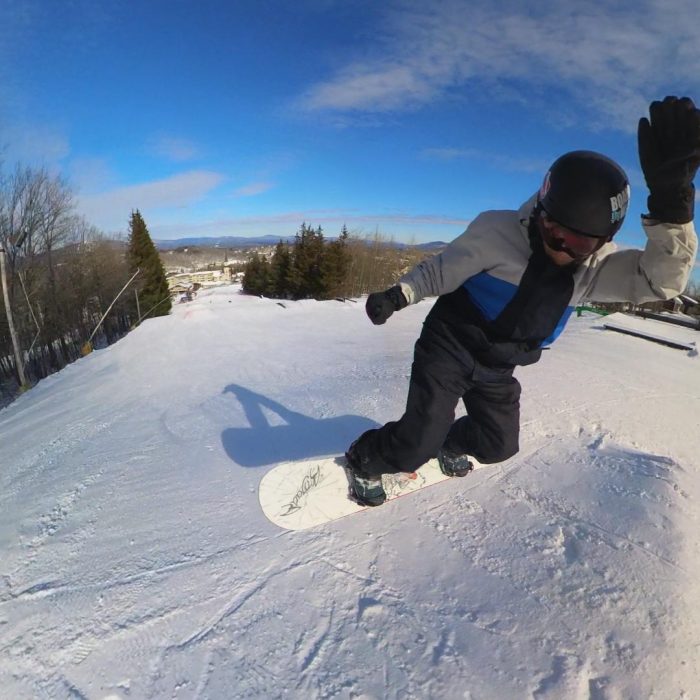
Image Gallery From This Review
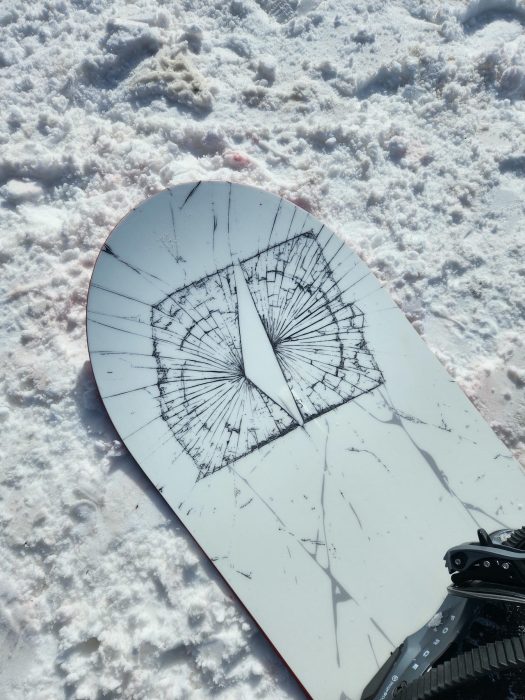

Steve Weber is the passionate snowboarder, skateboarder, and author behind Board of the World. He understands that most gear reviews focus on having the perfect snow conditions, but his testing methodology is different. Living in Pennsylvania, Steve describes exactly how a board performs when the conditions aren’t perfect. His reviews cover performance on ice, hardpack, and flat-out brick conditions. In other words, he reviews boards for the conditions that East Coast riders actually face.
Bringing 27 years of East Coast snowboarding and 21 years of skateboarding experience, Steve is a 42-year-old intermediate park rider. His recommendations are informed by decades of battling icy conditions, ensuring every review accounts for the board’s performance on the roughest of terrain.
For the last five years, Steve has poured his passion into writing in-depth, unbiased reviews that help riders make informed decisions about the gear they’ll use. He also works part-time at a snowboard shop in Northeastern Pennsylvania, which gives him a direct line to learning about the new gear tech months in advance. When he’s not writing reviews, Steve is often found riding at Montage Mountain and testing out new boards.
Steve’s goal with Board of the World is simple: to help every reader find the right gear so they can have fun outside from the first time they use it.