


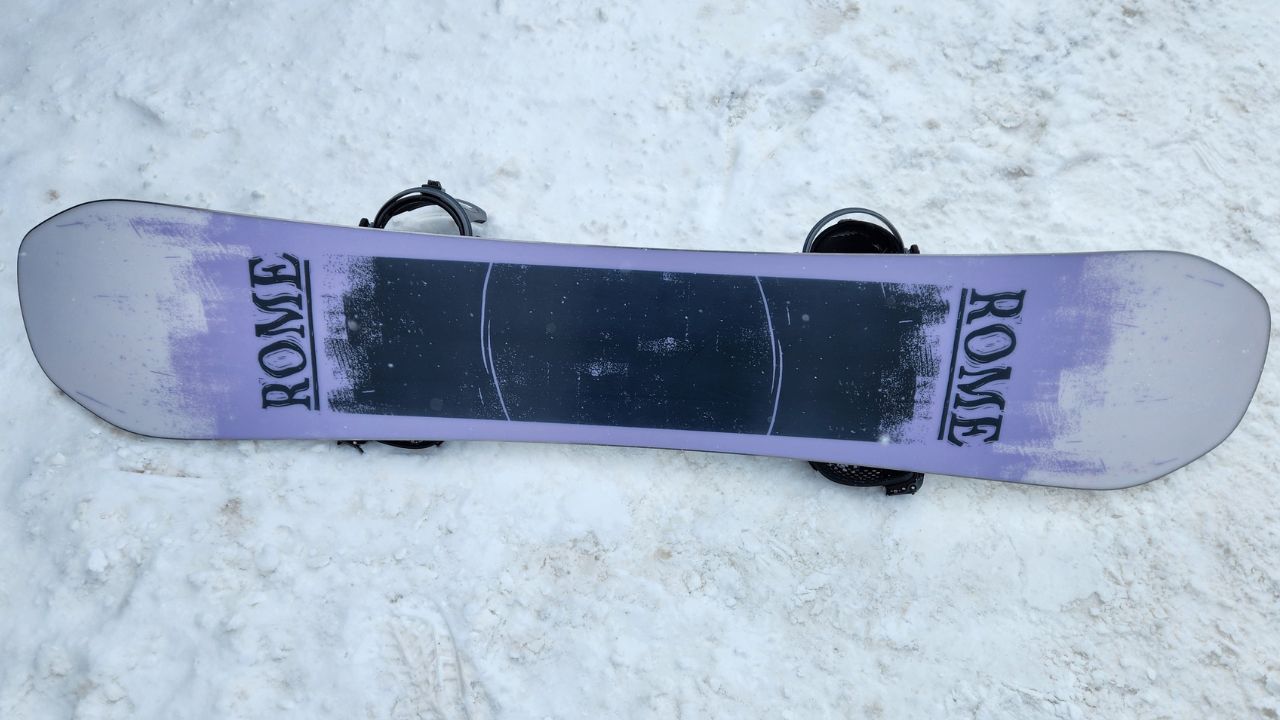

Chapters
| Board Reviewed | Rome Boneless 2027 |
| Price | $529.95 |
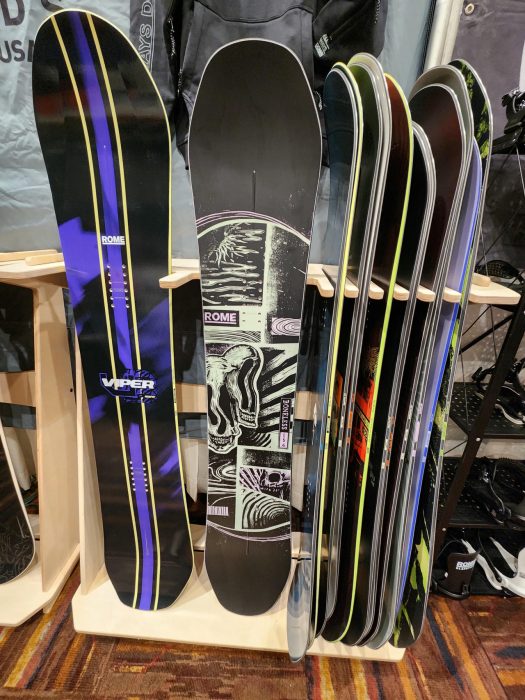
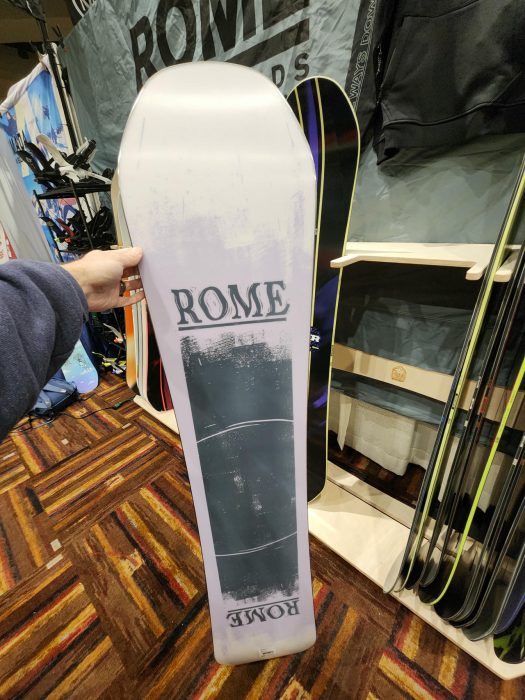
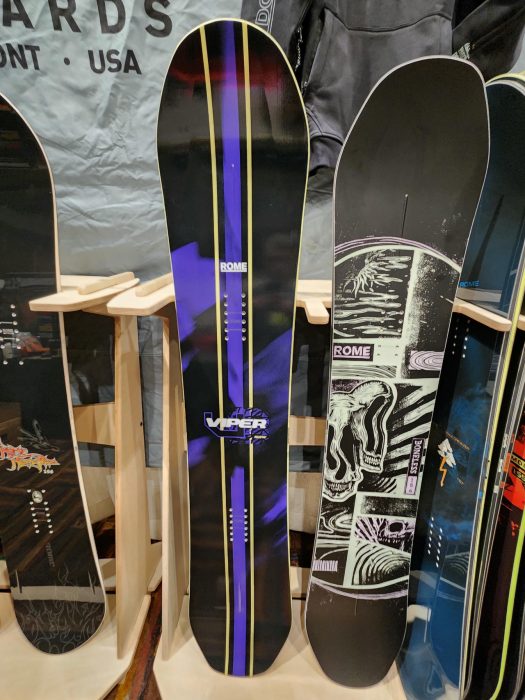
| How I Tested It | 1 day at the EWSRA 2027 on-snow demo at Stratton, VT on February 4th, 2026. With a first look explanation at the EWSRA January Mart indoor tradeshow on January 6th 2026. |
| Shape / Profile | True twin, Fusion Camber (positive camber with small rocker sections right at the contact points), Twin Diamond 3D nose and tail, 0cm setback |
| Flex | Rome rates it a 5 out of 10. I’d call it a 3.5 out of 10. This is a pretty soft board both from tip to tail and from toe to heel. It’s the softest thing I rode for the 2027 season so far. |
| Best For | The jibber and butterer who still wants a board that carves and can cruise groomers outside the park |
| Size I Rode | 153cm at 142lbs, mens size 9 boot. It fit me perfectly. |
Rome Boneless Pros: What It Does Well
- The best butter and jib board I rode for this coming season, and it isn’t even close.
- 3D shaping in the tips makes it catch free without making it harder to jib or ride in any way
- Locks onto rails and boxes and just stays there
- Carved better than you would expect for a soft board with contact points lifted
- Noticeably light
Rome Boneless Cons: Where It Falls Short
- Not the best option for precise carving with its soft flex and lifted contact points
- 3D shaping isn’t for everyone
- The lifted contact points mean you have to dig your toe edge in on landings, or it wants to revert
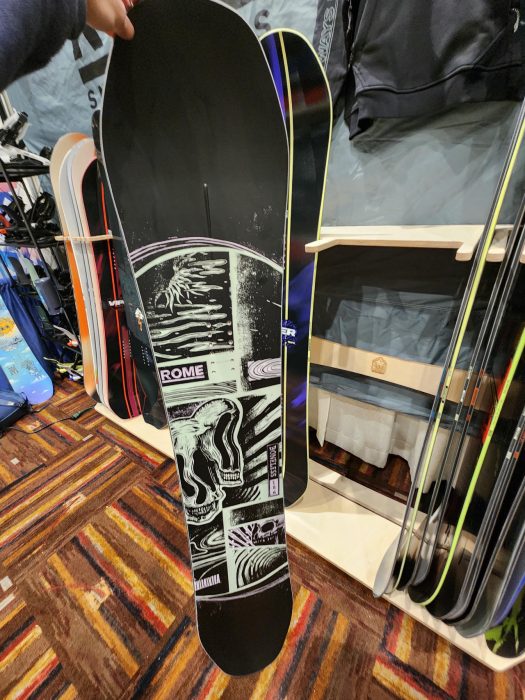
Summary: My Overall Impression of the Rome Boneless
The Rome Boneless earned an 84.8 out of a possible 100 points in our Park / Street & Jib category rating scale.
This deck actually surprised me with how good it jibs and feels to ride. It wound up being the top park board that I tested for the upcoming 2027 season. I was surprised because I wasn’t expecting to like it as much as I did. I share the story later in the post, but I actually tore my shoulder riding a similar-shaped board a few years ago. I went into this review a bit hesitant about wanting to recommend this deck, because its contact points are lifted just like the board I got hurt on. I came out of this review loving this deck enough that it is going to be my primary park deck for the 2027 season, and I know you’ll like this one if you like to jib, too.
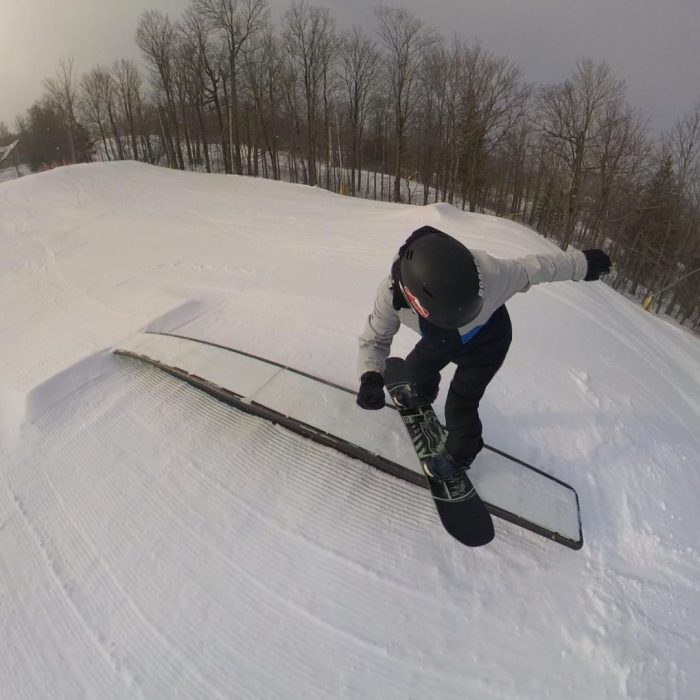
So why only an 84.8 if it is my top jib board for the season? Because the scoring factors in everything that might matter to the person looking for a park board. This one earned a 10/10 in the jib category, but its ranks a little lower overall because carving, speed and response count in my score. For jibbing specifically, it’s all time, and it’s the best jib deck I’ve ridden so far for 2027.
I first got a look at it at the EWSRA January Mart, the indoor trade show where the reps walk you through the new gear for next season, and then I got to ride it at the EWSRA 2027 on-snow demo at Stratton. When the Rome rep handed me the deck, he described it as “a big kid’s board.” That’s exactly what this snowboard is. It’s for the kid at heart who wants to play on their snowboard, butter around, and hit every park feature they see. And that’s why I loved it so much. It’s the board 17-year-old me would have wanted, and 43-year-old me is going to buy and pretend I can still ride like I still am 17.
In terms of what you should know, the Rome Boneless feels softer than it says it does. To me, it felt like a soft 3.5 out of 10 flex feel, while the marketing specs call it a medium 5 out of 10 flex.
This deck is also noticeably lightweight, easy and quick to steer, and it presses easier than any board I got to ride so far this season. And still, somehow this deck carves well enough that I never felt like its softer flex or diamond-shaped tips sacrificed its riding performance to make it more playful or jib-friendly.
The Rome Boneless is for the park rider who loves to jib and hit small to medium-sized jumps. It’s a very playful deck that feels lively, skate-like, and catch-free on rail features. It can carve well enough to explore outside of the park too, though.
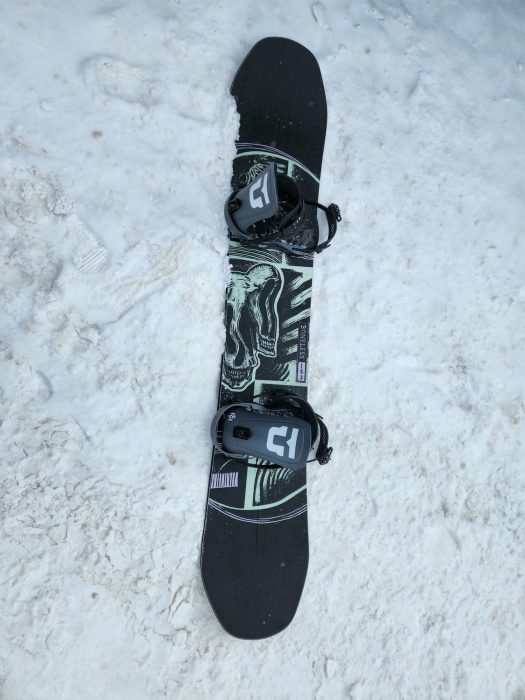
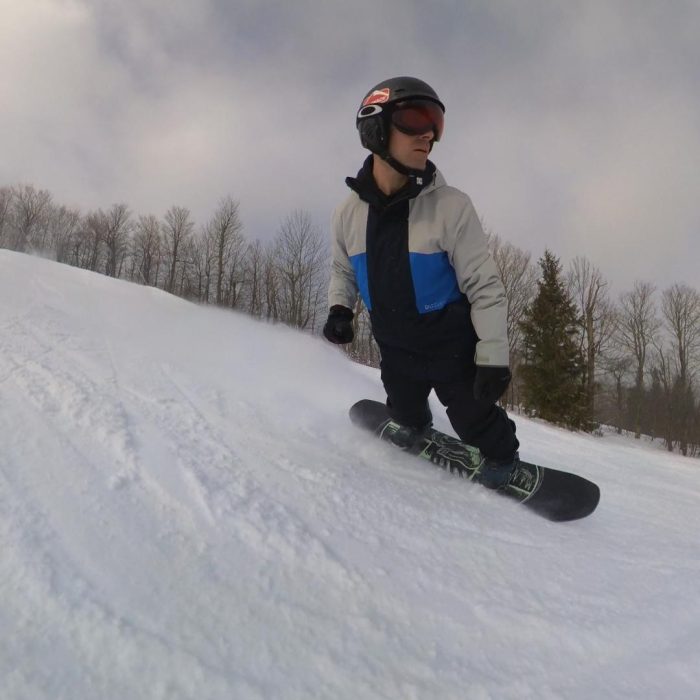
I rode the 153 Boneless at Stratton, VT on February 4th, 2026. That morning, we got around six inches of fresh snow, which softened everything up and made for close to perfect riding conditions to test this in. There were some choppy spots, and the park sat in the shade, so there was some ice and hard-packed landings, but it was nothing this deck couldn’t handle and nothing we aren’t used to here on the East. The sun came out as the day went on. Overall, I’d call it an ideal East Coast day riding on the ideal park board.
One last thing, I’d call out that I rode this deck in near perfect conditions and not the typical ice that I usually review boards in here on the East. That matters for a board like the Boneless because its contact points are intentionally lifted to make it catch free on rail features. If I had rode it in a sheet of ice and could never actually get to features because this was too loose, I have a feeling this review would read differently. So for anyone considering this board, know that it’s meant for jibbing and left intentionally loose with its lifted contact points. If you’ll be riding on a total sheet of ice often, you’ll probably want a deck from our recommended snowboards for icy conditions list as a backup for icier days.
Review Rating of the Rome Boneless
The Boneless earned a 84.8 out of a possible 100 in our Park / Street boards rating scale. Here are the stats from the review.
The Actual Flex Rating: Rome Says 5, I Say 3.5
Rome rates the Boneless snowboard at a 5 out of 10 flex rating, but to my feet it’s a 3.5 out of 10. It’s soft enough to press on rail features easily. Without much effort, you’re going to get a very tall, stylish-looking press. On a more medium-flexing board, you would have more of a fight to get a tall press than the Boneless offers. You lean forward or back, and it presses without much of a fight.
That’s an important note because jibbers are who this deck is actually meant for, and a medium flex rating would turn a few riders off when it’s actually a softer deck that can press easily.
How I Tested the Flex
For my reviews, I flex the nose and the tail separately against a flat section while I am completely stopped. I then twist the board from toe to heel to get a feel for the board’s torsional flex. I do all three before and after riding a deck. I then record the three flex score numbers and use those to compare against the flex of similar boards I’ve tested. It’s not an exact science, but it’s forced me to stay consistent to my own scale rather than listen to each brand’s scale (which is so very different from brand to brand).
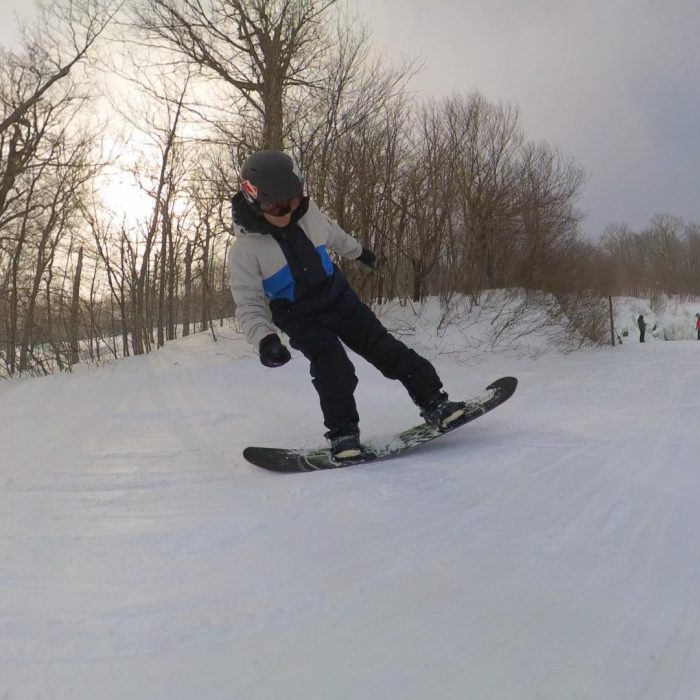
Rome scores it at a 5 out of 10.
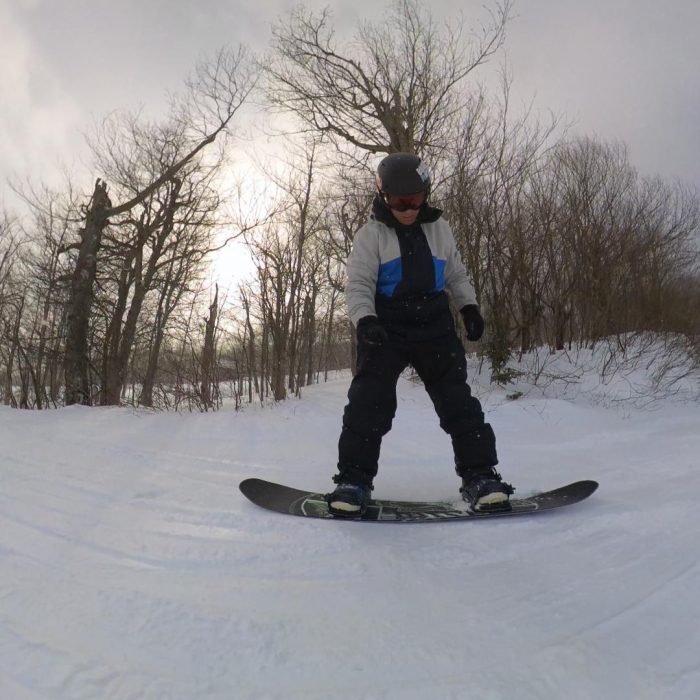
My flex scoring numbers out of 10: nose 3.5, tail 3.5, and torsional 3.
How Does the Rome Boneless Perform Across the Entire Resort?
This next section covers each riding category and consideration for the Rome Boneless.
Jibbing: The Board’s Highlight
Jibbing is what the Rome Boneless was made for. Its soft flex (it feels like 3.5 out of 10 flex) lets you lock into tall nose presses with close to no effort at all.
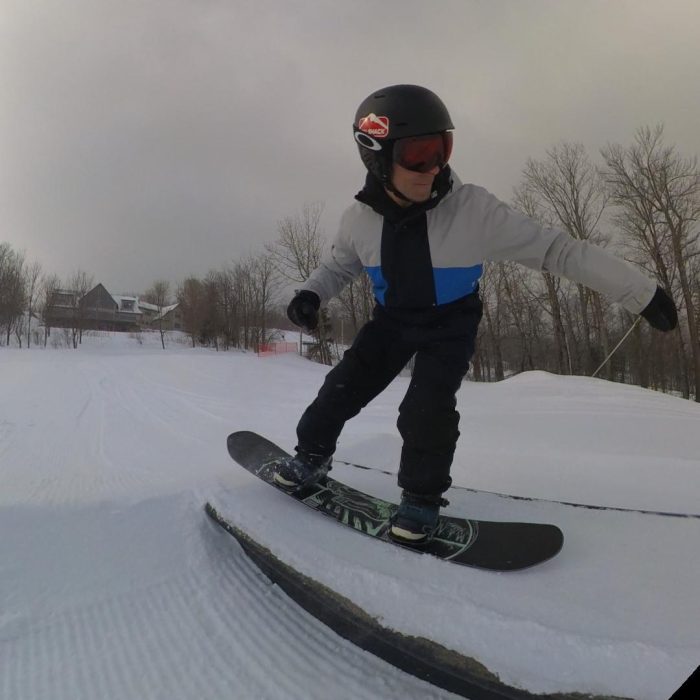
The softer flex also helps you balance easier on rail features, because it allows the board to cradle around it, rather than try to seesaw your way across until the end. By having an easier time balancing on features, you get an extra second to get your shoulders right for change-ups and spinning on or off. I would say the Boneless is a stronger jib deck on rail features over giving you a lot of added pop for doing tricks out of features, though. The balance benefits are really where it shines and what makes this board a jibber’s secret weapon.
With the contact points being lifted on the Boneless, you don’t need to be as careful while you’re hitting rail features or tubes because you won’t catch an edge if you land on the feature off-angled or crooked (zeached).
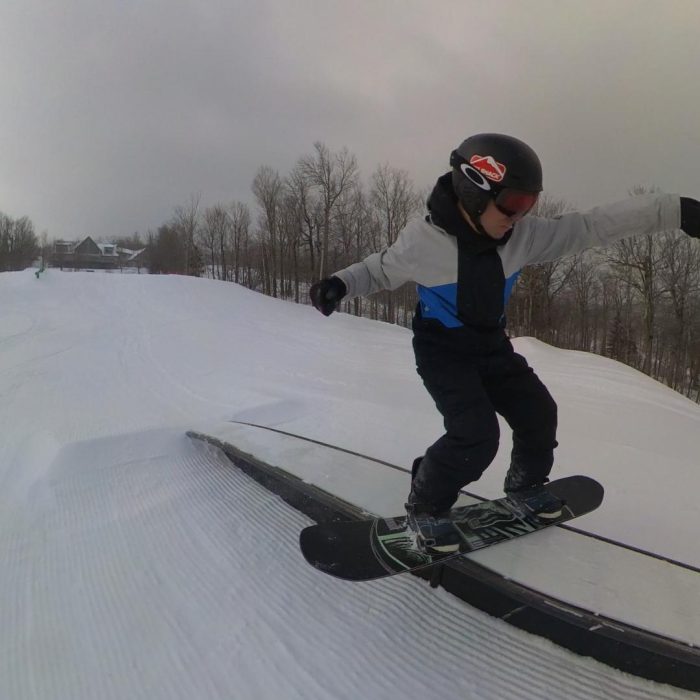
To me, the lifted contact points aren’t that noticeable on features. It felt the same jibbing with it as a deck that you would have really detuned the contact points on. The Boneless stays flat and feels stable sliding on features without the upward angles being an issue or forcing you to learn how to come in differently.
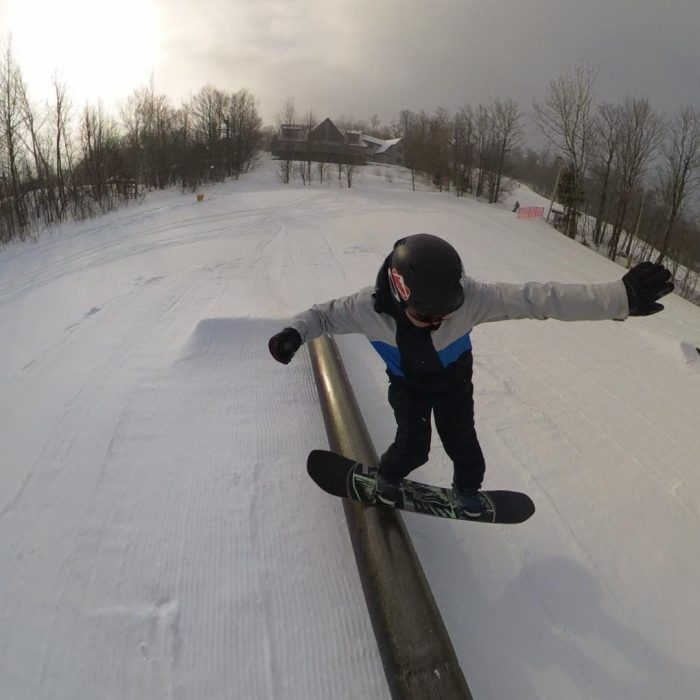
To test out the catch-free feel of how well this jibs, I hiked the milly tube and box in Stratton’s Tyrolienne Park. I kept throwing tail slides on the tube. It felt like it would just slide easier than other decks. It’s probably more that there is less drag or friction on the feature thanks to the contact points being out of the way. That started to translate to me worrying less that a feature would be dry and that I would catch an edge. I hit every feature I saw, and had no issues sliding sideways or straight on for 5050s. And by worrying less about whether I would catch, I’d say this made me a far more confident jibber (and why I am adding this deck to my quiver).
Why 5050s and Nosepresses Are Easier On the Boneless Than on Other 3D Shaped Decks
I found 5050s and nosepresses, what I would call more straight-on jib tricks, to be noticeably easier on the Rome Boneless than they are on other 3D spooned-shaped decks, like a Bataleon deck, for example.
Here’s why.
A board with a 3D base means that the base of the snowboard isn’t perfectly flat. I don’t mean flat as in the board’s camber profile being flat. I mean flat as in the base’s surface under your feet from your toe edge to your heel edge. On a 3D base, it isn’t flat because the curvature of the base itself is shaped to be more spoon-like, or similar to a boat’s hull. The main benefit of these bases is that there is easier turn initiation and some float benefits due to it allowing snow to pass past the board with less drag.
The downside is that they actually make some jib tricks harder because they often only leave a skinny hallway of flat section right dead center on the base in the section that would be immediately under your midsole. It makes jibbing harder because when you come down on a rail feature, you have to be more precise with exactly where you place your board against the rail than you do if the base of the snowboard was perfectly flat (from your toe to heel edge).
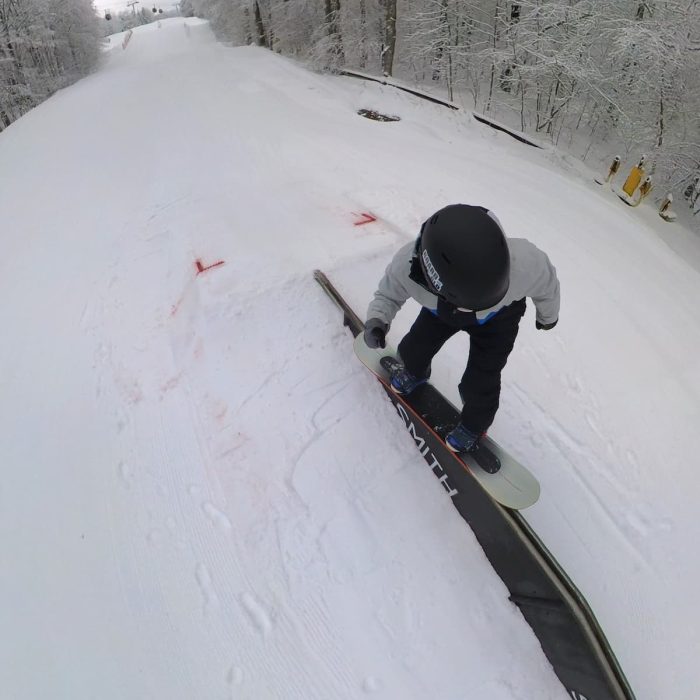
And if you come down wrong on a curved based board, you lose leverage and slide off the feature.
The Rome Boneless didn’t have that same challenge with needing to be precise with straight-on jibs, though.
Directly under your feet, from the toe to heel edge, it’s a plain old normal / standard flat snowboard base, so there is no extra precision needed for jibbing. Just aim for the base, catch your balance on the feature, and slide across it. You only need to land on the feature and not in a specific part of your board’s base.
So nosepresses and boardslides felt no harder to balance than they would on a flat-based twin. It locked right onto features and stayed there.
You get all of the catch-free benefits with none of the drawbacks, so there isn’t much more you can ask for in a jib board.
Buttering / Flat Ground Tricks
Buttering is the other highlight of this board. It’s the other core reason why most riders should get this board.
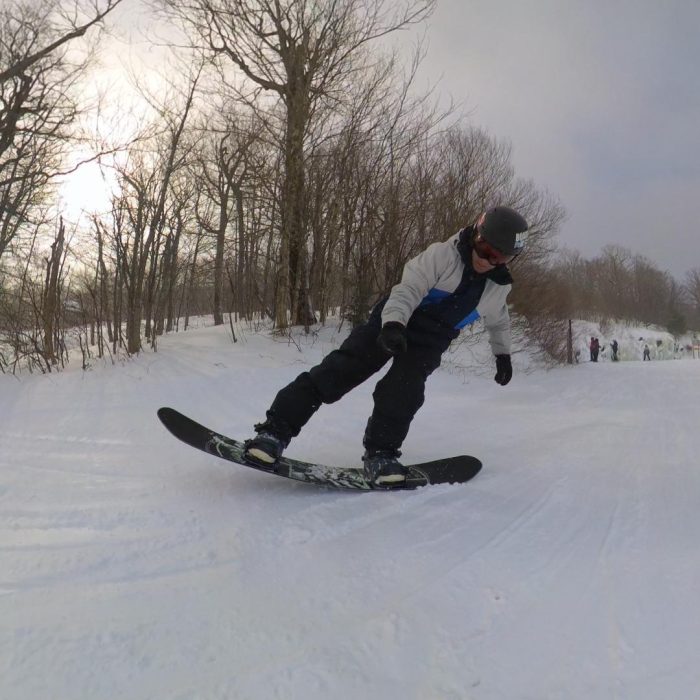
Between the 3.5 flex and the Twin Diamond 3D shaping in the tips, the Boneless is able to butter with close to no effort. The lifted contact points allow you to press and then spin around your butters without the deck feeling like you have to work to constantly keep your weight uphill so that you don’t catch an edge.
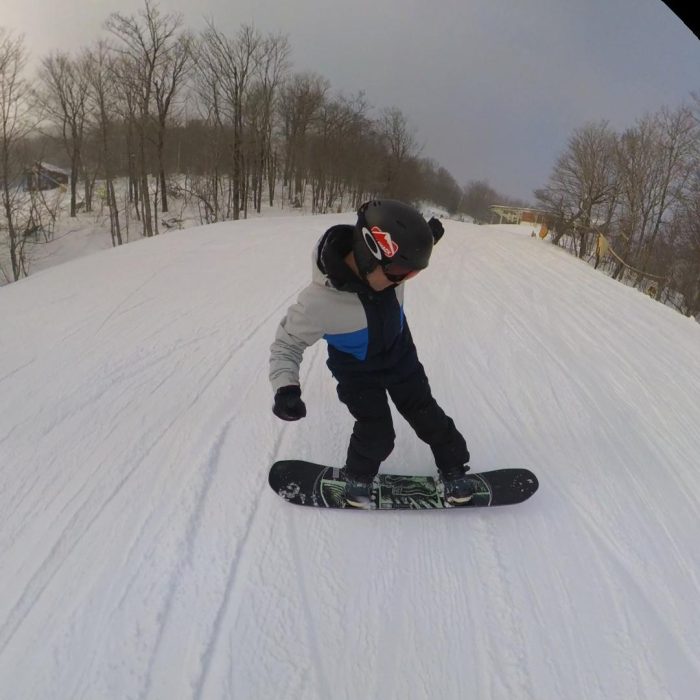
I got a clip of myself buttering through a couple of spins with it, and that is not something I can pull off on most of the boards I test. I’d say on most boards, at best I can get a butter 540. With the Rome Boneless’ contact points staying out of the way, I can butter 900 easily before I have to pause to see where I am going. With no contact points to stop you, it’s just so simple to butter with it.
If buttering is what you’re interested in, this is a camber board that can butter more easily than any other deck I’ve tried for the season.
Jumping
The Boneless is great for small to medium sized jumps and sidehits. I didn’t hit any large jumps on it, and I don’t think it’s great for that. It’s soft, and the contact points are lifted, so it doesn’t have the response you need to keep it from washing out on big landings.
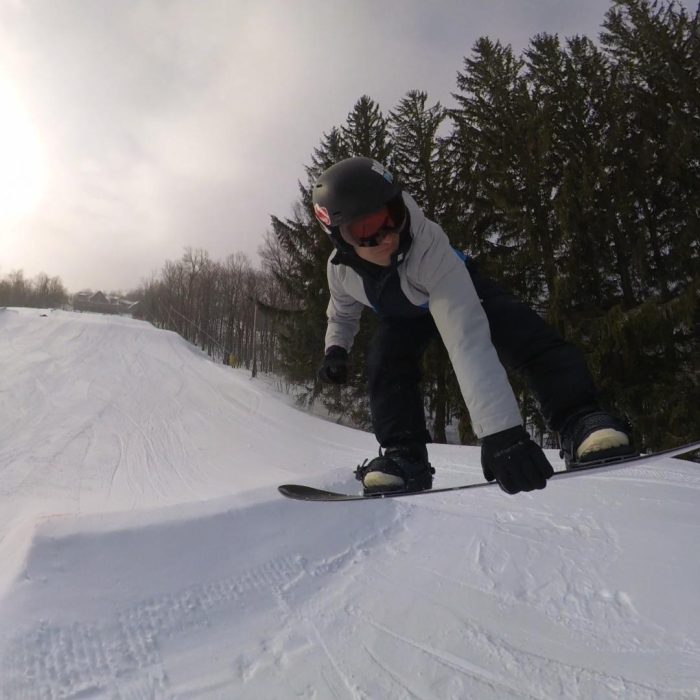
Where this board’s tech feature really helps you out when jumping is with its forgiving landings. The lifted contact points make it catch-free, so if you’re slightly off-axis, you just pull your weight around and ride away. That feature alone will make it easier to learn new spins. The only downside is it also forces you to really need to dig your toe edge in while you land so you don’t revert.
There were a few times I went for a spin in the Stratton Tyrolienne park where I came up short on my spin, and I was still able to ride away.
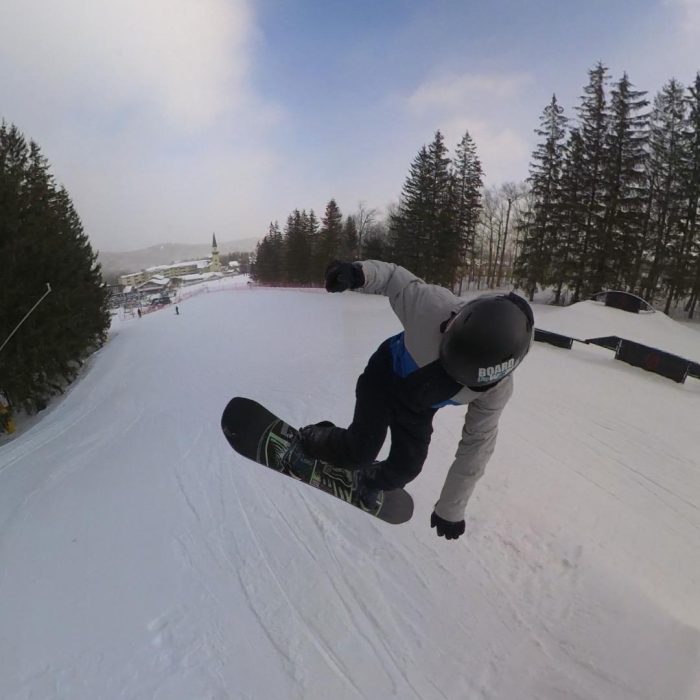
The Boneless has a nice little extra boost of pop. It’s nothing too crazy or explosive, though. It’s just a little extra pop that most soft jib boards don’t have to help get you past the knuckle of medium-sized jumps.
A Small Boost of Pop From the Board’s HotRods
There is a feature in the Rome Boneless that gives it a small extra boost of pop. It’s called Rome’s Bamboo Omega HotRods. These are bamboo rods placed about halfway up the nose and tail running lengthwise and reinforced in a carbon fiber Omega shaped (Ω) sleeve.
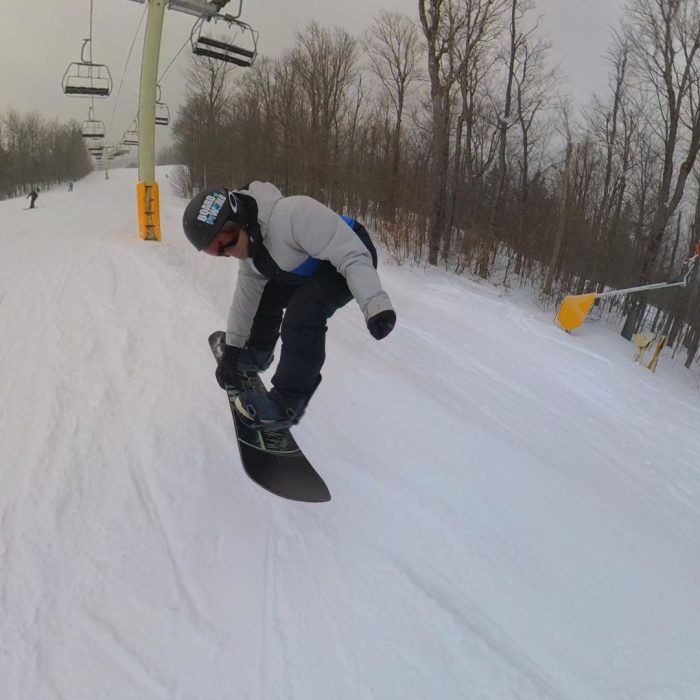
These carbon bamboo rods are what give the Boneless an added boost of pop that other soft jib boards don’t have.
Carving
The carving experience actually felt better than I thought it would. It wasn’t overly loose, but it definitely isn’t a responsive, hard-charging snowboard either. The main thing to remember is that this is a soft-flexing board with its main contact points intentionally lifted off of the snow. That means it’s less precise and responsive for carving at fast speeds, and it’s meant to be more for casual riding and hitting features in the park. It’s good for the occasional burst of speed so you can hit features in the park, but it just isn’t meant to go all out with it for you to hit your personal best top speed.
It’s just not that type of snowboard. The tips do chatter when you’re going fast. Thankfully, Rome added flax impact plates that dampen some of that as you ride.
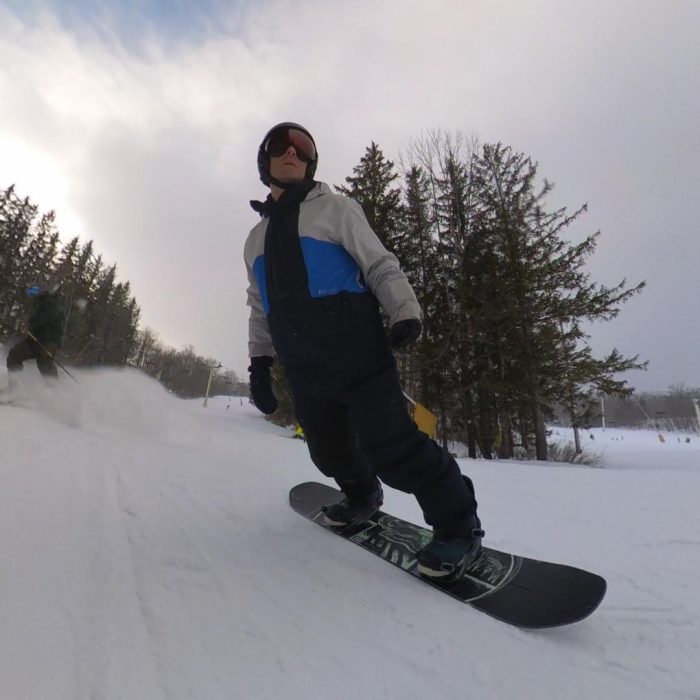
Turning-wise, it felt like it was best with small and medium turns. It felt like once it engaged its turn, it was locked, and I didn’t wash out like I thought I would. However, I know if I tried to dig a trench or Eurocarve, I would have definitely washed out.
So will the carving experience in the Rome Boneless wow you?
No, probably not, but you get this board for its ability to jib, and how well it carves is a nice add-on and not a requirement.
The Boneless is meant for the rider who doesn’t need to perfect their turns. Carving actually bores them. They just want to hit the park, and their extent of carving is what you do to get your speed right between features.
Speed
The base itself wasn’t slow by any means, but this isn’t a board to open up and charge your hardest with. When I let it run on Yodeler at Stratton, I noticed the nose chattering as I transitioned in between turns. At more casual, park speeds, it works well, though. You can go fast enough to get it to clear the knuckles of medium-sized jumps and get your speed right to hit every feature you need to in the park. It just isn’t the right board for trying to hit your personal board with your favorite GPS tracking app.
Dampness
The Flax Impact Plates noticeably absorb the shock you feel under your feet. It’s a chattery, soft board, and the plates help dissipate that. The tips still chatter at speed, but the plates take some of that out.
Ice and Hardpack
The honest caveat here are the conditions I rode this in. It’s rare that I get fresh snow or the ideal East Coast day, but when I rode the Boneless, I must have been lucky because that’s what I had. It was mostly a layer of fresh snow. The conditions were soft in the sun and then harder and icy only in the shade. It did ok on the small icy sections and landings I rode it on. It carves well in the other conditions, but until I get it on a truly icy day, I’m putting it at average for ice.
Powder
I got lucky when I rode this deck. Six inches of fresh snow fell that morning, so I actually got to slash a pow stash on a park board, which doesn’t usually happen for me here on the East Coast.
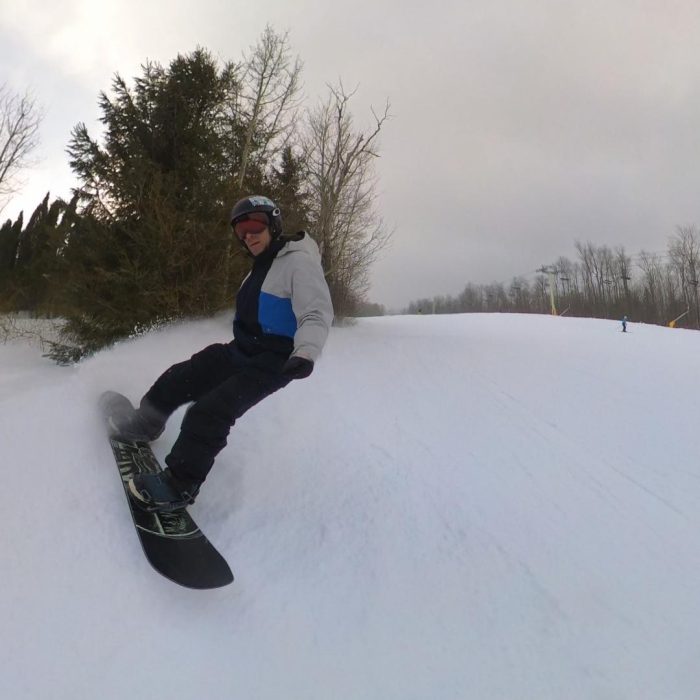
It’s a true twin board with zero setback to the stance, so there’s nothing in the shape to help you float with it. It can manage in deeper snow because of its 3D shaped nose’s ability to channel snow better than a traditional park deck that just tries to plow head on through it, but not much else is there to help it float. So I wouldn’t say it’s a park board that also is great in powder. Because it isn’t. It just has one feature to give it one small advantage over a normal park deck.
If you’ll be riding deep snow, get your pow board out of your car and save this for park laps.
Resort Riding
Outside the park, it handles groomers and cruising just fine. Between park laps I took it down Upper Standard and Yodeler. It’s a board for cruising around between features, not for every condition the mountain throws at you.
Riding Switch
This is switch riding perfection. It’s a true twin perfectly symmetrical board that feels forgiving to ride in either stance.
Why I Almost Didn’t Ride This Board
I tore the rotator cuff in my right shoulder riding a Bataleon board with its 3D, spoon-shaped Triple Base Technology (3BT) and Sidekick features. The spoon shape sounded great because it added an extra level of looseness to the deck by lifting the contact points up so it could feel less catchy and improve the deck’s powder performance.
I was looking for a deck that was more skate-like for riding in the park. However, from being so used to flatter, traditional (plain old normal) snowboard-based decks, I just had a hard time getting used to it. I wound up somehow catching an edge while going off a jump to set up for a backside 180 (sharing as a friendly reminder not to precarve on your takeoffs).
While the edge catch was no doubt my own fault, it’s made me extra cautious about trying other park boards with 3D bases.
I saw the Rome Boneless and thought that both Rome and Bataleon are owned by Nidecker, and that the Boneless had the same shape, just rebranded under the Rome name. It turns out it is not. The Boneless is different.
The Rome Boneless Rides Like a Normal Jib Deck, Not a Spooned-Shaped Deck
While 3BT decks can feel loose and squirrelly depending on their level of contouring, the Boneless doesn’t share that same squirrelly loose feel. In fact, the only similarities between the Boneless and Bataleon’s 3BT are that the contact points are lifted upwards. The rest of the board’s base under your feet is perfectly flat from your toe to heel edge, where Bataleon’s contouring extends under your toe and heel on some of its freestyle models. I wrote it already in the jib section, but that means you don’t need to be so precise with the Boneless. You get the same catch-free benefits when you want them (on rails), but it still feels like a “normal” deck for connecting your turns and every other aspect of your riding.
So, the Boneless is just like a normal snowboard, except that the very tips of the deck are curved. It carves like a normal deck, jibs like a normal deck, and you aren’t forced to recalibrate where to put your weight as you ride straight or set up for a jump.
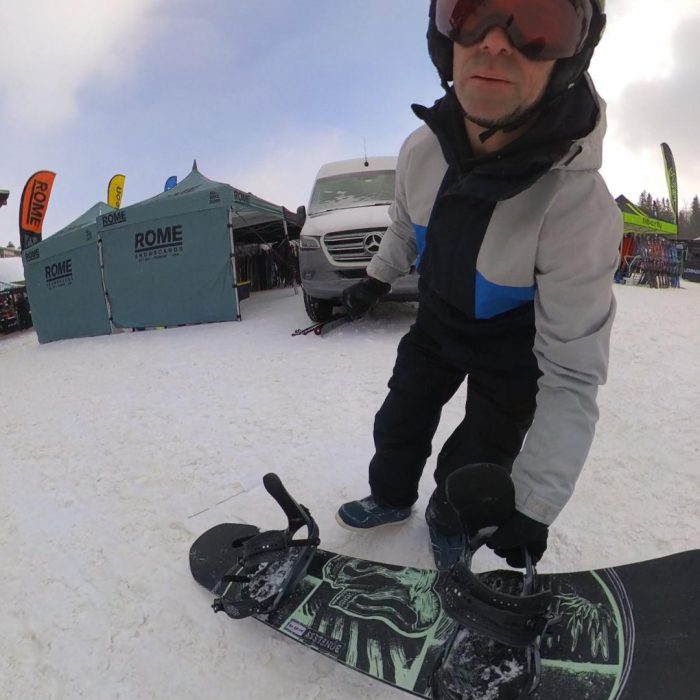
If you’ve written off 3D shaping because of a bad experience, too. The Rome Boneless is still worth considering.
Who Is the Rome Boneless Good For?
The jibber who spends most of their time in the rope tow park or indoor dome hitting rail features. This deck is for the jibber who prefers a camber deck that’s soft and pressable but still has that camber familiar feel to it.
It’s also for the flatground rider who wants a camber board that can press and butter so easily.
I’d also say it’s a good transitional board for anyone coming from a camber deck that was considering a 3D shaped board like Bataleon or Lobster. This is a more mellow, flat version that you won’t take as long to get used to riding because the base under your feet is just like the snowboard you have now.
Rome markets it to intermediate to creative park riders, but it’s easy and forgiving enough that a beginner could learn on it.
So Who Is the Boneless Not For?
The resort rider who loves to perfect their turns, go fast, and has no interest in the park. This deck is meant for the jibber and rider who wants to butter, so it’s not precise enough for riders who need response and precision for turning.
The park rider who loves to hit massive kickers or ride in the pipe. They’ll want a stiffer more responsive park deck. This leans more for the jibber.
The rider who doesn’t enjoy testing new shapes. The mellow camber with lifted contact points may not be your thing.
Bindings I Rode It With
I rode the Boneless with my own Union Force bindings. It worked well as a pair. I think I would have preferred my Union Ultras with this deck though. The softer flex would have paired a little closer.
Review Wrap-Up: Is the Rome Boneless a Good Snowboard?
Yes, if you love to jib or butter. The Rome Boneless is one of the best options available for you for this coming season. It’s not too expensive and it is a secret weapon for rail features because you don’t need to detune it.
Out of every park board I rode for the 2027 season, the Boneless is the one I want in my own quiver. It butters better than anything else I was on, it locks onto features, it’s light, and for the casual resort or weekend rider, it carves well enough to have fun cruising. It just isn’t a responsive board for someone who obsesses over turning.
Two things to be honest about. It’s softer than Rome says, so don’t buy it expecting a 5 out of 10 medium flex. It’s closer to 3.5 out of 10, and I had it in what I’d consider pristine conditions. This review might have been different if it was slick out.
Is the Rome Boneless a Good Snowboard If You Won’t Be Jibbing or Buttering?
If you’re looking at this board more as your resort carver, there are better, more versatile options out there. Check out our best all mountain decks to see the ones that stood out for this season.
Where to Buy the Rome Boneless
The 2027 Boneless is $529.95 at the moment. You can find it at EVO and other major retailers. I did see there were a handful of left over 2026 models here at Backcountry. The deck hasn’t changed beyond the graphic, so if you see one of those on sale, scoop it up because this is stellar deck for jibbing and buttering.
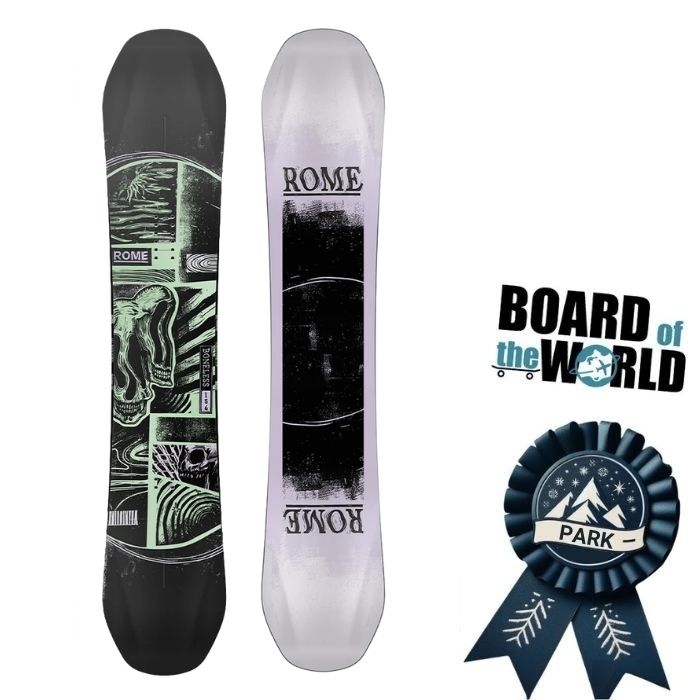
This is an affiliate link that keeps this site going. It doesn’t cost you anything to use. The retailer I linked to just shares a small commission from your purchase with me, and that goes towards more gear to write about on this site and our new mobile app.
Sizes Available and What Size I Rode
The Boneless comes in 11 sizes running from a 138 narrow up to a 163 wide, with waist widths from 23.2cm to 26.7cm and recommended rider weights from 77 to 234 pounds. That’s one of the widest size runs of any park board I’ve looked at, and the narrow options at the bottom are genuinely useful if you’ve got small feet.
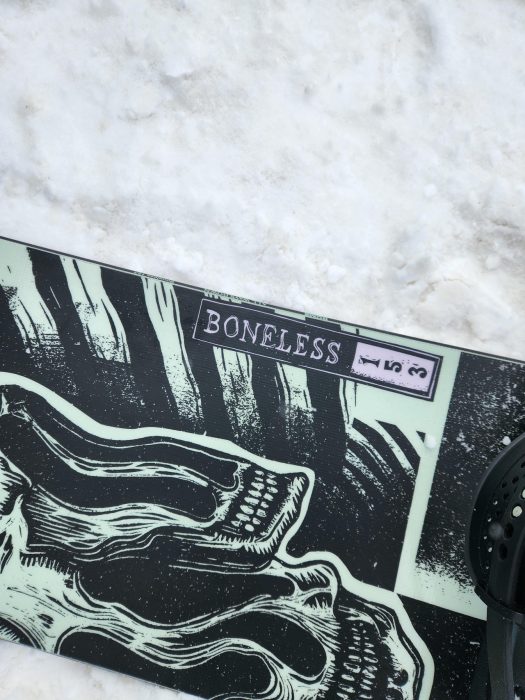
I rode the 153 at 142 pounds with a mens size 9 boot and it fit me perfectly.
Rome Boneless Specs
| Model Year | 2027 |
| MSRP | $529.95 |
| My Flex Rating | 3.5 / 10 |
| Rome Flex Rating | 5 / 10 |
| Shape | True Twin |
| Camber Profile | Fusion Camber, positive camber with small pockets of rocker at the contact points |
| 3D Shaping | Twin Diamond 3D, a gradual three dimensional rise in the nose and tail |
| Setback | 0cm |
| Sidecut | Tri-Radial, three radii blended into one continuous curve |
| Core | Pop Core with Bamboo Omega HotRods |
| Laminates | Biax glass, upper and lower |
| Impact Protection | Flax Impact Plates, woven flax around the insert packs |
| Base | SinterStrong sintered |
| Insert Pattern | 2×4 |
| Rome Terrain Map | Park 7/10, All-Mountain 7/10, Powder 7/10 |
| Ability Level | Intermediate to creative park riders (forgiving enough for a beginner to learn on) |
| Sizes Available | 11 sizes, 138N to 163W |
About the Reviewer
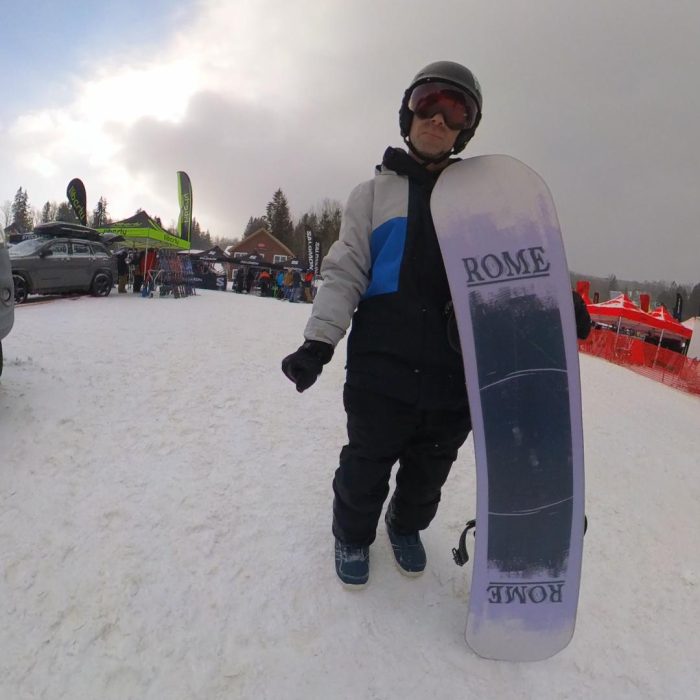
Rider: Steve Weber
Where I Rode This: Stratton, VT
Rider Weight: 142 lbs
Experience: 27 years snowboarding
When I Rode This Board: February 4th, 2026, for one day at the EWSRA On Snow 2027 gear demo. I got my first look at it at the EWSRA January Mart on January 6th.
Conditions: About six inches of fresh snow that morning, soft in the sun with icy, hardpacked landings in the shaded park.
Size ridden: 153cm
Bindings used: Union Force Bindings
Boots used: ThirtyTwo Men’s STW BOA in a size 9
Image Gallery From This Review
Check Out these Other Related Reviews:

Steve Weber is the passionate snowboarder, skateboarder, and author behind Board of the World. He understands that most gear reviews focus on having the perfect snow conditions, but his testing methodology is different. Living in Pennsylvania, Steve describes exactly how a board performs when the conditions aren’t perfect. His reviews cover performance on ice, hardpack, and flat-out brick conditions. So Steve is the guy reviewing boards for the conditions that East Coast riders actually face.
Bringing 27 years of East Coast snowboarding and 21 years of skateboarding experience, Steve is a 43-year-old intermediate park rider. His recommendations are informed by decades of battling icy conditions, ensuring every review accounts for the board’s performance on the roughest of terrain.
For the last six years, Steve has poured his passion into writing in-depth, unbiased reviews that help riders make informed decisions about the gear they’ll use. He gets his first look at new gear each January at the EWSRA January Mart and rides the next season’s boards at the EWSRA on-snow demo in Stratton, Vermont. These events give him a direct line to learning about the new gear tech a few months in advance. He also consults on a local snowboard shop’s website and helping the team decide which gear to stock for the season. When he’s not writing reviews, Steve is often found riding at Montage Mountain and testing out new boards.