


I recently had the opportunity to try the new FASE binding system at two separate demo events. Unfortunately, my experience at both was less than ideal, and as a result, I can’t give a proper review of any one FASE binding model in the same way that I normally would review bindings. I simply wasn’t able to put them through my usual tests, all because each of the three FASE binding models that I tried had a quirk or failed to work as they were intended to from a functional standpoint.
So instead of my usual review or comparison style, this article will be here just to tell you about my overall impression of the new Fase system and tell you about the two main problems I ran into while testing these three models: Rome Katana FASE, Bataleon Blaster FASE, and ThirtyTwo T32M FASE.
Quick Verdict: Skip the FASE?
I am sure most of you won’t run into the same issues I did. However, if you are looking for convenience without any hassle, I recommend checking out these alternatives instead:
- Best Step-in Alternative: Nidecker Supermatic
- My Daily Driver: Union Force Bindings for All Mountain / Union Ultra for Park
The Problem with Frozen Buckles and New Tech
The biggest issue I ran into was with the bindings’ buckles being too frozen to move (now there is an additional buckle on the inside of your ankle to help you adjust the ankle strap itself).

When I went to set up the Bataleon Blaster FASE bindings, the buckles were so frozen that I couldn’t make the fine adjustments needed for a perfect fit. I took a few runs, and just thought to myself, “I can’t write about how these feel because they aren’t fitting me right, and I feel like I can fall out at any moment.”
Fortunately, the rep working the Bataleon demo tent was kind enough to help me get the buckles unstuck with some sheer brute force (it might be the one instance where the manufacturer recommends brute force) and explained to me that my experience with Fase wouldn’t be the typical rider who buys this experience.
Why?
Well, because he reminded me that people set their bindings up in the warmth of their own living rooms and not on snow. He said that with FASE, you shouldn’t need to tinker too much to make the fine-tune adjustments, so most riders wouldn’t get the same experience that I had. He was honest and let me know this was the second demo session of the day, and the bindings I was using were sitting in the cold already for a few hours, so moisture likely froze in the buckles, making them extremely difficult to use.
One of the main perks of FASE is that they’re faster to get in and out of. With the buckles being frozen, it meant I couldn’t use the bindings as they were intended – to be faster and less trouble than a traditional binding. Mine definitely weren’t.
The buckles wouldn’t ratchet smoothly, which took away from the entire motivating factor someone would choose to buy these bindings: the convenience of getting in and out faster.
I powered through the best I could, but for me, they just didn’t work, and I couldn’t wait to just use more traditional bindings.
I went back to the demo tent and tried the Rome Katana at that point. This time, the traditional outside buckles worked a little smoother, but the new inside customization buckles were frozen. I couldn’t get my ankle strap centered and get those last two comfort clicks in, so I got a better feel for the Katana (they’re noticeably higher end). I just couldn’t get them completely dialed to comment on how they’re better than my traditional bindings. For me, they weren’t.
I am sure there is some truth to my experience with FASE being better if I customized them in my living room, and then taken them to the mountain.
However, it raises a good point.
When we ride, we need to be able to make adjustments on the fly to keep ourselves safe. With new tech, there are more pieces that could freeze, malfunction, or break. The extra complications can take away from the convienence of these bindings.
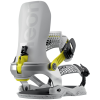
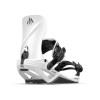
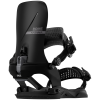
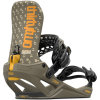
The Horizontal Highback Adds Some Clunkiness
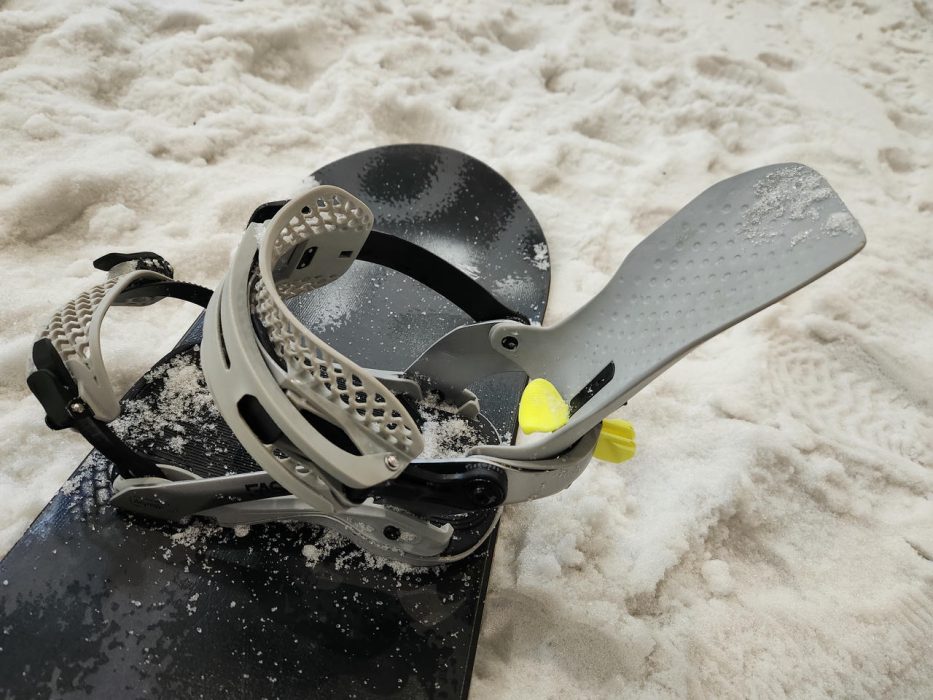
Another problem I ran into was with the highbacks after getting out of the bindings and skating over to the lift. There’s a new clunky quirk you should know, and that’s if you leave the highback horizontal, you’ll kick it when you try to skate to the lift. So you have to move it.
When you release the FASE highbacks, they extend horizontally from your heelside edge. This means you have to get good at either kicking them out of the way or physically bending down and getting them out of the way with your hand so you can skate to the lift.
While I’m sure any of us could get used to this, it’s one new step that isn’t an issue with a traditional binding’s highback only having 90 degrees of motion. (In comparison the FASE highback has closer to 160% and you need a little more effort to simply fold it over and out of the way.)
So, Would I Try FASE Again?
Yeah, absolutely. The Rome Katana FASE felt pretty good on my feet. I just want the tech to get upgraded to the point where these little tech issued nuances don’t have me thinking “I hate this, and I want my old bindings” the whole time.
I also realize that FASE isn’t for everyone, and it may not be for me. I am set in my ways, and I don’t think it takes that long to bend over and strap in to my bindings in order to feel safe, secure, and ready to rip.
That said for riders with mobility issues who need to reduce the time spent bending down or strapping in altogether, you would be better off with the Nidecker Supermatic bindings over the FASE system, as you still have to strap and unstrap the ankle strap with the FASE system.
Quick Performance Notes and Overall Verdict
Despite the issues, I do have some performance notes on each of the models I tried.
- The Rome Katana FASE was clearly the winner for its overall feel and versatility. It felt high-end all mountain binding, the straps were the highlight, It had decent response, felt relatively lightweight, and had noticeable dampening. It reminded me of my Union Force bindings. It’s soft and comfortable (it’s just my Union Force were actually easier to get in and out of), so I just can’t comment on it being more convenient, because my buckles were sticky and the adjustments weren’t perfect when I needed them to be.
- The Bataleon Blaster FASE gave me the most trouble. It felt more like a mid flexing entry level (cheaper) all-mountain binding. The response was mid to low and the dampening felt weak / low. I didn’t find it to be beneficial in the park in any way. Again, my experience was likely an unusual one due to the frozen buckles, so take what I wrote here with a grain of salt.
- The ThirtyTwo T32M FASE worked as intended. I’d say this was more of a park binding. It was still a bit clunky with its straps, and I had to pay extra attention to the highback. Overall it reminded me of the Union Strata. It feels lightweight, mid flex, and had some light dampening to absorb shock as you land.
Of the three I tried, I’d rate them like this:
Rome Katana FASE > ThirtyTwo T32 FASE > Bataleon Blaster FASE.
And altogether, I still would prefer traditional straps or Supermatics over FASE, so maybe go with the Rome Katana without FASE and let the tech issues buff out in the initial launch year?
Overall, with buckle issues, I didn’t find these bindings to be faster. I found them to be a bit of a headache, which left me wishing I had my usual bindings or was testing a pair of Supermatics.
One of the main perks of FASE bindings is that they are supposed to be faster and more convenient to get in and out of. They are supposed to be a little faster because you only need to adjust one strap—your ankle strap—instead of both your ankle and toe straps like you would in a traditional binding. The other perk is that they feel like a traditional binding weight, and performance-wise. However, the thing is, they don’t feel like a traditional binding because there are more pieces, and in my experience, those pieces didn’t work out for me.
Of the three I tried, I would recommend the Rome Katana FASE bindings, but as for me, I am going to stick with traditional bindings for this season. I’ll be on my Union Force bindings for the 2026 season, and hopefully for year two, the tech kinks will work themselves out.
(And full disclaimer if you skimmed this article and missed the note above – I tried these at two demo events. At demo events it’s snowy and you are adjusting bindings that are cold. If you were to buy these bindings, you would be making their adjustments at your home when its warm.
I say this just for the fact that as a member of the press who isn’t large enough to be sent boxes of product, I got to give you my unbiased opinion, and in this instance, these bindings don’t adjust well when it’s cold outside.)
Pictures from Review


Steve Weber is the passionate snowboarder, skateboarder, and author behind Board of the World. He understands that most gear reviews focus on having the perfect snow conditions, but his testing methodology is different. Living in Pennsylvania, Steve describes exactly how a board performs when the conditions aren’t perfect. His reviews cover performance on ice, hardpack, and flat-out brick conditions. In other words, he reviews boards for the conditions that East Coast riders actually face.
Bringing 27 years of East Coast snowboarding and 21 years of skateboarding experience, Steve is a 42-year-old intermediate park rider. His recommendations are informed by decades of battling icy conditions, ensuring every review accounts for the board’s performance on the roughest of terrain.
For the last five years, Steve has poured his passion into writing in-depth, unbiased reviews that help riders make informed decisions about the gear they’ll use. He also works part-time at a snowboard shop in Northeastern Pennsylvania, which gives him a direct line to learning about the new gear tech months in advance. When he’s not writing reviews, Steve is often found riding at Montage Mountain and testing out new boards.
Steve’s goal with Board of the World is simple: to help every reader find the right gear so they can have fun outside from the first time they use it.
Am I wrong that the buckles are the exact same on the base product and not exclusive to the fase variants? Seems a issue with the specific bindings or just them being new and stiff and shouldn’t reflect on the fase itself
Hey Lance! It’s such a fair point that even new regular ratchets can stick when they’re new and its cold out, too. The FASE ratchet system is a little different from what we’re used to with traditional bindings. FASE has locking mechanisms on both sides of your ankle (inner as well as outside). The one on the outer side in the normal ratchet position opens and closes like the normal ratchets, but it also remains locked into a slide position that leaves the binding partially strapped, forming a wide loop you can step in and out of instead of completely opening up. While traditional bindings open into two separate parts—the strap on one side and the ladder on the other—the FASE system acts like it’s still partially strapped (the loop I was describing). Your meant to simply just step into the big, partially strapped loop and slide the mechanism into place. The toe strap is standard and is meant to just stay strapped in while you step away from it.
The part that kept freezing for me was the buckle with the sliding mechanism (the outer side buckle). I’m sure the models I tried were brand new and just not broken in yet, which made them more finicky than expected. The reps were honest in saying my experience of needing to make so many adjustments in the cold, at a demo event, wouldn’t be the normal users experience. They’d simply dial them in at home and then take them to the mountain. Ice would slow any binding down. It’s just with these having to slide, and having more parts, there’s more parts that could freeze on you. Have a feeling that’s what I ran into. I just couldn’t get it to slide and it wound up taking longer to deal with it than normal bindings.
If you’re bindings don’t work in the cold, what’s the use on a product designed to be in the snow all day?
It’s a very fair point. I would imagine gen 2 FASE will get these quirks sorted.
The Rome and the Bataleon have the exact same baseplate, I’m wondering if you not being able to adjust the straps had everything to do why you didn’t think the Blaster”s weren’t damp, responsive ? I have all 4 and rode them all last season and I loved the blaster, it felt closest to my Ultra’s that I adore. Though I do not know if I will be able to daily drive the FASE system, only time will tell. I am a Union loyalist I’d say at this point and the Ultra is so hard to beat, especially after the Hybrid (Falcor Strap) Upgrade for 2026. I rode them all summer at Hood & Copper and they just slay, FASE reminds me of BOA when it first came out, will it stand the test of time…. Lets see!
Thx for the read!
Hey thanks for the comment. Yeah, you’re most likely right on the money with me not getting the proper feel for anyone of these models. I just don’t think I got a fair shot at trying FASE for this season. I was invited to demo events rather than getting sent anything (as some other gear reviewers do). Both events were less than ideal conditions. First one at Stratton, VT was in 7 degrees, and the second was indoor at Big Snow where the bindings were left out all morning on hill. In both cases, I had to config the bindings in conditions that most riders won’t have to. They just fought me too much to get that custom fit, or to be quick to get in and out of. That’s ultimately why I wrote this post. I was just trying to say, “Hey, if you were hoping for my normal in depth review on any one of these models, unfortunately, I can’t run them through my normal testing because of these freezing up and me feeling like I was going to fall out. I was more concerned about that than trying to put them to the test.” That’s sick about Hood! I really want to get out that way. I have a feeling if I was testing them out there, it would have been a way different post. Testing gear on the east coast gets tricky at times. I’ll give Fase another shot next season.
Keep ripping!
I’ve just received new bindings and this worries me a bit — is it normal that the highback, after setting it upright, moves slightly when the boot isn’t strapped in?
Hey Michael, the FASE system has an actuator in the inside of your highback that needs your boot in it to fully lock it in place. Does your binding still move as much when you’re strapped into it as normal? It shouldn’t. Our FASE rep, explains it better in the video I added to this post here. And truly sorry if what I wrote is worrying you. That wasn’t what I was trying to do with this article. It was meant to be more of a “Hey, I didn’t have the best experience, so I couldn’t run my standard testing process to review these for 2026. I’ll try again next season, but of the three models I tried, the Rome Katana was noticeably the best.” All of the brands that make these bindings are great and offer excellent support, if you run into any issues, just hit their customer support inbox and they’ll help you.
So you didn’t set them up ahead of time and took frozen equipment out to use for the first time. The Rule of 6 P’s…Proper Preparation Prevents Piss Poor Performance
True, Steve. I also mentioned that in the article most riders would have the chance to set them up properly. I need to get my hands on the Katanas so I can set them up ahead of time and report back on that proper FASE experience.
Do you think these problems were solved before the mass production like this video explains.
Maybe. The second demo event I went to was open to the public the week these were released, so I thought I was riding the production version that time around. Either way, I actually just got back from a 2027 demo event and took some more runs with the upcoming ThirtyTwo Basin FASE model.
It was warmer out this time, and I didn’t have the same freezing issues. My boot got stuck a few times trying to get out of the binding, but nothing too crazy. It just took a few extra seconds. The issue this time was the rubber heel of my boots was getting stuck on the inside of the FASE actuator trying to lift up to release. I think “actuator” is what the part is called. It’s the little lever that lifts on the inside of the highback. I chatted with the rep and he explained the new ThirtyTwo boots all wrap the heel in plastic to make that whole process even smoother. So if anyone reading this runs into some slowness getting out, new boots that match the binding are likely going to help.
But the third time around was a better event, so if you’re thinking FASE and a bit anxious about what I wrote, just give them a shot because the overall ride of the binding was still great. It’s just trying to find the right mix of settings and boots to match to get the more convienent experience these were made to offer.